
1466 (year)
Overview of the year 1466: calendar note, major events including the Second Peace of Thorn, and its political and cultural context in late medieval Europe.
The year MCDLXVI is recorded as a common year beginning on Wednesday under the Julian calendar. As a date in the mid‑15th century, 1466 sits within the late medieval period and the early Renaissance, a time of political realignment in northern Europe and rapid cultural and technological change across the continent.
Image gallery
1 Image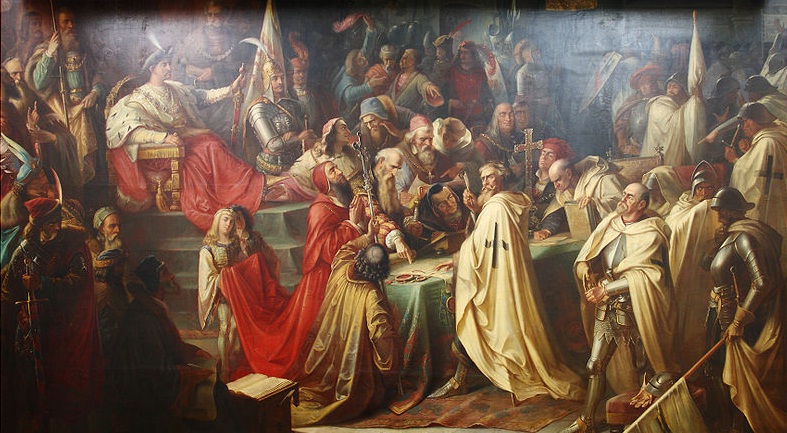
Major events
- One of the defining developments of 1466 was the conclusion of a prolonged conflict in the Baltic region by treaty, reshaping the relationship between the Kingdom of Poland and the Teutonic Order.
- Across Europe the spread of the printing press, the revival of classical learning in Italian courts, and changing military practices continued to alter societies and state power.
Although the year contains fewer widely cited singular occurrences than some landmark years, its importance is cumulative: diplomatic settlements, territorial adjustments, and the slow diffusion of new technologies and ideas contributed to longer‑term shifts. Maritime exploration was in its early stages; while no major voyages are directly tied to 1466, seafaring ambitions and navigational advances were accelerating around this time.
Political and cultural context
In Central and Eastern Europe the balance between regional powers—kingdoms, orders, and city leagues—was being renegotiated through warfare, treaties, and dynastic maneuvering. In Italy and other parts of Western Europe, artistic patronage and humanist learning fed what is collectively called the Renaissance, influencing literature, visual arts, and science. The Ottoman Empire and the remnants of Byzantine influence also shaped geopolitics after the mid‑15th century.
Legacy: events clustered around 1466 contributed to the gradual transformation from medieval structures toward more centralized states and early modern political arrangements. The year is often referenced by historians when discussing the transitionary decades that followed the fall of Constantinople and preceded the expansion of overseas empires.
For concise reference, 1466 is best understood as part of a period of consolidation and change rather than as a year of single, universally recognized turning points.
Related articles
Author
AlegsaOnline.com 1466 (year) Leandro Alegsa
URL: https://en.alegsaonline.com/art/111382