
1410 (year)
Year 1410 was a common year of the late Middle Ages notable for the Battle of Grunwald, shifting power in Eastern Europe, and ongoing political and cultural developments across Eurasia.
1410 was a common year of the Julian calendar situated in the late Middle Ages. It falls within a period of political realignment, religious tension and cultural transition that later historians associate with the early Renaissance in parts of Europe and the consolidation of powerful states in Asia.
Image gallery
1 Image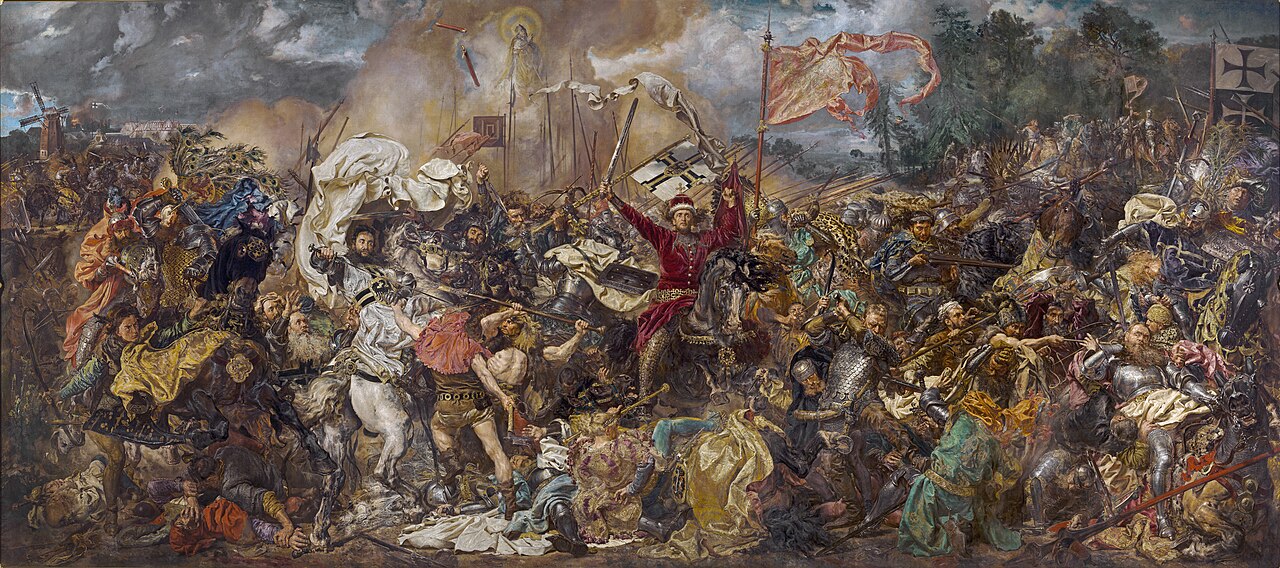
Overview
The year is best remembered for a major military confrontation in Central Europe that altered the balance of power in the region. Elsewhere, dynastic struggles, imperial rule and religious disputes continued to shape states from the British Isles to China. Many developments of 1410 are part of longer trends rather than isolated events.
Major events
- Battle of Grunwald (Tannenberg) — On 15 July 1410 an allied army of the Kingdom of Poland and the Grand Duchy of Lithuania defeated the forces of the Teutonic Order. The victory significantly weakened the Order's military prestige and marked a turning point in Polish–Lithuanian influence in the region.
- Siege of Marienburg (Malbork) — Following the battle, Polish–Lithuanian forces besieged the Teutonic capital at Marienburg (Malbork). The fortress held out, and the campaign eventually led to continued negotiations and later settlement in the following year.
- Wider geopolitical context — Across Europe the Great Western Schism and other ecclesiastical disputes continued to affect politics; in East Asia the Ming dynasty under the Yongle Emperor consolidated imperial authority and promoted large-scale projects begun in the early 15th century.
Regional developments and significance
In Central and Eastern Europe the defeat of the Teutonic Knights undermined a once-dominant crusading military order and strengthened the Polish–Lithuanian alliance, which would become an important actor in regional diplomacy and warfare. In Italy and other parts of western Europe, artistic and intellectual currents associated with the Renaissance were advancing, while local politics in city-states and kingdoms remained complex.
In Asia, strong dynastic rule and state-sponsored projects characterized large empires. These developments affected trade, diplomacy and cultural exchange across Eurasia, linking regional histories to broader patterns of economic and political change.
Legacy and notable facts
The events of 1410, especially the Battle of Grunwald, entered national histories and collective memory in later centuries and are often cited as emblematic moments in the medieval history of Poland, Lithuania and the Teutonic Order. Politically, the year is part of a sequence that reshaped medieval northern and eastern Europe and fed into diplomatic settlements and conflicts that followed in the early 15th century.
Related articles
Author
AlegsaOnline.com 1410 (year) Leandro Alegsa
URL: https://en.alegsaonline.com/art/111328