
1311
1311 is an odd composite integer (3×19×23) and a year in the early 14th century noted for the Battle of Halmyros and the opening of the Council of Vienne.
Overview
1311 may refer to the natural number that follows 1310 or to the calendar year 1311 of the Common Era. In arithmetic it is an ordinary member of the sequence of integers; in history it falls in the early 14th century, a decade marked by tense relations between monarchs and barons, papal initiatives, and military conflict across the Mediterranean and western Europe.
Image gallery
1 Image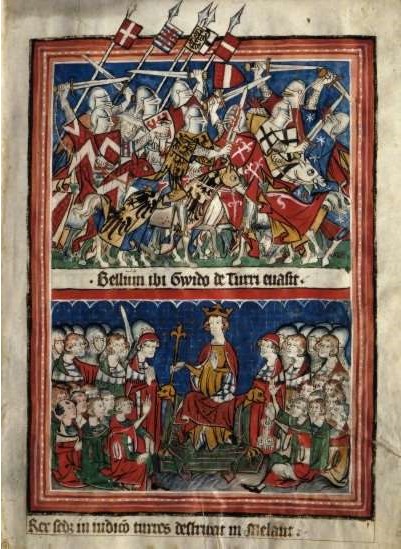
Mathematical characteristics
As an integer, 1311 is odd and composite. Its prime factorization is 3 × 19 × 23, which makes it a sphenic number (the product of three distinct primes). Its positive divisors are 1, 3, 19, 23, 57, 69, 437 and 1311. The sum of its proper divisors is 609, which is less than 1311, so it is a deficient number. In common numeral systems it is written in binary as 10100011111 and in hexadecimal as 0x51F. The sum of its digits in base ten is 6, which explains the divisibility by 3.
The year 1311: political and religious context
The year 1311 occurred during the papacy of Clement V and amid broader struggles among European kings, noble families and military companies. Rivalries over territory and influence, the legacy of earlier crusading ventures, and fiscal pressures on monarchies all shaped political life. In several kingdoms domestic reform movements and baronial opposition sought to check royal prerogatives.
Notable events
- Battle of Halmyros (March 1311) — A confrontation in central Greece in which the Catalan Company defeated the Frankish forces of the Duchy of Athens. The battle brought a major shift in control in parts of Greece and inaugurated a period of Catalan dominance in the duchy.
- Council of Vienne (opened October 1311) — An ecumenical council convened by Pope Clement V. It addressed a range of ecclesiastical and political questions, including the investigation and future of the Knights Templar; proceedings at Vienne continued into the following year and contributed to major institutional decisions.
- Ordinances and baronial pressure in England (1311) — In England, magnates pressed for limitations on royal authority and for reforms of royal administration. The Ordinances of 1311, drafted by a committee of nobles and clergy, aimed to restrict expenditure and influence of royal favourites.
Significance and distinctions
Numerically, 1311 is notable mainly for its factorization and classification as a sphenic and deficient number. Historically, the year is remembered for a set of regional events whose effects stretched beyond a single campaign or meeting: military realignment in Greece after Halmyros and the papal council at Vienne that shaped subsequent decisions about military orders and church reform. References to 1311 in chronicles and administrative records illustrate how local actions interacted with wider political and ecclesiastical currents in the early fourteenth century.
Related articles
Author
AlegsaOnline.com 1311 Leandro Alegsa
URL: https://en.alegsaonline.com/art/111243