
1326 (year and integer)
1326: a year in the early 14th century notable for political change in England and Ottoman growth, and the integer 1326 with its arithmetic properties, factorization and classification.
1326 denotes both a calendar year in the early 14th century and the positive integer 1326. As a year it falls in the late medieval period, a time of dynastic struggles, territorial shifts and evolving relationships between monarchs and the church. As an integer it is an even composite number with elementary number‑theoretic features useful for classification and simple computation.
Image gallery
2 Images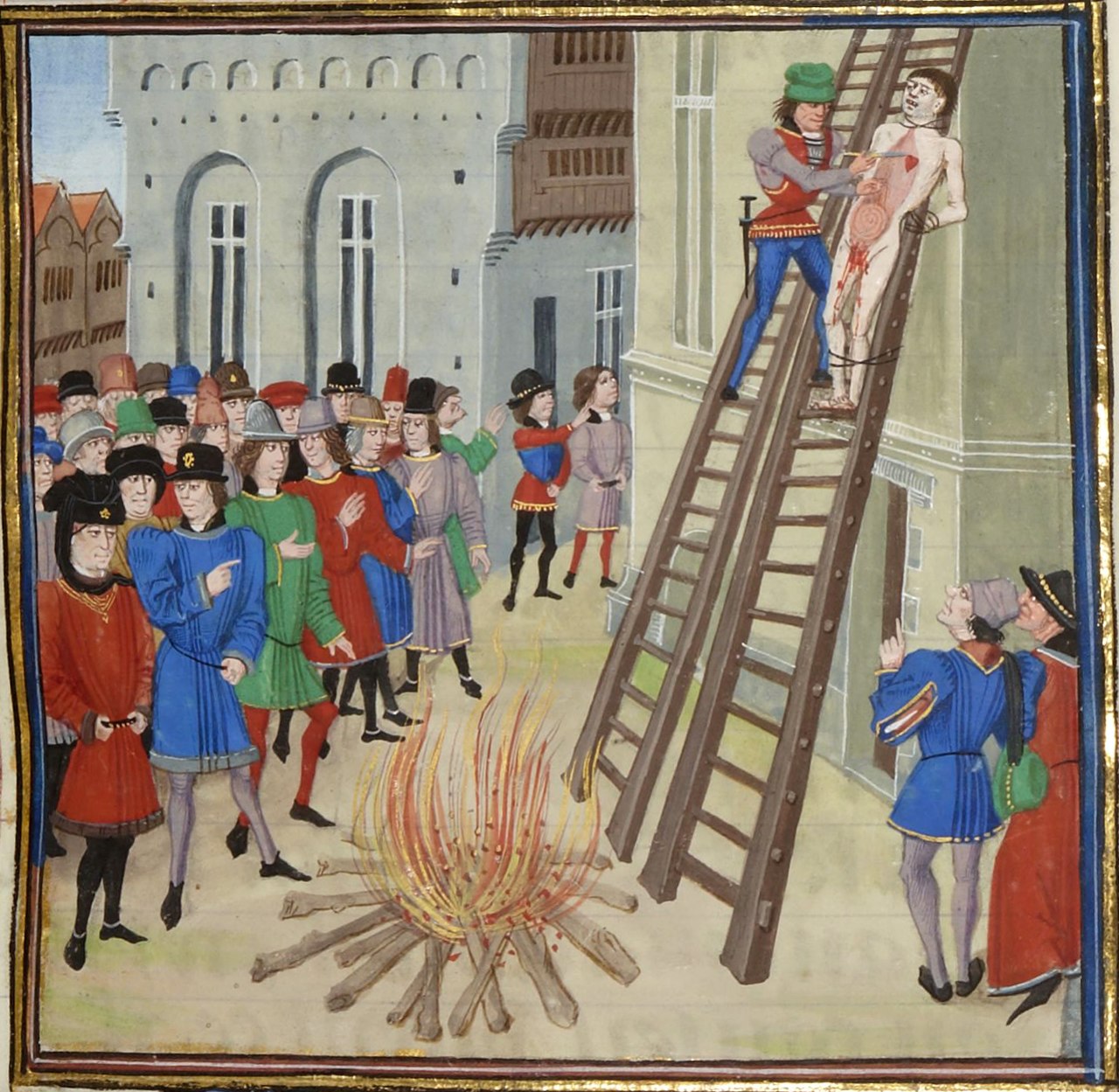

Historical overview
In the British Isles the year 1326 is associated with the invasion of England by Isabella of France and her ally Roger Mortimer. Their intervention precipitated the collapse of King Edward II's authority and led to his formal deposition in 1327; Edward II subsequently died in captivity the same year under circumstances that remain the subject of historical debate. The episode illustrated tensions between royal power and baronial opposition in medieval England.
In Anatolia and the surrounding regions the small principalities that emerged after the decline of Seljuk power continued to shift. The Ottoman house, under leaders of the early Ottoman dynasty, consolidated influence in north‑western Anatolia and increased the importance of urban centres that later served as administrative and military bases for further expansion.
Religiously and diplomatically, the papacy remained resident at Avignon under Pope John XXII, part of the period often described as the Avignon Papacy, which shaped relations with several European monarchs. Meanwhile the Byzantine world and successor states of the Mongol Empire experienced episodic conflicts and succession disputes that kept the eastern Mediterranean and parts of Central Asia unsettled.
Key events (summary)
- Invasion of England by Isabella of France and Roger Mortimer, initiating the fall of Edward II.
- Continued Ottoman consolidation in north‑western Anatolia with growing importance of urban centres such as Bursa.
- Ongoing Avignon Papacy under Pope John XXII and regional dynastic struggles in Byzantium and the Mongol successor states.
Mathematical and notational facts
As an integer, 1326 has the prime factorization 2 × 3 × 13 × 17. Its full set of positive divisors is: 1, 2, 3, 6, 13, 17, 26, 34, 39, 51, 78, 102, 221, 442, 663 and 1326. The sum of all divisors is 3024, so the sum of proper divisors is 1698, which exceeds the number itself; therefore 1326 is classified as an abundant number.
The Euler totient function value phi(1326) equals 384, reflecting the count of integers less than 1326 that are coprime to it. In Roman numerals the number is written MCCCXXVI. Numerically and historically, the label "1326" thus serves both as a marker of particular medieval events and as an example of basic arithmetical structure.
Related articles
Author
AlegsaOnline.com 1326 (year and integer) Leandro Alegsa
URL: https://en.alegsaonline.com/art/111254