
1094
1094 is an even natural number and a semiprime (2 × 547). This article reviews its arithmetic features, numeral representations, the year 1094, and typical contexts where the number appears.
1094 is a positive integer that follows 1093 and precedes 1095. As a basic descriptor it is even and composite; its simple factorization and arithmetic characteristics make it easy to study and to place in elementary number theory. The number is of interest chiefly as an example of a semiprime and for the way common arithmetic functions evaluate at this value.
Image gallery
2 Images
Mathematical properties
The prime factorization of 1094 is 2 × 547, where 547 is a prime number. Because it is the product of exactly two primes, 1094 is a semiprime. Its positive divisors are 1, 2, 547 and 1094. Summaries of standard arithmetic functions at 1094 include:
- Number of positive divisors (τ): 4
- Sum of all positive divisors (σ): 1644
- Sum of proper divisors: 550, so 1094 is a deficient number (proper divisor sum < number)
- Euler's totient (φ): 546, since φ(1094)=φ(2)·φ(547)=1·546
Representations and simple tests
In base‑10 the digits of 1094 add to 1+0+9+4 = 14, so 1094 is not divisible by 3 or 9 and therefore not a Harshad number in base 10. It is not a perfect square or triangular number. Common positional and symbolic representations include:
- Binary: 10001000110
- Hexadecimal: 0x446
- Roman numerals: MXCIV
Year 1094 and historical note
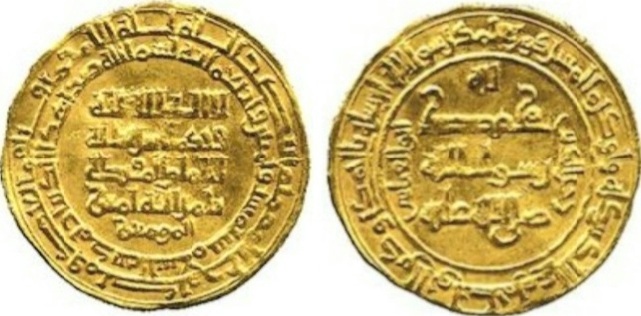
As a year number, 1094 refers to the eleventh century (the 1094th year of the Common Era). Like any year label, it functions as a chronological reference used in histories and chronologies. Specific events tied to that date belong to the political, religious and cultural developments of the High Middle Ages, but detailed accounts are found in specialized historical sources.
Uses, examples and distinctions
Numbers such as 1094 commonly appear as identifiers: route or highway numbers, model numbers, part numbers and other catalogue codes. In mathematics it serves as a straightforward example when illustrating concepts such as semiprimes, multiplicative functions, or the computation of φ(n) for products of distinct primes. Because it factors as 2×547, pedagogical examples often use 1094 when showing how properties of n derive from properties of its prime factors.
Related articles
Author
AlegsaOnline.com 1094 Leandro Alegsa
URL: https://en.alegsaonline.com/art/111002