
1109 (number, year, and historical context)
Summary of 1109 as an integer and as a year: mathematical properties, representations, the year AD 1109 in medieval context, the era around 1109 BCE, and common uses of the number.
Overview
1109 is a four-digit positive integer used both as a numeric value and as a calendar year designation. In Roman numerals it is written MCIX. As a chronological label it may indicate AD 1109 (1109 CE) in the Julian calendar or 1109 BCE in the pre‑Common Era chronology; those two senses relate to very different historical and archaeological contexts.
Image gallery
1 Image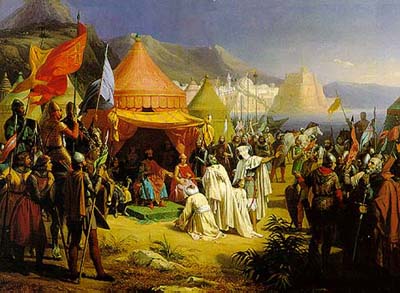
Mathematical properties
As an integer, 1109 is odd and is a prime number, with no positive divisors other than 1 and itself. Its decimal digits sum to 11, and its decimal representation ends with a 9. Common positional representations include binary 10001010101, octal 2125 and hexadecimal 0x455. Because it is prime, 1109 appears in elementary number theory examples and in demonstrations of primality testing, modular arithmetic, and basic cryptographic concepts at an introductory level.
AD 1109: historical context
The year 1109 CE falls in the High Middle Ages, a period of demographic growth, social change and religious reform across much of Europe. One well documented event of that year is the death of Anselm of Canterbury, an influential theologian and church leader. More broadly, the early twelfth century saw continued interactions between Latin Christendom and the Islamic world in the eastern Mediterranean, consolidation of territorial principalities in western Europe, and ongoing developments in monastic and ecclesiastical life.
1109 BCE: archaeological perspective
Placed in the early first millennium BCE, 1109 BCE is within the long span after the Late Bronze Age upheavals and during the emergence of early Iron Age cultures in many regions. For this remote period historians and archaeologists rely on material remains and broad cultural sequences rather than precise single‑year chronicles; researchers discuss shifts in trade, settlement patterns and technology rather than detailed yearly events.
Uses and distinctions
The numeral 1109 appears frequently as a year marker, in catalogue and model numbers, in serial identifiers and as part of numeric codes. Its primality gives it occasional illustrative value in mathematics education. It should not be conflated with similar numbers such as 1099 or 1110, each of which has distinct mathematical properties and historical associations.
Notable facts
- Roman numeral: MCIX.
- Arithmetic: prime number, digit sum 11.
- Positional forms: binary 10001010101, octal 2125, hexadecimal 0x455.
Related articles
Author
AlegsaOnline.com 1109 (number, year, and historical context) Leandro Alegsa
URL: https://en.alegsaonline.com/art/111024