
1083 (number and year)
1083 is a positive integer with distinct arithmetic properties and also a calendar year in the High Middle Ages; this article summarizes its mathematical features, numeral forms, and historical context in cautious, general terms.
Overview
1083 is both an integer used in counting and labelling and a year designation in the Common Era (AD 1083). As a numeral it appears in arithmetic, computing and cataloguing; as a year label it falls within the High Middle Ages, a period of regional political, religious and cultural transformations across Eurasia.
Image gallery
1 Image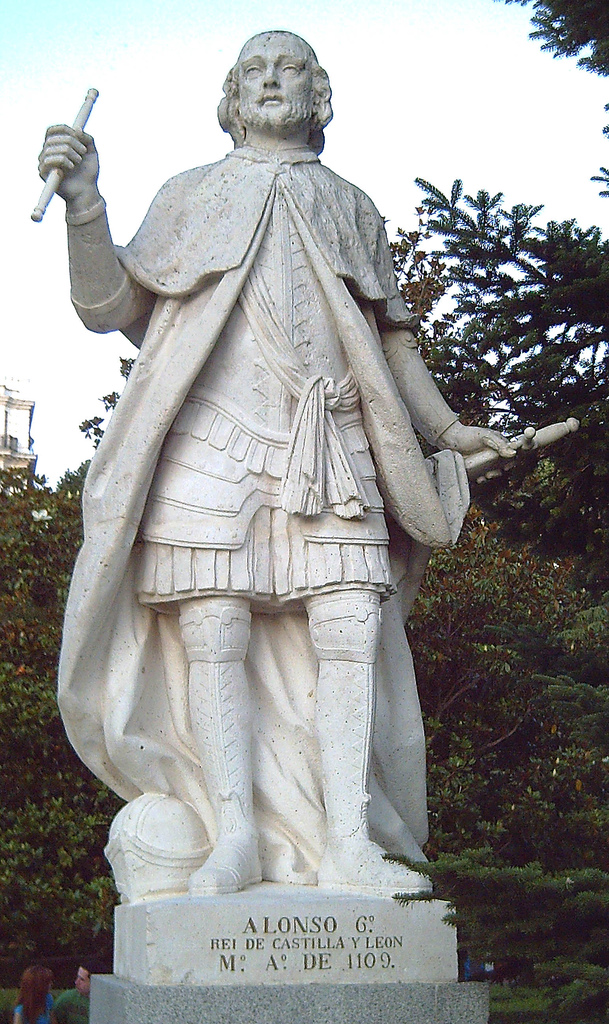
Mathematical properties
Arithmetically, 1083 is a composite, odd integer. Its prime factorization is 3 × 19², so its positive divisors are 1, 3, 19, 57, 361 and 1083. The sum of all divisors equals 1524, and the sum of proper divisors is 441, which is less than 1083; therefore the number is classified as deficient.
- Prime factorization: 3 × 19²
- Positive divisors: 1, 3, 19, 57, 361, 1083
- Deficient number: sum of proper divisors = 441
- Roman numerals: MLXXXIII
In positional numeral systems 1083 has the representations: binary 10000111011, octal 2073 and hexadecimal 0x43B. The sum of its base-10 digits is 12. These representations are useful in computing and digital contexts where different bases are used for storage or display.
Year 1083 in context
As a year label, 1083 sits within a century of shifting borders, dynastic changes and religious developments rather than a single globally defining event. In Western Europe, relations between secular rulers and the Church were a continuing theme; on the Iberian Peninsula, Christian and Muslim polities continued to contend and negotiate; in the eastern Mediterranean and Near East, regional states such as Byzantine and various Turkic polities interacted through warfare, diplomacy and trade; in East Asia established dynasties maintained and adapted administrative and cultural institutions. The year is part of a broader medieval landscape that later produced large-scale developments such as the crusading movements and state consolidation in some regions.
Modern uses and cultural notes
Today the sequence 1083 is encountered as an identifier, catalogue number, model designation, road number or archival reference. It has no widely recognized symbolic significance across major cultures, but functions as a practical numeric label in technical, historical and administrative contexts. When historians cite medieval material they use such year numbers as neutral chronological markers; scholars also note that calendar era labels (AD, CE, regnal years, local eras) affect how a year like 1083 appears in original sources.
Related articles
Author
AlegsaOnline.com 1083 (number and year) Leandro Alegsa
URL: https://en.alegsaonline.com/art/110990