
Advanced Placement Program (AP)
The Advanced Placement (AP) program offers college-level high school courses and exams in a wide range of subjects; successful scores can sometimes lead to college credit or advanced placement.
Overview
The Advanced Placement Program, commonly called AP, provides high school students with college-level coursework and examinations. Administered by the College Board, AP courses are offered in many schools and through approved providers to give motivated learners an opportunity to study a subject in greater depth than a standard secondary class. Students who complete AP courses typically sit for a standardized exam that colleges may use to grant credit or place students into advanced classes.
Image gallery
1 Image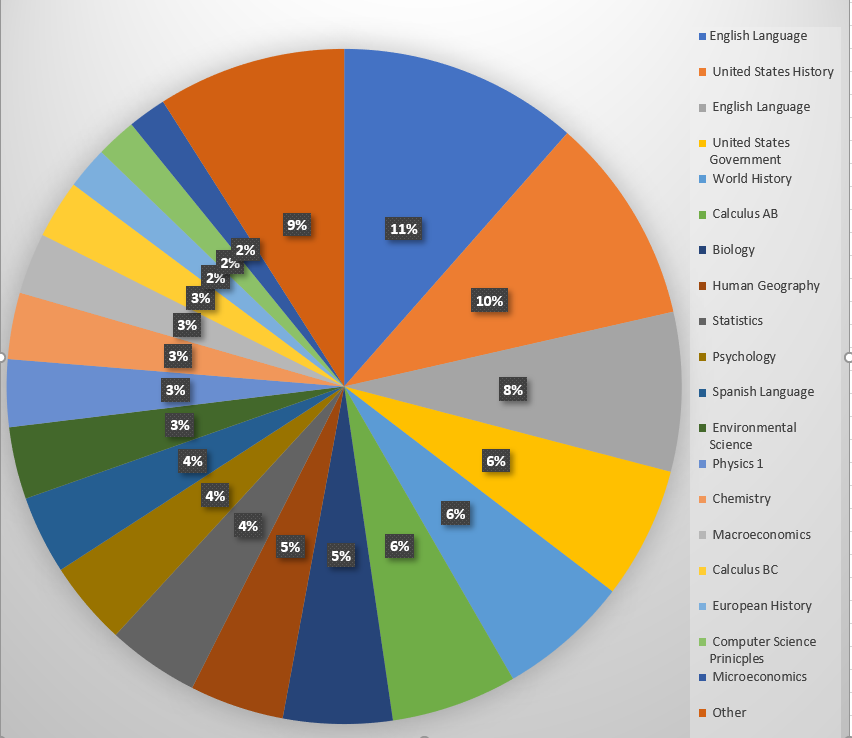
Structure and assessment
AP courses follow curricular frameworks set by the College Board and culminate in end-of-course exams that combine multiple-choice and free-response sections. Exams are scored on a five-point scale (1–5); policies on how scores translate to college credit or advanced standing vary by institution. Most AP exams are administered in May, and registration is coordinated by secondary schools or independent testing centers.
Subjects and examples
AP spans a broad array of disciplines, allowing students to pursue science, mathematics, social science, language, and arts topics. Common examples include:
- Sciences: Biology, Chemistry, Physics
- Mathematics: Calculus AB/BC, Statistics
- Humanities and languages: English Literature, U.S. History, Spanish
- Arts and specialized programs: Studio Art, Computer Science, AP Capstone (research and seminar)
History and development
The AP program developed in the mid-20th century to serve students seeking more rigorous study and to create pathways into higher education. Over time it expanded from a handful of offerings to dozens of subject exams and introduced specialized sequences such as AP Capstone to emphasize research, argumentation, and academic inquiry.
Uses and significance
Many students take AP courses to prepare for college-level expectations, strengthen college applications, and potentially reduce the time and cost of postsecondary study. Colleges differ in how they accept AP credit: some award semester credit for high scores, others offer placement into higher-level courses without credit, and some do not grant credit at all. Educators also view AP as a tool to raise academic standards within secondary schools.
Distinctions and considerations
AP is one of several advanced secondary programs; another well-known alternative is the International Baccalaureate (IB), which emphasizes an integrated diploma model. Parents and students often compare AP and IB in terms of curricular breadth, assessment style, and college recognition. Access, teacher preparation, and exam cost are ongoing topics in discussions about equity and the program's role in secondary education.
AP coursework is available to high school students in many regions, including institutions and students in Canada and the United States. For comparisons with other systems and program details, readers often consult resources that discuss AP alongside alternatives such as IB.
Related articles
Author
AlegsaOnline.com Advanced Placement Program (AP) Leandro Alegsa
URL: https://en.alegsaonline.com/art/1105
Sources
- gsgi.co.uk : Advanced Placement (AP) – Good Schools Guide International
- collegeboard.com : "A Brief History of the Advanced Placement Program"
- lbis.kenyon.edu : "Historical Markers: Kenyon College" · web.archive.org
- chronicle.com : "The Liberal Arts in School and College"
- about.collegeboard.org : About the College Board
- apcentral.collegeboard.com : "The History of the AP Program" · webcitation.org
- apcentral.collegeboard.com : "The History of the AP Program"
- apcentral.collegeboard.com : The Advanced Placement Program
- apcentral.collegeboard.com : Program Summary Report 2006
- apcentral.collegeboard.com : AP Fact Sheet
- apstudent.collegeboard.org : AP: Frequently Asked Questions
- professionals.collegeboard.com : Fees & Fee Reductions
- washingtonpost.com : "AP Language, Computer Courses Cut"