
Yamagata — capital city of Yamagata Prefecture in Japan
Yamagata is the capital of Yamagata Prefecture in Japan's Tōhoku region, noted for the Zaō mountains, Yamadera temple, Kajo Park, the Hanagasa Festival, cherries, hot springs and winter snow phenomena.
Overview
Yamagata is the principal city and administrative center of Yamagata Prefecture on the island of Honshu in Japan. It sits in the Tōhoku region and serves as a regional hub for government, education and culture. For official municipal information see the city page Yamagata City and for broader context consult the Tōhoku region and Japan pages.
Image gallery
5 Images


Geography and administration
The modern city lies within a basin framed by mountains, with the Zaō range to the east providing scenic highlands and ski areas. Yamagata is the seat of prefectural government and is commonly referred to as the capital of Yamagata Prefecture; official prefectural resources are available via Yamagata Prefecture. Administratively, the city has developed municipal services, cultural institutions and parks that serve the surrounding rural districts.
Attractions and culture
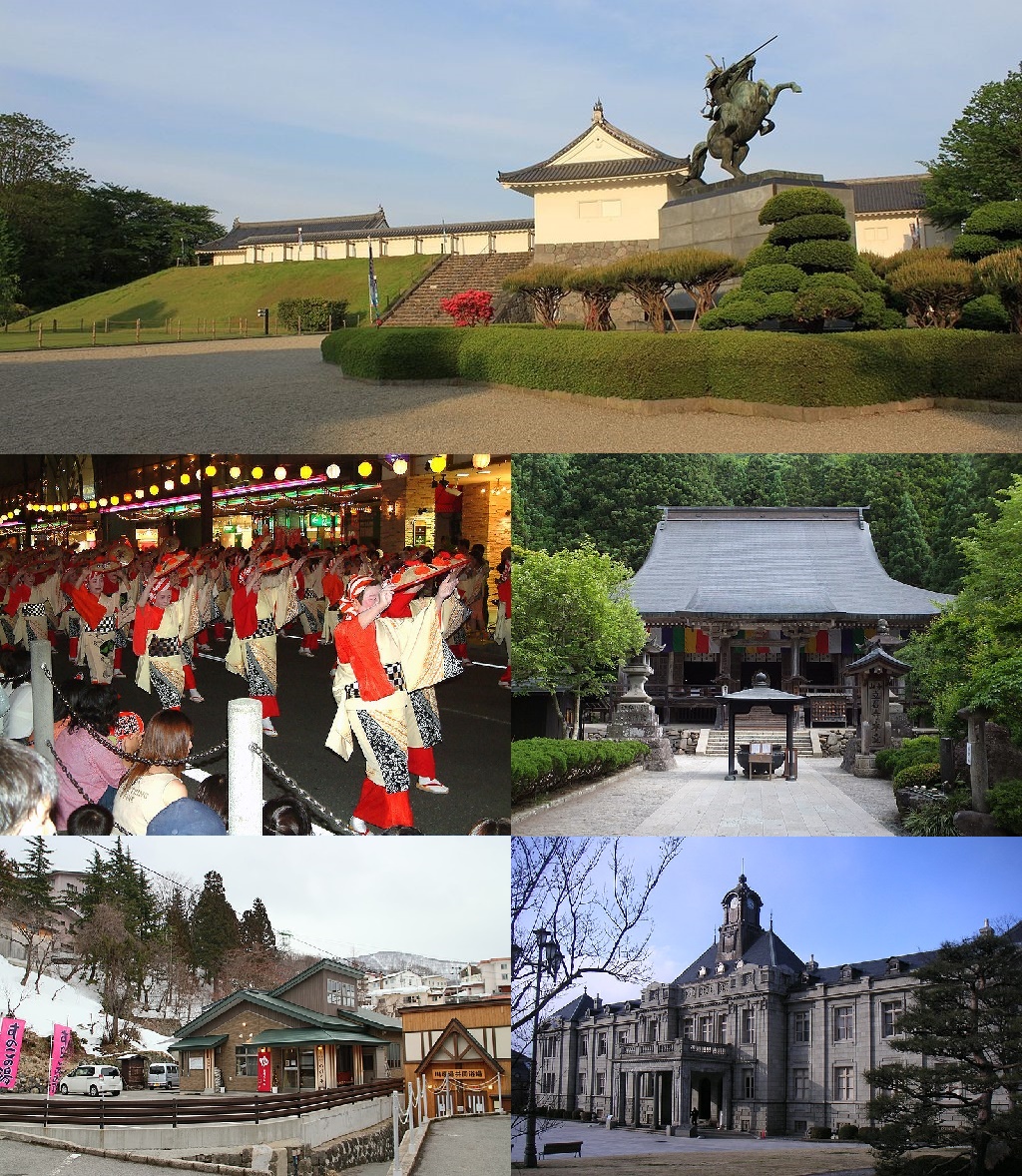
Key landmarks include Risshaku-ji, often called Yamadera, a mountain temple famous for its stone steps and panoramic views; the historic grounds of Yamagata Castle, now largely preserved as Kajo Park; and the Zaō mountains with the volcanic crater lake known as Okama. The city hosts the annual Hanagasa Festival each August, a lively parade where dancers wear flower-decorated hats. Visitors can find more on local festivals and sites from the city and regional guides capital city information.
Climate, nature and economy
Yamagata has warm summers and cold, snowy winters. The area is renowned for fruit production—especially cherries and pears—as well as safflower historically. Mountainous areas such as Zaō support onsen (hot spring) resorts and winter sports; in winter the tree-covered slopes can form the famous "snow monsters" or juhyō, attracting tourists for skiing and sightseeing. Agriculture, tourism and public services are important parts of the local economy.
History and status
The city has roots in regional castle towns and temple precincts. Over time it evolved into a modern municipal center; in 2001 Yamagata was designated a special city, a status that grants greater local autonomy within Japan's municipal system. For administrative details about that designation see special city status.
Transport, education and notable facts
Yamagata is connected to Tokyo and other major centers by the Yamagata Shinkansen and regional railways, and has bus services linking surrounding towns. Higher education institutions and research centers are based in the city, supporting regional development. Notable points include:
- Yamadera (Risshaku-ji) — a culturally important temple set on a mountainside.
- Zaō — volcanic peaks, the Okama crater lake, onsen and winter phenomena.
- Hanagasa Matsuri — a major summer festival featuring the flower-hat dance.
- Agriculture — particularly cherries, which are associated with the prefecture.
These features make Yamagata a blend of natural scenery, seasonal events and historical sites, offering year-round attractions for residents and visitors alike. For further reading consult regional guides and municipal resources linked above.
Related articles
Author
AlegsaOnline.com Yamagata — capital city of Yamagata Prefecture in Japan Leandro Alegsa
URL: https://en.alegsaonline.com/art/109579
Sources
- books.google.com : "Yamagata"
- books.google.com : "Tōhoku"
- hindawi.com : "Japan's Evolving Nested Municipal Hierarchy: The Race for Local Power in the 2000s,"
- hindawi.com : Table 3