
Yamoussoukro — political capital of Côte d'Ivoire
Yamoussoukro is the official capital of Côte d'Ivoire since 1983; a planned administrative center known for the Basilica of Our Lady of Peace and its role as a symbolic, political capital.
Overview
Yamoussoukro is the official capital city of Côte d'Ivoire, designated in 1983. It lies inland in the centre of the country and has a population of roughly 200,000 people in the city area. Although Yamoussoukro serves as the political and administrative capital, the coastal city of Abidjan remains the country's primary economic and commercial hub.
Image gallery
9 Images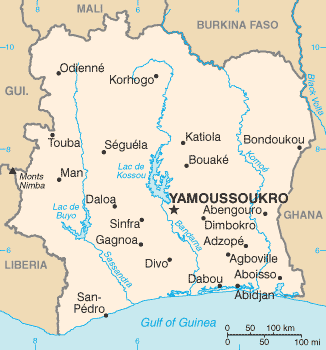


History and development
The town has long been associated with the Baoulé cultural region and gained national prominence because it is the birthplace of President Félix Houphouët-Boigny. During his presidency, large-scale investments and planning elevated the town into a purpose-built capital intended to symbolize national unity and modern statehood. The change of capital was driven by political, symbolic and developmental aims rather than economic concentration.
Built environment and layout
Yamoussoukro was developed with broad avenues, government precincts and planned residential zones. Public architecture and infrastructure reflect the city's role as a representational capital: ceremonial buildings, official residences and parks are spaced to form a formal administrative centre. The scale of some projects contrasts with the city's relatively modest population.
Notable landmarks
- Basilica of Our Lady of Peace — a dominant landmark often cited as among the largest churches in the world; its dome and colonnades give the skyline an unmistakable profile.
- Presidential and governmental complexes — official offices and ceremonial sites used for state functions.
- Local lakes and parks — including landscaped areas around official residences that are sometimes noted in travel accounts.
Administration, role and distinctions
As the constitutional capital, Yamoussoukro hosts key national institutions and formal state events. In practice, many ministries, businesses and foreign missions continue to operate from Abidjan, making the country an example of a nation with separate political and economic centres. This division has shaped debates about public spending and the practicalities of governance.
Transport, economy and tourism
The city is connected by road to other parts of the country and is served by an international airport that can accommodate large aircraft, though regular international services are limited. The surrounding region is predominantly agricultural, contributing to national exports. Tourists are mainly drawn by the basilica and the unusual mix of monumental architecture and provincial life.
Yamoussoukro remains significant both as a symbol of post-independence nation-building and as an active site of government. Its combination of planned infrastructure, monumental buildings and ongoing administrative functions makes it an instructive example of a purpose-built capital in the post-colonial world.
Related articles
Author
AlegsaOnline.com Yamoussoukro — political capital of Côte d'Ivoire Leandro Alegsa
URL: https://en.alegsaonline.com/art/109598