
Yalobusha County, Mississippi
Yalobusha County, established in 1833 in north‑central Mississippi, is a rural county with two county seats (Water Valley and Coffeeville). It is shaped by the Yalobusha River, agriculture, small towns and local history.
Overview
Yalobusha County lies in the north‑central portion of the U.S. state Mississippi. Organized in the early 1830s, the county is notable for maintaining two county seats: Water Valley and Coffeeville. As recorded in the 2010 United States Census, the county had 12,678 residents; more recent estimates indicate modest population change typical of many rural counties in the region.
Image gallery
1 Image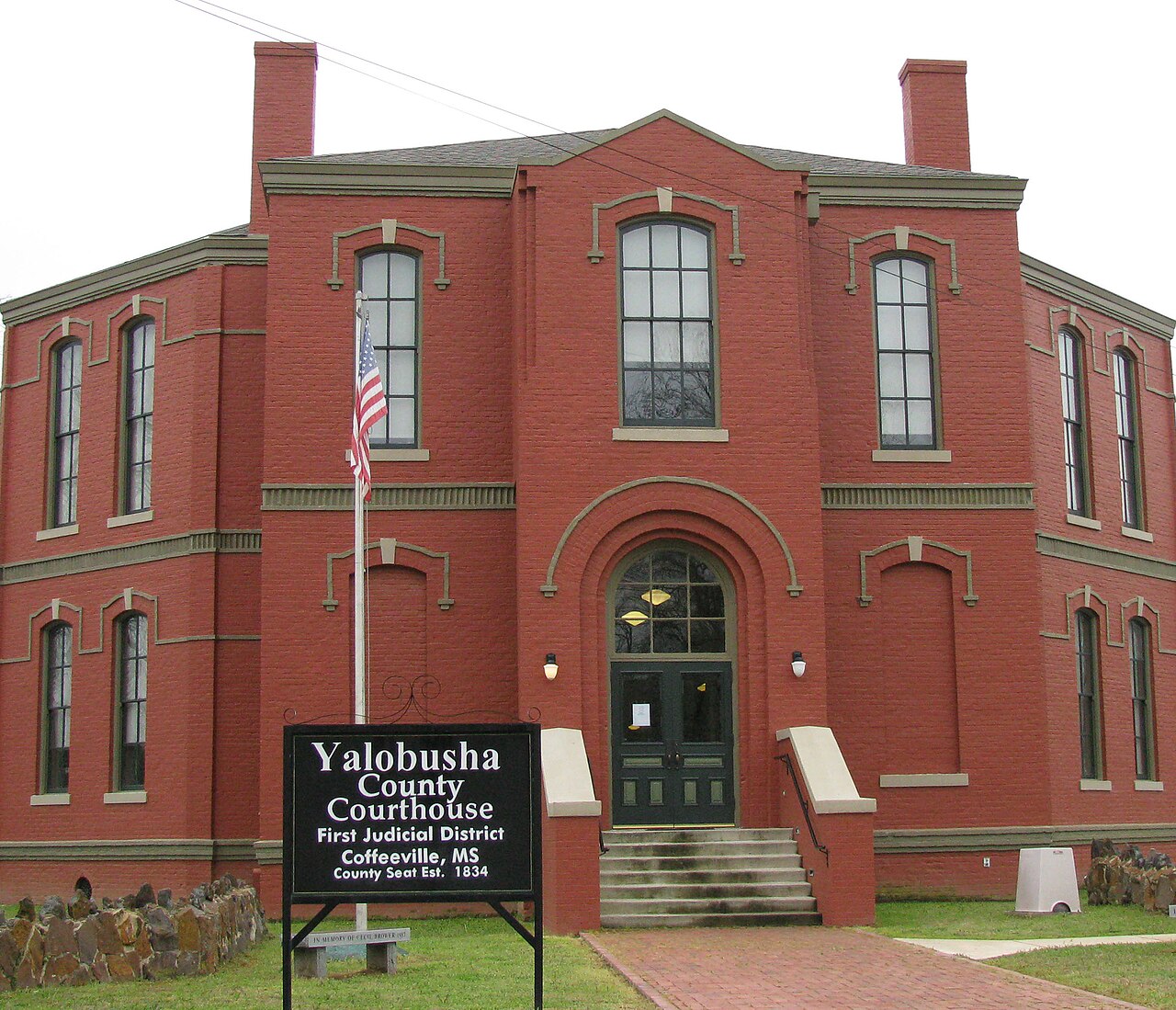
Name and early history
The county name derives from a Choctaw term; local histories commonly interpret it as referring to tadpoles or a place associated with them, reflecting the Native American heritage of the area and the influence of the Choctaw people prior to and during early European‑American settlement. Settlement and county organization in the 1830s followed Mississippi's broader patterns of frontier settlement, agriculture and the development of small towns.
Geography and environment
Yalobusha County includes rolling uplands, agricultural fields, forested tracts and waterways, most notably the Yalobusha River and its tributaries. These landscapes support farming, timber production and outdoor recreation such as fishing and hunting. Small streams, wetlands and woodlands provide habitat for regional wildlife and contribute to local land use planning.
Economy and transportation
The local economy is largely rural in character, with agriculture, forestry, light manufacturing and service businesses providing much employment. Towns that grew up along rail lines—especially Water Valley—played an important role in regional commerce and continue to influence the local economy. Road corridors and remaining rail connections shape commuting and freight movement within the county.
Communities, culture and attractions
Besides the two county seats, the county contains several small towns and unincorporated communities, including Oakland and Tillatoba. Historic downtown districts, community festivals, small museums and local landmarks attract residents and visitors. Outdoor opportunities on rivers and in public green spaces are a feature of county life.
Government and services
The dual county‑seat arrangement remains a notable governance feature, originally intended to make courts and county services more accessible across a geographically dispersed population. Local government provides standard county services, and residents also rely on regional institutions for higher education, health care and specialized services.
For official information about county services, planning and records consult the county government pages and state resources. Further statistical and historical data are available from state and federal agencies and local historical societies.
Related articles
Author
AlegsaOnline.com Yalobusha County, Mississippi Leandro Alegsa
URL: https://en.alegsaonline.com/art/109571
Sources
- quickfacts.census.gov : "State & County QuickFacts"
- naco.org : "Find a County"