
Yale Lary: NFL Defensive Back, Punter, Politician, and Hall of Famer
Profile of Yale Lary (1930–2017): Texas A&M standout, multi-role Detroit Lions star, three-time NFL champion, Pro Football Hall of Famer, and Texas state representative.
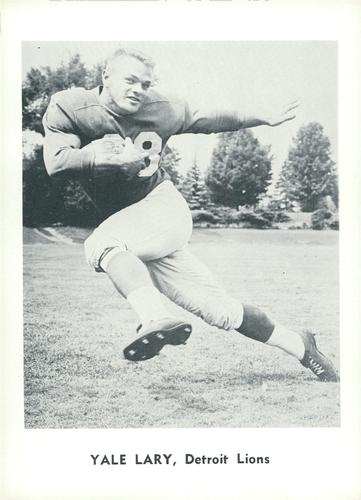
Yale Lary (November 24, 1930 – May 12, 2017) was an American football player, businessman and public servant best known for his long and versatile career with the Detroit Lions. A product of Texas A&M, Lary combined defensive skill, special-teams excellence and leadership to become one of the era's most respected practitioners of multiple roles on the field. His career later included business activities and a period of elected public service in the Texas legislature.
Image gallery
3 Images

Early life and college
Lary grew up in Texas and played collegiate football at Texas A&M, where he earned recognition as a talented and durable athlete. At the college level he developed the range of abilities—coverage, tackling, punting and returns—that would define his professional career. His successful transition from college to the professional ranks reflected both physical ability and football intelligence.
Professional football career
Lary spent his entire National Football League career with the Detroit Lions, appearing in the 1950s and early 1960s. He played as a defensive back and safety while also handling punting and often contributing on kickoff and punt returns, exemplifying the multi-function specialist more common in mid-century football than in modern rosters. He was part of Lions teams that won NFL championships in the 1950s, and his play was widely regarded as critical to those title runs.
After joining the league, Lary missed two seasons in the mid-1950s because of military service, then returned to continue his career through the early 1960s. His combination of defensive playmaking and special-teams reliability earned him recognition among peers and sportswriters of the time; he was eventually honored by selection to all-decade teams and halls of fame for his generation.
Public service and business
While still active as a player, Lary began a parallel chapter in public life. He served as a member of the Texas House of Representatives from 1959 to 1963 as a Democrat, balancing legislative responsibilities with his athletic career. After retiring from football he engaged in business activities and remained an active figure in his community, maintaining ties to college and professional football circles.
Honors, legacy and notable facts
- Inducted into the Pro Football Hall of Fame in 1979, recognizing his sustained excellence in multiple phases of the game. Hall of Fame listing.
- Named to the NFL 1950s All-Decade Team for his decade-long impact on the game.
- Honored in several regional halls of fame, including Texas A&M's athletic hall and state-level sports halls of fame.
- Remembered for versatility: a defensive back who also punted and played special teams, at a time when such two-way and multi-role contributions were especially valuable.
For further reading about his athletic career and historical impact, consult resources that cover the Detroit Lions' 1950s championship teams and profiles of Hall of Fame-era players. Examples of such resources are available in collections and biographies that document professional football in mid-century America. Player profile and career overview and retrospective accounts provide context for his era.
Death and remembrance
Yale Lary died on May 12, 2017, in Fort Worth, Texas, at the age of 86. His passing was noted by former teammates, sports historians and civic leaders who recalled both his on-field accomplishments and his civic engagement. Obituaries and tributes highlighted his Hall of Fame induction, championship seasons with the Detroit Lions, and his term in the Texas legislature. Local notices and memorial mentions reflect the respect accorded him in the communities where he lived and worked.
His career is often cited when discussing the importance of special teams and the value of multi-skilled players in the NFL's mid-century period. For archival materials, contemporary reports and league records, see specialized sports history databases and organizational histories. League records, team histories and political archives relating to his public service provide primary-source context. His political affiliation and legislative tenure are noted in state records. Public service record.
Related articles
Author
AlegsaOnline.com Yale Lary: NFL Defensive Back, Punter, Politician, and Hall of Famer Leandro Alegsa
URL: https://en.alegsaonline.com/art/109568
Sources
- lrl.state.tx.us : Texas Legislators Past and Present-Yale Lary
- profootballhof.com : "Yale Lary, 1930-2017"
- nfl.com : "Lions great, Pro Football Hall of Famer Yale Lary dies at 86"