
WorldCat: the global union catalog of library collections
WorldCat is a cooperative, library-maintained union catalog listing bibliographic records and holdings in tens of thousands of libraries worldwide; used for discovery, cataloging, and interlibrary lending.
WorldCat is a comprehensive union catalog that aggregates bibliographic records and holding information contributed by libraries across the globe. It is designed to help people discover which libraries own particular items — books, journals, audiovisual materials, digital resources and other formats — and to provide shared bibliographic metadata that libraries can reuse.
Image gallery
1 Image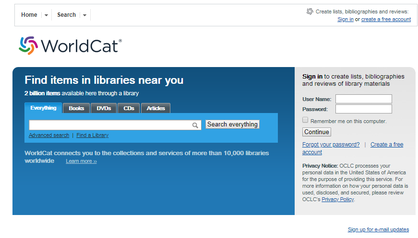
Scope and content
Entries in WorldCat include standard bibliographic elements such as title, author, edition, publication details, subject headings, identifiers like ISBNs, and unique control numbers assigned within the database. Records represent many item types and languages and typically indicate which participating libraries hold each item. The breadth of coverage — spanning academic, public, national and special libraries — makes WorldCat a central resource for locating physical and some digital materials.
How it is organized and maintained
WorldCat is maintained collaboratively: libraries that are members of the cooperative contribute, edit and update records. Bibliographic data are standardized to support interoperability and to reduce duplication; when multiple libraries submit records for the same work, mechanisms exist to merge or link records so users see consolidated information. Cataloging tools and data services provided by the operating organization enable batch updates, authority control, and the assignment of unique identifiers that help track items across systems.
History and governance
The catalog was developed and is supported by OCLC, a membership-based organization created to advance shared library services and cooperative cataloging. Over decades the system expanded from a regional bibliographic utility into an international dataset used by thousands of institutions. OCLC provides technical platforms and membership services while participating libraries retain responsibility for the accuracy and currency of their holdings data. See more about the organization behind this work at OCLC.
Primary uses and importance
- Discovery: patrons and researchers can find which libraries own a title and where to request access.
- Interlibrary loan and resource sharing: institutions use WorldCat data to locate lenders and facilitate loans between libraries.
- Cataloging and metadata reuse: libraries copy or adapt existing records rather than creating every record from scratch.
- Collection analysis and research: aggregated data support bibliographic research, holdings analysis and reporting.
Individuals can search many WorldCat records through public search interfaces (for example via library search services), while libraries access additional subscription tools for advanced searching and batch operations. Membership and data-contribution details are managed through the cooperative structure; information about participating libraries and joining the cooperative is available from the organization and its member resources at the cooperative.
Because WorldCat links bibliographic descriptions to library holdings worldwide, it functions both as a practical tool for locating items and as a shared metadata repository that underpins modern library collaboration and discovery systems. Its role continues to evolve as libraries add digital collections and integrate linked-data practices into their catalogs.
Related articles
Author
AlegsaOnline.com WorldCat: the global union catalog of library collections Leandro Alegsa
URL: https://en.alegsaonline.com/art/109135