
Wole Soyinka
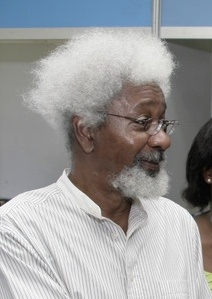
Nigerian playwright, poet and essayist Akinwande Oluwole 'Wole' Babatunde Soyinka (born 1934). Nobel Prize laureate (1986) known for plays, literary activism, and blending of Yoruba tradition with modern drama.
Akinwande Oluwole "Wole" Babatunde Soyinka (born 13 July 1934) is a Nigerian writer, playwright, poet and public intellectual. He emerged in the mid-20th century as a leading voice in English-language African literature, combining modern dramatic form with elements drawn from his Yoruba heritage. In 1986 he became the first African awarded the Nobel Prize in Literature.
Image gallery
6 Images


Life and influences
Soyinka was born in the then British colony that became Nigeria. He was educated locally and later continued studies in Britain. His work reflects a mix of classical European theatre, African myth and ritual, and a commitment to social and political engagement. His background in Yoruba oral traditions, music and ritual strongly shapes the rhythm and imagery of his plays and poems.
Works and forms
Soyinka is prolific across genres: drama, poetry, essays, memoir and the occasional novel. He wrote tragedies and comedies that stage political conflict, moral dilemmas and cultural collision. Recurring features are heightened language, ceremonial action, and archetypal figures drawn from community life.
- A Dance of the Forests (early major play)
- The Lion and the Jewel (comic drama)
- Death and the King’s Horseman (ritual tragedy)
- The Interpreters (novel)
- Collected poems and essays
Activism and legacy
Beyond literature, Soyinka has been an outspoken critic of corruption and authoritarianism; he has faced imprisonment and periods of exile for his activism. His writings and public interventions have influenced generations of African writers and thinkers and helped open global attention to postcolonial theatre and human-rights debates.
Widely translated and studied, Soyinka remains a central figure in modern world literature: admired for formal inventiveness, moral urgency and for bringing African dramatic traditions into international conversation.
Related articles
Author
AlegsaOnline.com Wole Soyinka Leandro Alegsa
URL: https://en.alegsaonline.com/art/108789
Sources
- books.google.com.ng : Nobel Prize Winners: An H.W. Wilson Biographical Dictionary, Volume 1
- nobelprize.org : "The Nobel Prize in Literature 1986 Wole Soyinka"
- wikidata.org : wikidata.org/wiki/Q41488
- authority.bibsys.no : 90096482
- catalogo.bne.es : XX1722082
- catalogue.bnf.fr : cb119253009
- data.bnf.fr : (data)
- cantic.bnc.cat : a1099452x
- ci.nii.ac.jp : DA01294268
- d-nb.info : 118615807
- isni.org : 0000 0001 2283 7862
- id.loc.gov : n80038437
- kopkatalogs.lv : 000000068
- id.ndl.go.jp : 00475387
- aleph.nkp.cz : jn20000605097