
Wireless LAN (WLAN): Overview, Technology, Standards, and Uses
A concise guide to Wireless Local Area Networks (WLANs): how they work, main components and standards (IEEE 802.11), common uses, security considerations and deployment types.
Overview
A Wireless Local Area Network (WLAN) is a network that links devices over short distances without physical wiring. Instead of relying on fixed cables, a WLAN uses cables only where infrastructure connects to the wider network and employs radio waves to carry data between devices. The family of technical specifications most commonly associated with WLANs is IEEE 802.11, often marketed under the Wi‑Fi brand.
Image gallery
2 Images
Technology and components
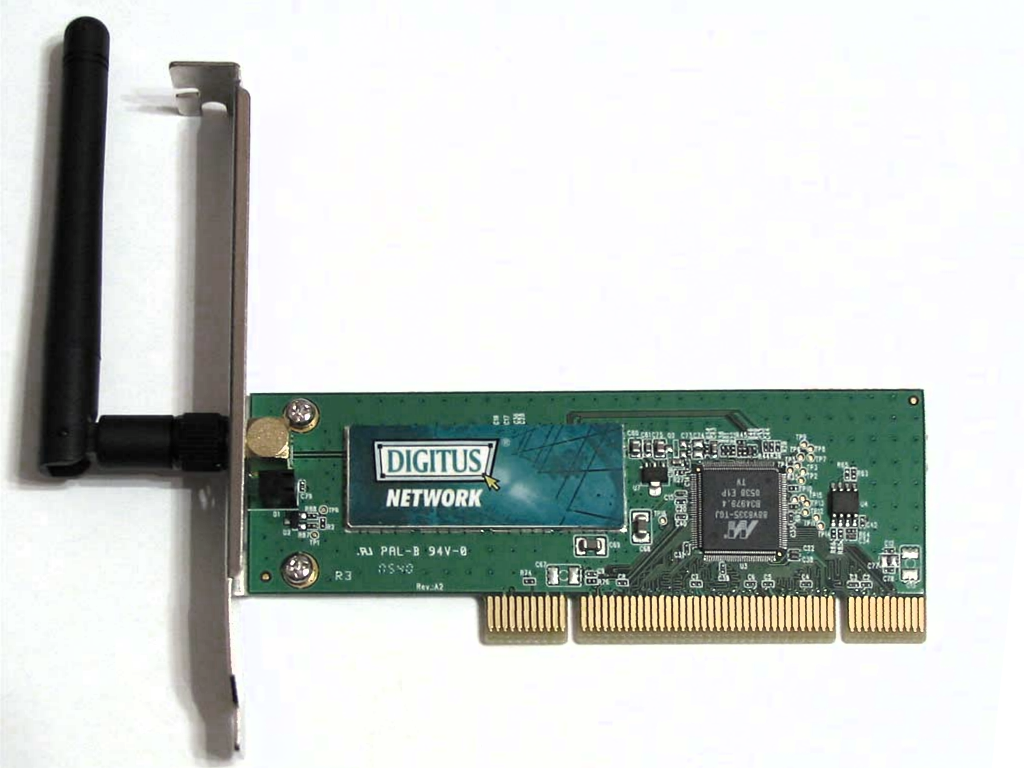
Typical WLANs include access points, client devices (laptops, phones, IoT devices), and often a router or wireless controller. Key elements are:
- Access points (APs) — radios that provide local wireless coverage and bridge to wired networks.
- SSIDs and channels — network identifiers and radio channel assignments used to segregate and manage traffic.
- Antennas and radios — hardware that transmits and receives signals, operating on common bands such as 2.4 GHz, 5 GHz and (in newer devices) 6 GHz.
Standards and development
The IEEE 802.11 family defines multiple generations of WLAN technology, each improving speed, capacity and spectral efficiency. Variants carry informal names (for example 802.11a/b/g/n/ac/ax) that indicate successive enhancements in throughput, range and multi‑device handling. Implementations may support features like beamforming, multiple input multiple output (MIMO), and wider channels for higher data rates.
Uses and deployment types
WLANs serve many roles: home Wi‑Fi, enterprise campus networks, public hotspots, and wireless backhaul. Deployment modes include infrastructure mode (clients connect via APs), ad hoc (peer‑to‑peer) mode, and mesh networks where APs cooperatively route traffic to extend coverage. WLANs are valued for mobility, easy installation and flexible coverage.
Security and limitations
Security is a central concern. Modern WLANs use authentication and encryption protocols such as WPA2 and WPA3 to protect traffic; older methods like WEP are considered insecure. Other practical issues include interference from other radios, throughput reduction with many simultaneous users, and range limits imposed by power and frequency choice. Proper planning of placement, channel selection and encryption helps maintain performance and safety.
Notable distinctions
WLANs differ from wider area wireless systems (cellular networks) in scope and management: WLANs are typically private, provide local high‑speed access, and are managed by the site owner. Understanding standards, deployment options and security practices is essential for effective WLAN design and operation.
Related articles
Author
AlegsaOnline.com Wireless LAN (WLAN): Overview, Technology, Standards, and Uses Leandro Alegsa
URL: https://en.alegsaonline.com/art/108669