
Wilson Frost: Chicago alderman and 1976 acting-mayor claimant
Wilson Frost (1925–2018) was a long-serving Chicago alderman whose 1976 claim to be acting mayor after Richard J. Daley's death produced a brief, high-profile power struggle in the City Council.
Overview
Wilson Frost (December 27, 1925 – May 5, 2018) was an American politician best known for his long service on the Chicago City Council and for a short-lived challenge to mayoral succession after the death of Mayor Richard J. Daley in 1976. Frost represented the 34th Ward as an alderman and was a prominent African American figure in Chicago municipal politics during a period of change and increasing representation for Black elected officials.
Image gallery
1 Image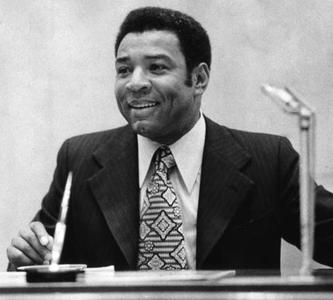
Early life and municipal career
Born in Cairo, Illinois, Frost moved to Chicago where he became active in local civic life and city government. Over several decades he built a reputation as a long-serving member of the largely Democratic Chicago City Council. Colleagues and constituents regarded him as an experienced legislator with deep familiarity with council procedures and ward-level concerns.
The 1976 succession dispute
When Mayor Richard J. Daley died in 1976, Frost publicly asserted that he should assume the duties of mayor. His claim was based on his position and interpretation of council rules at the time. The episode produced a brief but intense power struggle within the all-Democratic Chicago City Council, which ultimately decided that Frost's claim was not the proper path to the mayoralty. Instead, the council appointed Alderman Michael Anthony Bilandic as acting mayor. The dispute drew national attention because, had Frost prevailed and been elected by voters afterward, he would have been the city's first African American mayor.
Later career and significance
After the 1976 episode, Frost continued to serve as an alderman and remained active in Chicago politics. His career is often discussed in the context of the broader struggle for racial representation and power-sharing in American cities during the latter half of the 20th century. The succession controversy highlighted how municipal rules, party structures, and informal power dynamics could shape leadership transitions, sometimes ahead of broader electoral change.
Legacy and notable facts
- Frost is remembered as a senior and persistent presence on the council during a time of political realignment in Chicago.
- The 1976 dispute emphasized the importance of clear succession rules in municipal charters and the role of city councils in times of unexpected vacancy.
- His public claim to the mayoralty is frequently cited in studies of Chicago politics and African American political history.
Death and remembrance
Wilson Frost died on May 5, 2018 in Palm Desert, California at the age of 92. Obituaries and later commentaries recalled both his decades of municipal service and the dramatic 1976 moment that made his name familiar beyond his own ward. For further information on the offices he held and the events surrounding the 1976 succession, see related municipal histories and archival records (34th Ward, Chicago City Council).
Additional reading and documentary sources may be found through municipal archives and collections that track Chicago political history and the biographies of its aldermen and mayors (alderman records, party records, mayoral history).
Related articles
Author
AlegsaOnline.com Wilson Frost: Chicago alderman and 1976 acting-mayor claimant Leandro Alegsa
URL: https://en.alegsaonline.com/art/108402
Sources
- encyclopedia.com : "Wilson Frost bows out - with a decisive vote - Chicago Sun-Times - Encyclopedia.com"
- content.time.com : "The Nation: Slicing Daley's Pie"
- chicago.suntimes.com : "Wilson Frost, trailblazing black alderman, dies at 92"