
Wezembeek-Oppem
Wezembeek-Oppem is a municipality in Flemish Brabant, Belgium, near Brussels. It is officially Dutch-speaking with language facilities for French speakers and had about 13,496 inhabitants in 2007.

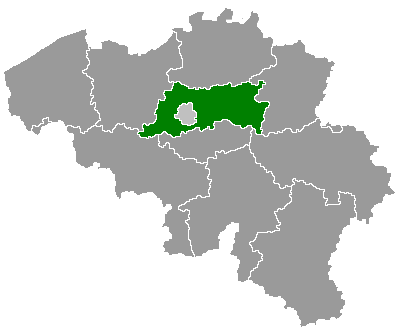
Wezembeek-Oppem is a municipality in the Belgian province of Flemish Brabant. It lies close to the eastern edge of the Brussels metropolitan area and is commonly considered part of the Brussels periphery. The settlement is recorded at coordinates 50°50′N, 4°29′E (approximately 50.833°N, 4.483°E). A population count from 2007 reported 13,496 inhabitants.
Image gallery
3 Images

Language and administration
Administratively the town belongs to the Flemish Region and the province of Flemish Brabant. It is an officially Dutch-speaking municipality but provides language facilities to French-speaking residents, a characteristic it shares with other municipalities around Brussels that accommodate a bilingual or multilingual population. The community operates under Belgian municipal law and local government structures typical of the region; the term municipality describes this basic local unit.

Geography, transport and character
Wezembeek-Oppem is primarily suburban and residential, mixing single-family homes, apartment blocks and green public spaces. Its location makes it convenient for commuting into central Brussels and to nearby employment areas. Local roads and public transport links connect residents to the wider Brussels region and to regional centres, while parks and small commercial streets serve daily needs.
History and development
Historically the area was rural, with small villages and farmland. Over the 20th century the expansion of Brussels and changing economic patterns led to suburban growth: housing developments and services appeared to meet demand from people working in the capital. This gradual transformation produced a townscape where older village elements coexist with more recent suburban construction.
Community life and notable facts
- Multilingual population: a significant portion of residents speak French in daily life despite the official Dutch-language status.
- Proximity to Brussels: its closeness to the capital influences housing, schools and local commerce.
- Local services include schools, municipal facilities and parks typical of a small suburban municipality.
For an overview of the provincial context see the province information. Further details about municipal services and current statistics are available from local authorities and official Belgian demographic sources.
Related articles
Author
AlegsaOnline.com Wezembeek-Oppem Leandro Alegsa
URL: https://en.alegsaonline.com/art/107643
Sources
- statbel.fgov.be : Werkelijke bevolking per gemeente op 1 januari 2007 / Population de droit par commune au 1 janvier 2007 (.xls)
- statbel.fgov.be : Geografische coördinaten van de gemeenten (.xls)