
Wheathampstead, Hertfordshire
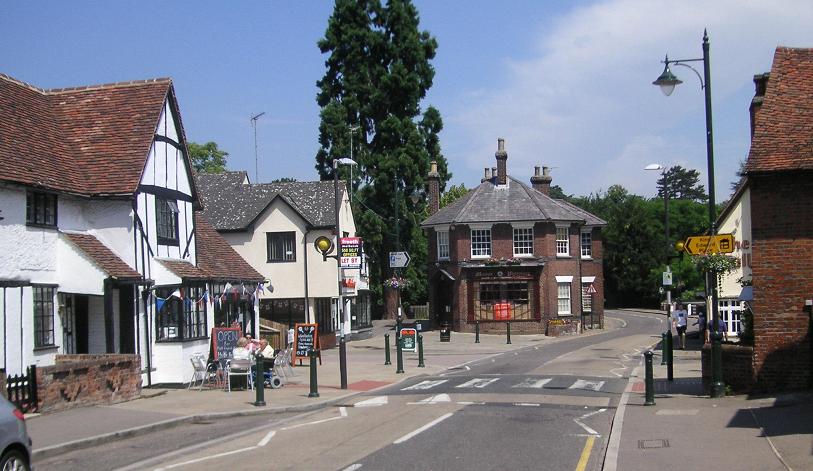
Wheathampstead is a village and civil parish north of St Albans on the River Lea in Hertfordshire, known for riverside walks, historic sites, conservation areas and an active local community.
Overview
Wheathampstead is a village and civil parish located just north of St Albans and within the City and District of St Albans, in the county of Hertfordshire. The settlement lies on the banks of the River Lea, a tributary of the Thames, and functions today as a residential centre that retains a pronounced village character while being within commuting distance of larger towns and London. The recorded population at the time of the 2001 census was 6,058.
Image gallery
10 Images


History and archaeology
Evidence of long-term human activity in and around Wheathampstead reflects its riverside location. Archaeological finds, earthworks and historic field patterns indicate occupation across multiple periods, from prehistory through medieval times to the modern era. The historic core contains buildings and features that reflect agricultural origins and the later diversification of the local economy.
Governance and administration
The village is administered at the local level as a civil parish and forms part of the City and District of St Albans for district services. For national parliamentary elections Wheathampstead is within the constituency of Hitchin and Harpenden. Local council and parish documents provide information on planning, conservation and community services.
Geography and environment
Set in the Lea valley, Wheathampstead benefits from riverside meadows, mature trees and a network of public footpaths. These green corridors support wildlife and provide opportunities for walking, birdwatching and informal recreation. Parts of the village and surrounding landscape are covered by conservation designations that aim to protect historic character and local biodiversity.
Amenities, culture and community
The village offers a mix of shops, pubs, community facilities, churches and primary education provision typical of an English village of its size. Community groups, local history societies and voluntary organisations are active in maintaining village events and heritage projects. Visitors and residents are drawn to riverside walks, village festivals and the small-scale independent retail and food outlets in the centre.
Transport and economy
Wheathampstead has good road links to nearby towns and the surrounding region; public transport and rail services are accessed from neighbouring centres. The local economy is largely service- and retail-oriented, supplemented by professional, craft and home-based enterprises. Many residents commute to larger employment centres while contributing to a diverse village economy.
Landmarks and recreation
Historic buildings, open green spaces and riverfront paths form the focus for recreation. Nearby archaeological sites and earthworks add cultural interest for visitors and residents. Information on the river and local walks can be found through resources about the River Lea and local authority guidance held by the district and parish.
Further information
- Local governance and parish services: see the civil parish page linked above (civil parish).
- Context within the wider county and district: see pages for Hertfordshire and St Albans.
- Population and official records: historical figures such as those from the 2001 census are available from national statistics and local archives.
Wheathampstead remains a community appreciated for its mix of historic interest, countryside access and village amenities, offering a base for residents and a destination for day visitors exploring the Lea valley and Hertfordshire countryside.
Questions and answers
Q: Where is Wheathampstead located?
A: Wheathampstead is located north of St Albans, in Hertfordshire.
Q: What is the administrative division that Wheathampstead is a part of?
A: Wheathampstead is a part of the City and District of St Albans.
Q: What is the parliamentary constituency of Wheathampstead?
A: The parliamentary constituency of Wheathampstead is Hitchin and Harpenden.
Q: What river runs through Wheathampstead?
A: The River Lea, a tributary of the Thames, runs through Wheathampstead.
Q: What was the population of Wheathampstead during the 2001 census?
A: The population of Wheathampstead during the 2001 census was 6,058.
Q: Is Wheathampstead only a village or does it have civil parish status as well?
A: Wheathampstead is both a village and has civil parish status.
Q: Is Wheathampstead located to the south of St Albans?
A: No, Wheathampstead is located to the north of St Albans.
Related articles
Author
AlegsaOnline.com Wheathampstead, Hertfordshire Leandro Alegsa
URL: https://en.alegsaonline.com/art/107697
Sources
- neighbourhood.statistics.gov.uk : Wheathampstead.
- wheathampstead.net : The history of St. Helen's Church