
Weizmann Institute of Science
A leading Israeli public research institute in Rehovot focused on basic sciences, graduate training, and technology transfer, named for chemist and statesman Chaim Weizmann.
The Weizmann Institute of Science is an internationally recognized center for basic scientific research and graduate education located in Rehovot, Israel. Its Hebrew name is shown here: מכון ויצמן למדע. The institute functions as a public research university devoted primarily to advanced studies in the natural and exact sciences; it combines laboratory research, graduate training and efforts to translate discoveries into practical applications. A concise description is available via institutional summaries.
Image gallery
10 Images




Research focus and academic structure
The institute emphasizes fundamental research in fields such as molecular biology, biochemistry, chemistry, physics, mathematics and computer science. Its programs are organized around interdisciplinary faculty groups and dedicated research departments. Graduate students pursue MSc and PhD degrees under faculty supervision and participate in collaborative projects that often cross traditional disciplinary boundaries. General information on the institute's scientific mission can be found at science overview.
History and development
Founded in the 20th century as an evolving research entity, the institute grew from earlier scientific initiatives and was renamed to honor Chaim Weizmann, a noted chemist and the first president of Israel. Over decades it expanded its labs, graduate school and international collaborations, shaping a reputation for curiosity-driven inquiry and long-term investment in fundamental problems. For more on its historical role and milestones see historical resources.
Campus, architecture and public engagement
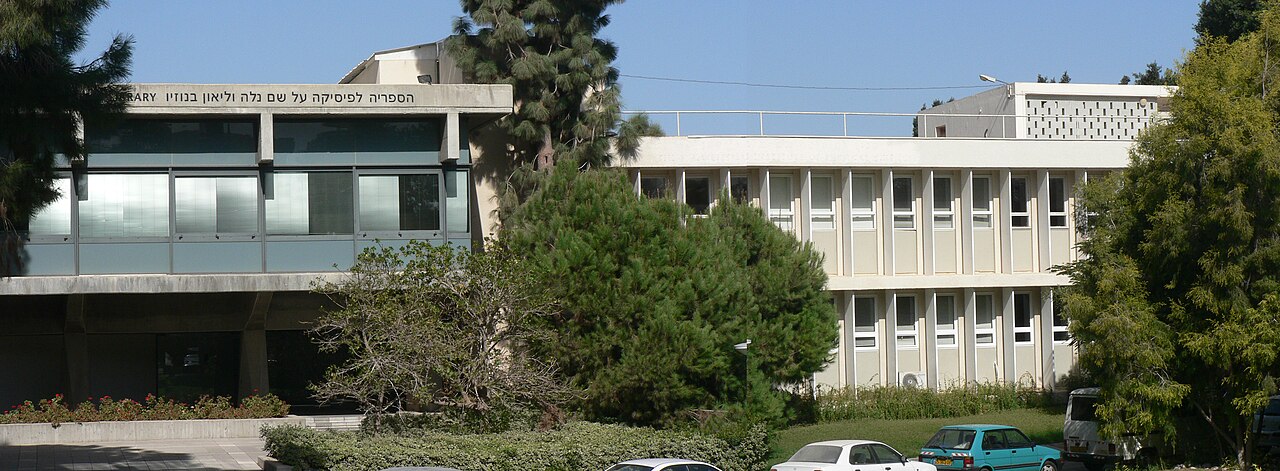
Located in Rehovot, the campus blends laboratory complexes, lecture facilities and public outreach venues. The grounds include research institutes, a graduate school and museums or preserved houses associated with the institute's founders. Outreach programs connect the scientific community with schools, visitors and industry partners.
Notable achievements and technology transfer
The Weizmann Institute has produced influential scientific contributions and alumni who hold leadership roles in academia and industry. It hosts Nobel laureates among its alumni and faculty and supports commercialization of research through a dedicated technology-transfer company. These efforts help move discoveries from laboratory benches toward medical, agricultural and technological applications.
Importance and distinctions
- Strong emphasis on basic research that underpins later applied advances.
- Compact, graduate-focused student body enabling close faculty mentorship.
- Active partnerships with academic centers, industry and public institutions.
Taken together, the Weizmann Institute of Science is best known for its combination of high-level fundamental research, graduate training and a culture that encourages long-range scientific exploration while supporting pathways to practical impact.
Related articles
Author
AlegsaOnline.com Weizmann Institute of Science Leandro Alegsa
URL: https://en.alegsaonline.com/art/107177