
Watson Lake, Yukon
Watson Lake is a small town in southeastern Yukon on the Alaska Highway near the British Columbia border. It functions as a regional service centre for forestry and mining and is known for the Sign Post Forest.
Overview
Watson Lake is a town in the southeast corner of the Canadian territory of Yukon, located on Yukon Highway 1, the portion of the Alaska Highway that crosses the territory. It lies just north of the border with British Columbia and serves as a convenient stopping point for travellers heading to and from the Lower 48 and the Yukon interior. The town is accessible year-round by road and by a local airstrip that supports small aircraft and medevac services.
Image gallery
8 Images




History
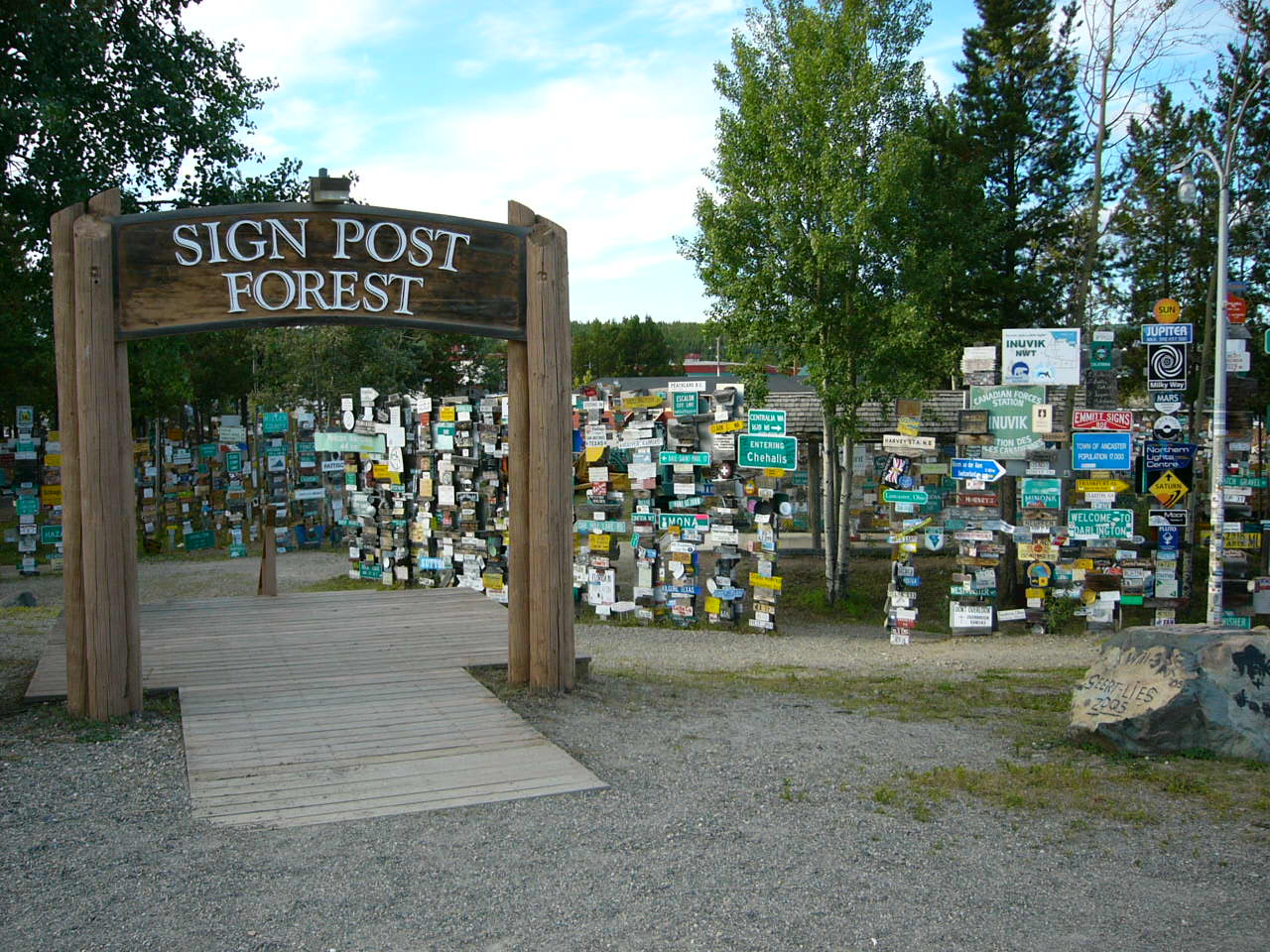
The modern settlement grew during the construction of the Alaska Highway in 1942, when military personnel and civilian workers established camps and support facilities in the area. One of the town's best-known historical and cultural legacies is the Sign Post Forest, begun by a distraught U.S. soldier who erected a sign showing the direction and distance to his hometown; over decades visitors have added thousands of signs from around the world, making it a distinctive roadside attraction.
Economy and services
Watson Lake functions as a regional service centre for the surrounding rural and resource areas. It supports local industries, notably forestry, and provides services for nearby mining operations, including fuel, equipment maintenance, lodging and catering. The town contains basic commercial services such as grocery and hardware outlets, vehicle repair, a health clinic, schools, and municipal administration. Seasonal tourist trade on the Alaska Highway also contributes to the local economy.
Transport and connections
The Alaska Highway brings significant tourist and freight traffic through Watson Lake during the warmer months. Local roads connect to surrounding communities and recreational areas; bus and charter services link the town with other Yukon centres on a seasonal basis. The transport role of the town is important for resupply and emergency services across this part of the territory.
Climate and environment
The area around Watson Lake is dominated by boreal forest and a subarctic climate: long, cold winters with deep snow and short, mild summers. The landscape offers access to lakes, rivers and forested tracts that support fishing, hunting and wildlife viewing. Local management of timber resources and land-use planning are ongoing considerations for residents and industry alike.
Culture, recreation and attractions
Besides the Sign Post Forest, visitors to Watson Lake can explore interpretive displays about highway history, local heritage and First Nations culture in the region. Outdoor recreation—fishing, boating, hiking and winter activities such as snowmobiling—attracts both locals and visitors. Community events and seasonal festivals provide cultural life for the town's residents and showcase regional traditions.
Governance and community
Watson Lake is governed by a municipal council responsible for local services, infrastructure and community planning. The population is small—roughly in the hundreds according to recent counts—and residents rely on a mix of municipal, territorial and federal programs for health, education and social services. The town acts as a practical hub for the surrounding rural population and transient workers in resource industries.
Related articles
Author
AlegsaOnline.com Watson Lake, Yukon Leandro Alegsa
URL: https://en.alegsaonline.com/art/106888