
Washbrook, Suffolk (village in England)
Washbrook is a small rural village in Suffolk, England, noted for its parish church of St Mary and for its long agricultural history. The village retains a mainly rural character close to Ipswich.
Washbrook is a small village in the English county of Suffolk. It is a rural settlement with historic roots and a compact village core centered on the parish church and surrounding farmland. Like many Suffolk villages, it retains a village character rather than suburban development.
Image gallery
1 Image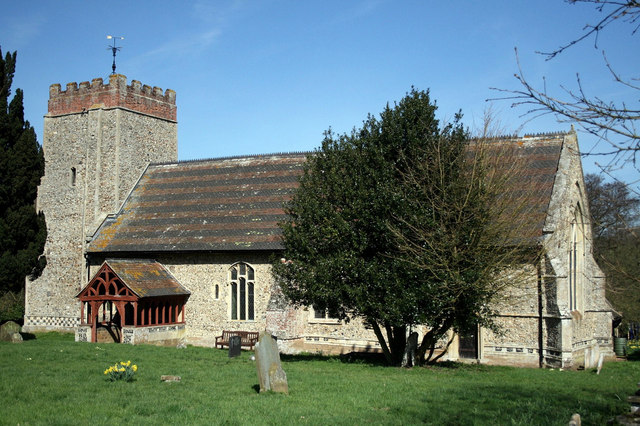
Overview
The village is primarily agricultural in character and historically formed around small farms, lanes and a watercourse or brook that likely inspired its name. Local housing consists of older cottages, farm buildings and a modest number of more recent residences. Community life has traditionally revolved around the church and nearby villages and market towns.
Churches and notable buildings
The parish church is dedicated to St Mary and serves as the principal historic and religious landmark. St Mary's reflects the long-established pattern of parish churches in rural East Anglia and is the focus for services and community events. Historical evidence indicates that the parish once contained another church or chapel; its dedication is not recorded in surviving sources and its location is known mainly from old documents and local tradition.
History and name
The name "Washbrook" refers to a brook or watercourse and likely describes a place where water, land and small-scale agriculture met. Settlement in the area dates back to the medieval period, when small hamlets and parishes formed the social and economic units of the countryside. Over the centuries, the village economy has been shaped by farming and by links with larger nearby towns.
Present day and significance
Today Washbrook remains a quiet village valued for its rural setting and historic church. Residents typically rely on nearby towns for shops, schools and services while preserving local traditions and countryside activities. The village illustrates the pattern of many small English rural communities where ecclesiastical, agricultural and local networks have defined continuity over centuries.
- Key landmark: St Mary’s Church
- Character: small, rural, agricultural surroundings
- Historical note: evidence of a second, now-lost church in the parish
For more local details and historical records consult county histories or local parish sources and archives.
Related articles
Author
AlegsaOnline.com Washbrook, Suffolk (village in England) Leandro Alegsa
URL: https://en.alegsaonline.com/art/106662
Sources
- suffolkchurches.co.uk : "Suffolk Churches"
- visitchurches.org.uk : "Our churches - The Churches Conservation Trust"
- suffolkchurches.co.uk : "Suffolk Churches"