
Vought F7U Cutlass — carrier-based tailless jet of the early Cold War
The Vought F7U Cutlass was a distinctive tailless, twin‑engine U.S. Navy carrier fighter of the early Cold War, noted for innovative design, engine problems, a short service life and limited use by the Blue Angels.
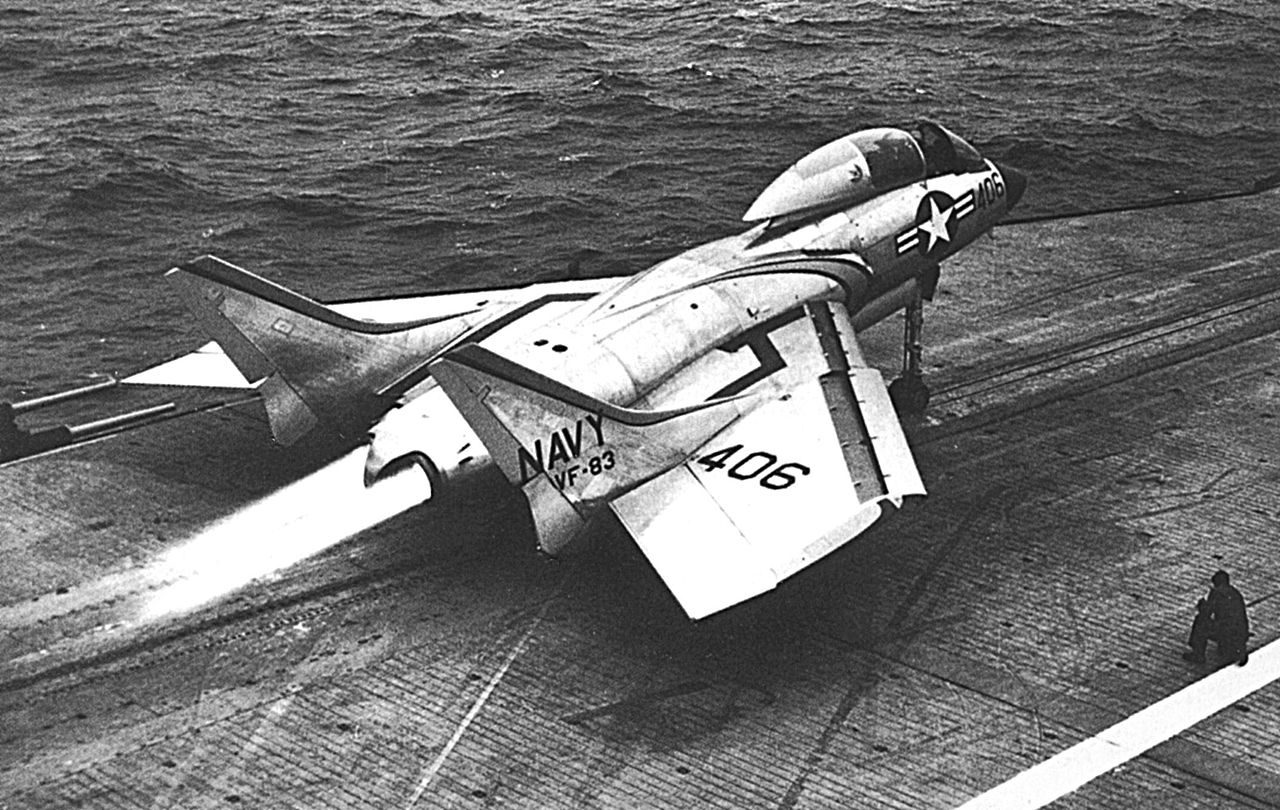
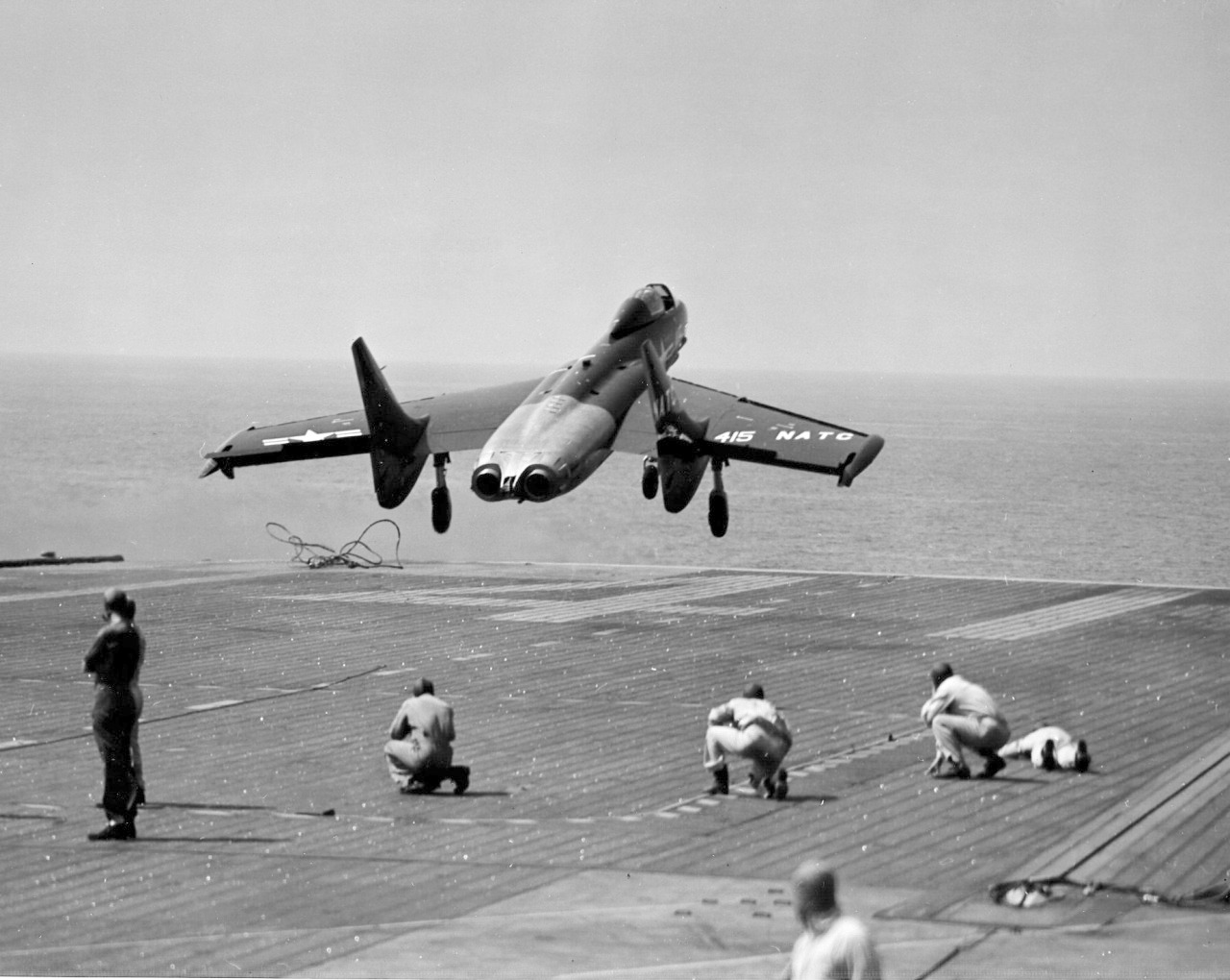
The Vought F7U Cutlass was an experimental-looking, carrier-capable fighter developed for the U.S. Navy in the late 1940s and operated in the early Cold War era. Designed by Chance Vought, the type pursued unusual aerodynamics for the time: a tailless, swept-wing planform and twin engines intended to produce high speed in a compact airframe. In service it was classified as a navalized fighter aircraft and deployed from American carriers during a period of rapid transition from piston fighters to jets.
Image gallery
9 Images




Design and characteristics
The Cutlass combined several novel features for the era. Its wing and fuselage blended into a tailless layout, with mid-mounted swept wings and small vertical fins. Twin turbojet engines and a tricycle landing gear suited carrier operations on paper, but the configuration imposed demanding handling traits. Pilots reported sensitive controls at low speed and a need for careful approach technique. Structural and powerplant aspects were also distinctive: the airframe emphasized streamlining and the engines were intended to deliver strong acceleration for interception missions.
- Layout: tailless, swept-wing design with twin engines.
- Role: carrier-based fighter/interceptor and limited reconnaissance.
- Notable traits: advanced but maintenance-intensive systems and high landing speeds for carrier decks.
- Variants: a photographic reconnaissance version was produced.
Development, service and operational issues
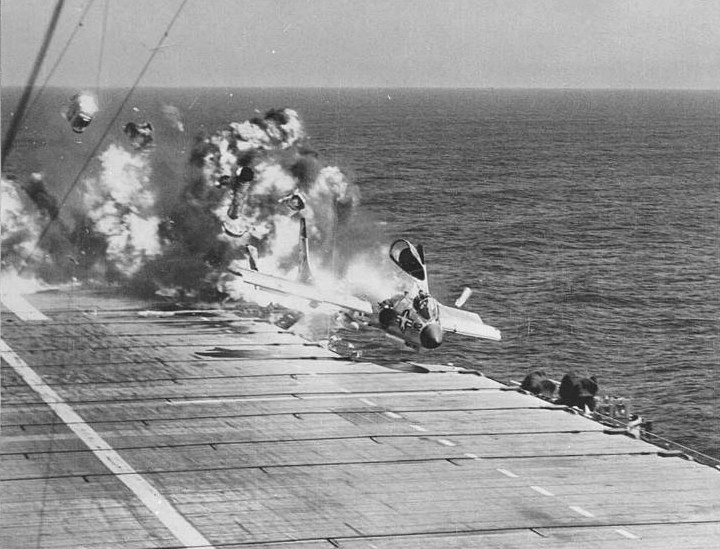
The Cutlass entered fleet service during the early Cold War period, when navies were rapidly adopting jet power and experimenting with airframe forms. Although the concept promised performance advantages, the program encountered recurring engine unreliability and maintenance difficulties that reduced availability. Those technical problems, combined with demanding handling at low speeds, contributed to a relatively short frontline career and a reputation for being troublesome to operate from carriers. The type was not exported and remained a U.S. Navy-only platform.
Uses, variants and legacy
Beyond its fighter role, a reconnaissance-modified version — commonly referred to by the designation F7U-3P — carried cameras and equipment for photographic missions. The Cutlass also made a cultural imprint when it was evaluated by the Navy flight demonstration team; the Blue Angels briefly flew the model in 1953 before returning to other aircraft due to its operational limitations. Despite its problems, the Cutlass is remembered as an ambitious step in post‑war naval aviation, illustrating the challenges of converting novel aerodynamic ideas into reliable carrier aircraft.
For further details on operational history, technical data and surviving examples in museums, see dedicated summaries and archives that document early Navy jet experimentation and the Cutlass program in particular. Additional contemporary context about carrier operations in the jet age can be found in more general Cold War naval aviation sources and studies of early jet engine development. Cold War context and carrier practice are central to understanding its service record. For carrier deployment specifics see carrier operations. The reconnaissance conversion is discussed in sources on naval photo‑reconnaissance: F7U-3P variant. The Blue Angels evaluation in 1953 is noted in squadron histories: Blue Angels 1953.
Author
AlegsaOnline.com Vought F7U Cutlass — carrier-based tailless jet of the early Cold War Leandro Alegsa
URL: https://en.alegsaonline.com/art/105949