
Vexilloid: ancient standards and flag-like emblems
A vexilloid is a flag-like standard used by traditional societies and premodern states; it combines a staff, a hanging banner and a finial emblem to identify groups, rulers or units.
Overview: A vexilloid is a type of standard that performs many of the same social, military and ceremonial functions as a modern flag, but differs in form and mounting. Rather than a rectangular cloth flown from a halyard, a vexilloid typically combines a vertical staff, a pendulous banner or hanging element, and a distinctive finial or emblem fixed to the top. Vexilloids are characteristic of many traditional societies and ancient polities, where they served as visible symbols of authority and group identity ancient polities.
Image gallery
1 Image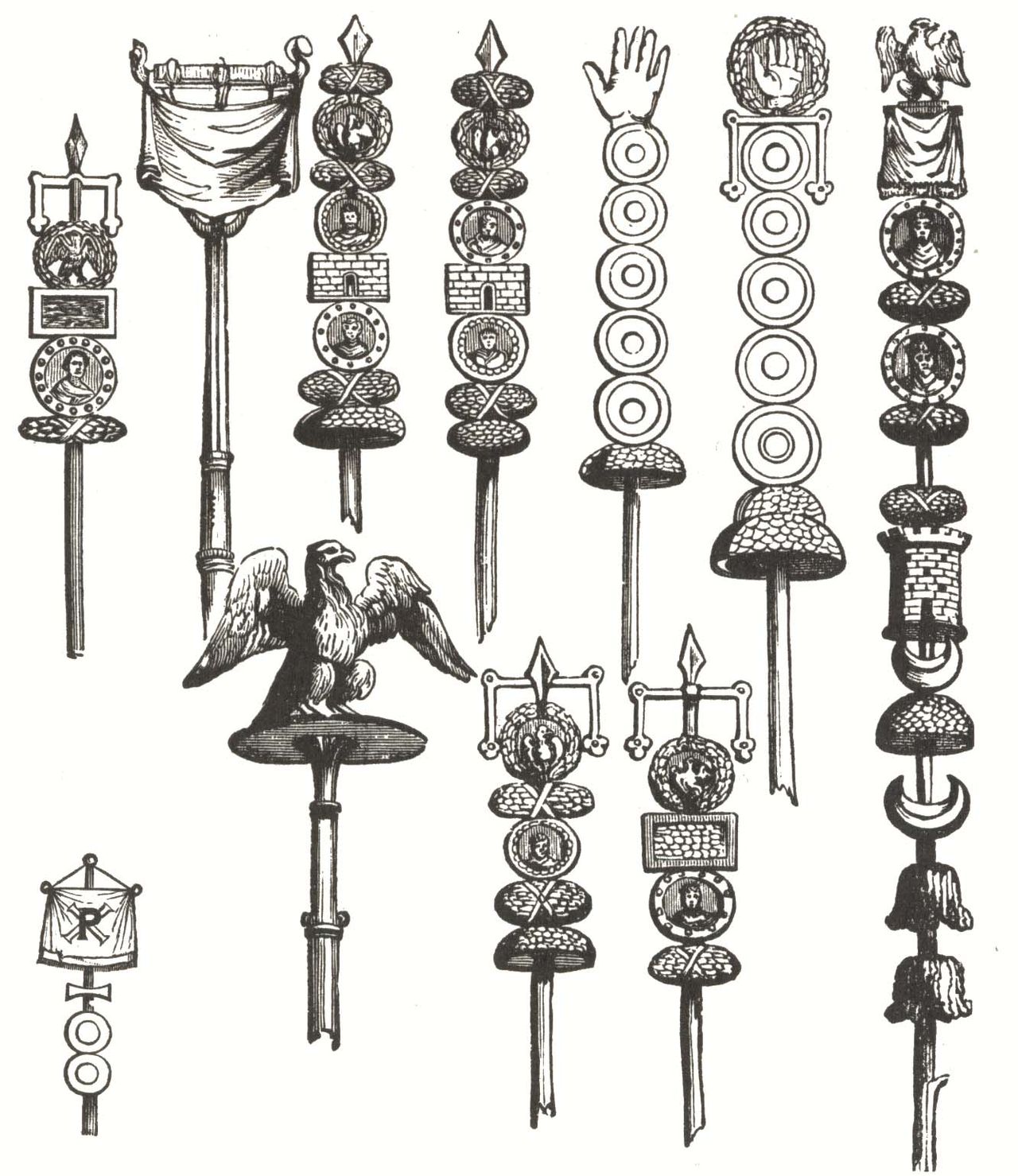
Characteristics and parts
Most vexilloids share several recognisable components. The staff or pole may be carried, planted temporarily, or mounted for display; staffs could be simple wooden poles or elaborately carved shafts. The hanging banner is often a rectangular or tapering piece of cloth, leather or woven material that droops or is supported by a crosspiece. Many designs include a cross-arm or short horizontal yard from which the cloth is suspended. The finial or emblem at the top — sometimes a carved figure, animal motif or religious symbol — serves as an identifying focal point, visible above the crowd or battlefield finial and emblem.
Origins and historical development
Vexilloids appear in archaeological remains and textual descriptions across continents. In ancient Egypt, Mesopotamia and other early states, signs and standards were used in ritual and military contexts. Classical Rome distinguished types of standards for legions and cavalry, and steppe and Central Asian peoples used horse-tail and tufted standards that functioned in a comparable way. In medieval and later periods, the pendulous banner form influenced the development of gonfalons, banners and pennons used in civic, religious and military ceremonies.
Uses and examples
Functionally, vexilloids marked allegiance, identified leaders, directed troops and symbolised authority, divine patronage or lineage. In warfare a standard could act as a rallying point; its loss or capture often carried significant symbolic weight. In ritual processions and state occasions, vexilloids announced rank and office and embodied collective memory. Variants are found among tribal groups, nomadic confederations and organized states, each adapting materials and imagery to local traditions.
Design variations and legacy
Designs vary widely: some finials are anthropomorphic or zoomorphic, others abstract or heraldic; banners may be painted, embroidered or woven with distinctive patterns. The visual language of vexilloids influenced heraldry and later flag traditions: many modern ceremonial standards and unit colours owe elements of form and symbolism to older vexilloid practice. Today, ceremonial standards survive in military parades, state pageantry and cultural reenactment, preserving a direct link to the premodern role of the standard as a concentrated symbol of identity and authority.
For further general background see discussions of the history of banners and standards and the relationship between early vexilloids and later flags; these topics are covered in broader treatments of symbols and insignia used by states and societies flag histories, early visual culture ancient polities and material emblem studies finial forms.
Author
AlegsaOnline.com Vexilloid: ancient standards and flag-like emblems Leandro Alegsa
URL: https://en.alegsaonline.com/art/104818