
Bench press
A bench press is a strength-training exercise in which a lifter presses a barbell or dumbbells upward from a bench, primarily working the chest, shoulders, and triceps.
The bench press is a classic weight-training exercise performed by lying on a bench and pressing a weight upward from the chest. It is commonly used to build upper-body strength and size, especially in the chest, shoulders, and arms. The movement is a staple in gyms, bodybuilding programs, and competitive strength sports because it is simple to learn in basic form, yet it can be trained in many ways to suit different goals.
In the standard version, the lifter lowers a barbell or pair of dumbbells to the chest and then presses the weight back to the start position with control. The main muscles involved are the pectorals, or chest muscles, along with the front deltoids and triceps. Other muscles, including the upper back, forearms, and core, help stabilize the body and guide the bar path. A smooth descent, steady wrists, and controlled breathing are important parts of safe technique.
Image gallery
3 Images
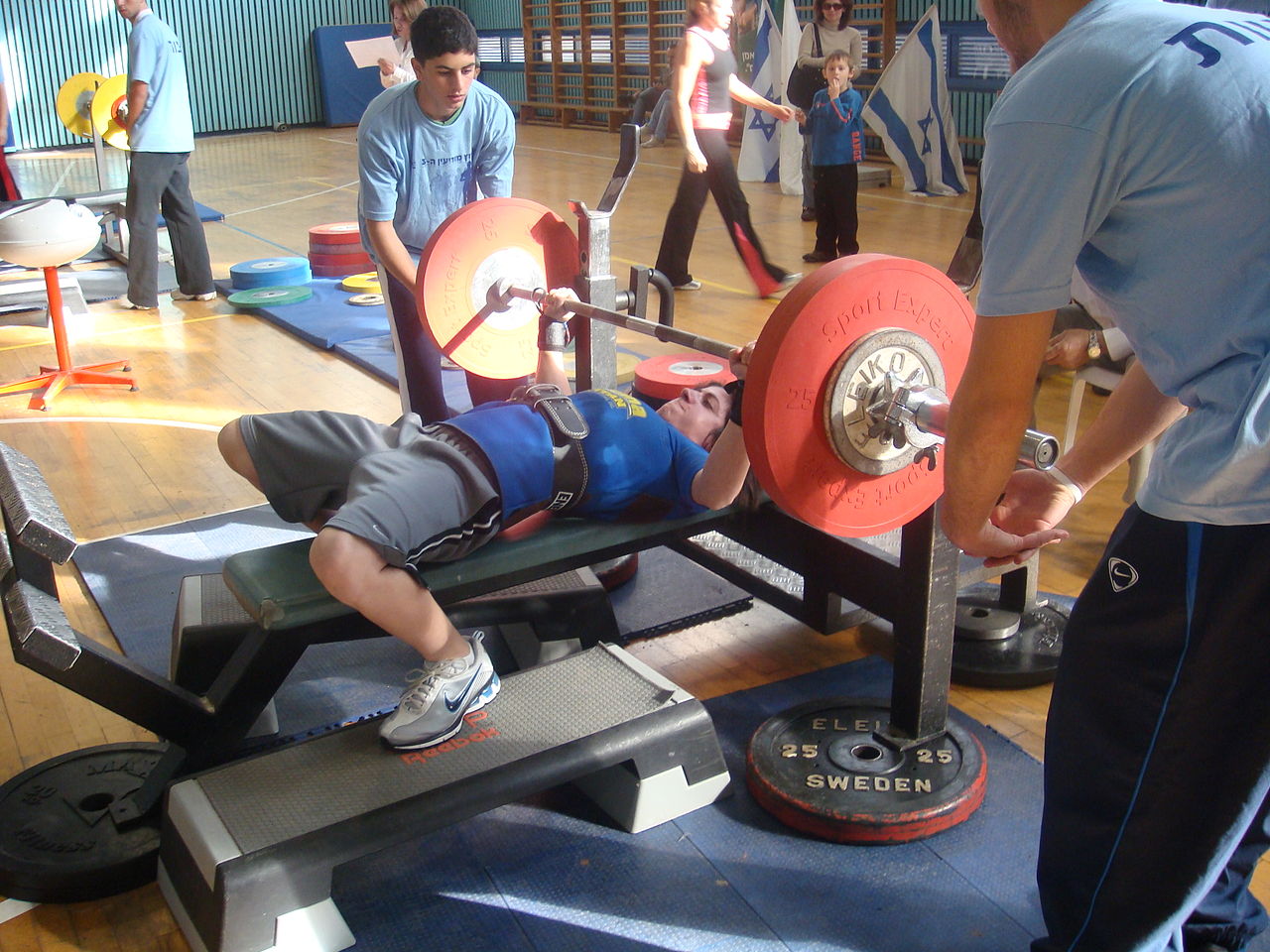

Technique and body position
Good bench press form keeps the shoulders stable, the feet planted, and the spine in a natural position. Many lifters use a slight arch in the lower back and drive through the legs to improve stability, but excessive arching or lifting the hips can shift stress away from the chest and place more strain on the lower back. The bar should move under control, usually to the lower or middle chest, before being pressed upward along a consistent path. Because the weight is above the face and chest, many people use a spotter or safety arms when lifting heavy loads.
Common variations
The bench press can be adapted to target the upper body in different ways:
- Barbell bench press: the most widely used version for strength training.
- Dumbbell bench press: allows a slightly freer range of motion and requires more balance.
- Incline bench press: places more emphasis on the upper chest and shoulders.
- Decline bench press: changes the pressing angle and is used less often in general training.
- Close-grip bench press: shifts more work toward the triceps.
These variations are chosen for different training goals, whether the aim is muscle growth, maximal strength, or balanced upper-body development. In powerlifting, the bench press is one of the three competition lifts, alongside the squat and deadlift. In that context, lifters often train it with strict rules about body contact, pause, and bar control.
Safety and practical importance
Although the bench press is widely practiced, it can cause injury if loads are too heavy or technique breaks down. Common problems include flared elbows, unstable shoulder position, bouncing the bar off the chest, and forcing the hips off the bench. Proper warm-up, gradual progression, and reliable spotting are standard safety measures. When performed well, the bench press remains one of the most useful exercises for developing pressing strength and measuring upper-body progress.
Related articles
Author
AlegsaOnline.com Bench press Leandro Alegsa
URL: https://en.alegsaonline.com/art/10467