
Växjö Municipality (Växjö kommun), Kronoberg County, Sweden
Växjö Municipality is a local government area in Kronoberg County, southern Sweden, centered on the city of Växjö. It combines urban, rural and lake landscapes and is noted for education and sustainability.
Växjö Municipality is a municipal authority in southern Sweden whose administrative centre is the city of Växjö. It lies within Kronoberg County and is part of the historical province of Småland. The area includes a mixture of urban neighbourhoods, small towns and extensive forested and lake-rich countryside, giving the municipality a combination of municipal services and large areas of natural landscape.
Image gallery
3 Images
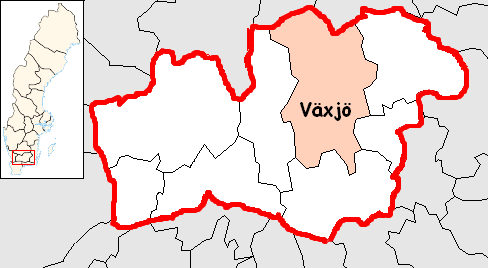

Functions and structure
As a Swedish municipality, Växjö is responsible for local services such as schooling, social care, land use planning, and local infrastructure. The municipal council (kommunfullmäktige) sets budgets and policies, while administration is carried out by municipal departments. The municipality contains both denser urban districts centred on the city and numerous rural settlements and lakeshore communities.
History and identity
The present municipality grew through the nationwide municipal reforms of the 20th century and incorporates communities with medieval and early-modern roots. Växjö's role as a regional centre developed around trade, administration and the cathedral; local history is visible in architectural landmarks and museum collections. The official Swedish name is Växjö kommun.
Economy, education and culture
Växjö hosts higher education and research institutions which influence the local economy, alongside manufacturing, forestry-related businesses and services. Cultural life includes museums, theatres and sporting clubs; for example, the city's ice hockey team is a prominent local institution. The municipality supports cultural events and maintains public parks and facilities.
Environment and recreation
Växjö is known for close links between town and nature: lakes, walking trails and forests are widely accessible and important for recreation. The local government has been noted for long-term environmental planning and efforts to reduce fossil fuel use and improve energy efficiency; these policies have attracted attention within Europe for municipal climate action and sustainable urban development.
Visiting and practical information
- Key landmarks include the cathedral area and county museums.
- Outdoor activities focus on boating, hiking and winter sports around lakes and forests.
- More local details, administration contacts and services can be found via the municipal information pages and regional portals: see the municipal site and regional resources for visitors and residents (southern Sweden overview).
For maps, governance documents and statistical summaries consult official municipal resources and regional authorities; relevant links are provided on local information sites and county webpages (Växjö kommun, municipal pages, and county portals).
Related articles
Author
AlegsaOnline.com Växjö Municipality (Växjö kommun), Kronoberg County, Sweden Leandro Alegsa
URL: https://en.alegsaonline.com/art/104422
Sources
- scb.se : "Statistiska centralbyrån den 1 januari 2010"
- scb.se : "SCB, Befolkningsstatistik 30 juni 2012"