
Vattenfall Cyclassics — the Hamburg one-day professional road race
Annual professional one-day road race held on city streets of Hamburg, Germany. Noted for repeated climbs of the Waseberg, a long urban circuit, large amateur 'Jedermann' rides and UCI World Cup/ProTour status.
Overview
The Vattenfall Cyclassics is an annual professional road cycling race held on the streets of Hamburg in Germany. First run in 1996, the event grew quickly into one of Germany's best-known one-day races. Its course combines long open roads with multiple laps inside the city, producing a mix of endurance and tactical racing that favours strong all-rounders and aggressive breakaway specialists.
Image gallery
9 Images


Course and characteristics
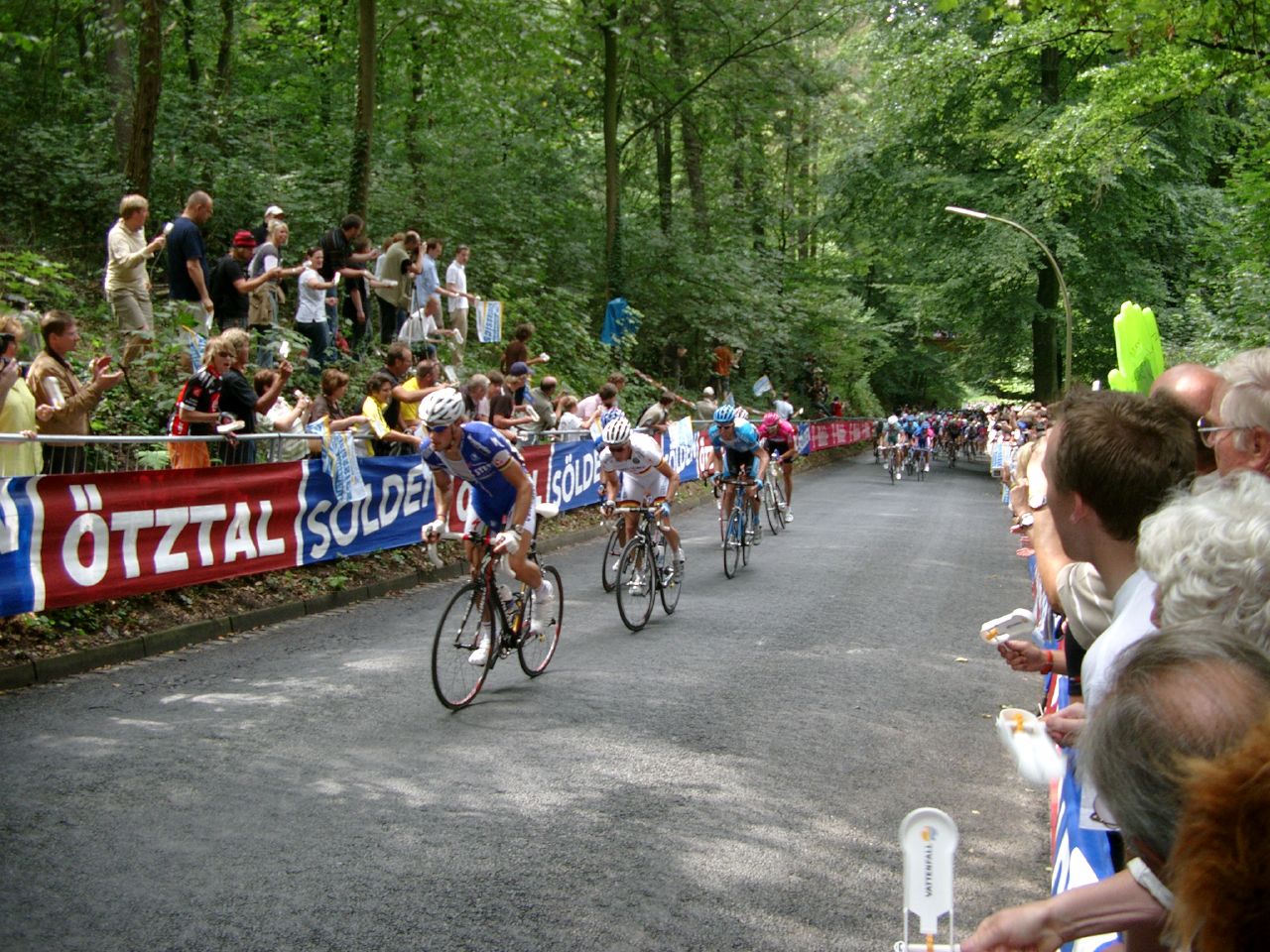
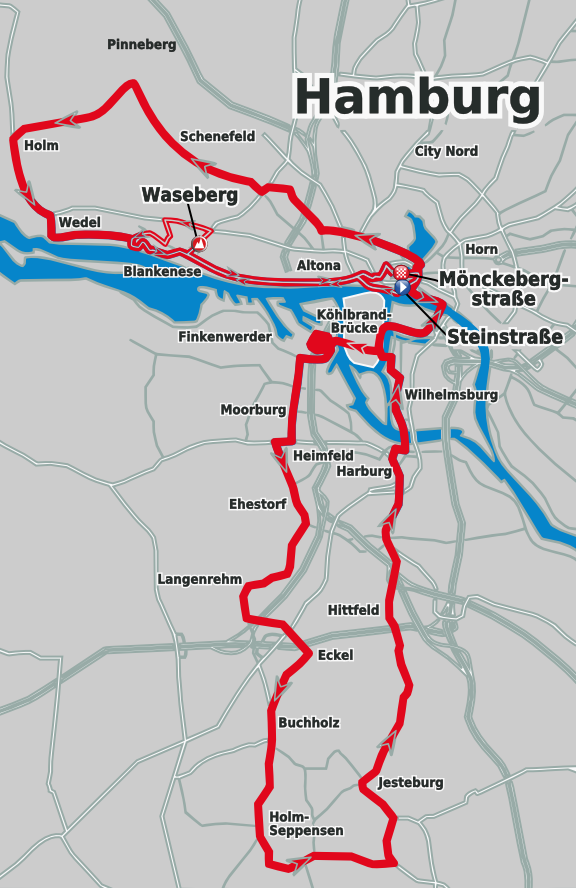
The exact route varies year to year, but the full professional race is typically around 250 km. Organisers design a course that starts and finishes in Hamburg and includes repeated passages over characteristic features such as the Waseberg, a short but sharp climb frequently used to select contenders, and the Köhlbrandbrücke, the city's high bridge that presents exposed, windy conditions. Because of these selective features and circuit laps, the race often breaks up into smaller groups rather than ending in a large mass sprint.
History and organisation
Although it began as a relatively modest event in 1996, rising interest in cycling across Germany led to rapid elevation of the Cyclassics. It joined the UCI Road World Cup in 1998, placing it among the sport's prominent one-day races, and later became part of the UCI ProTour series in 2005, increasing its international profile and drawing top professional teams. The race's name reflects its principal sponsor history: originally backed by the local utility HEW (Hamburgische Electricitäts-Werke), it was rebranded after that sponsor became part of the Vattenfall group and has been promoted as the Vattenfall Cyclassics since 2006. The event is organised to combine professional competition with a large public festival atmosphere.
Amateur participation and related events
A distinctive aspect of the Cyclassics is its large amateur programme, often referred to as "Jedermann" races, which allow non-professional cyclists to ride on substantial sections of the official course earlier in the day. Typical distances offered to mass participants include:
- 55 km — a short, accessible tour
- 100 km — a medium-distance sportive
- 155 km — the longest amateur route that mirrors significant parts of the pro course
These mass-participation events attract thousands of riders: in 2005, around 20,000 amateurs took part on the course, illustrating the race's broad public appeal and its role as a major cycling festival for both competitors and spectators. Registration for the Jedermann races often fills months in advance.
Significance and notable features
The Vattenfall Cyclassics serves multiple roles in the cycling calendar. As a professional contest it offers valuable ranking points and a high-profile chance for riders to win a major one-day race on German soil. For the host city and region it provides economic and cultural benefits by drawing spectators, teams, media and amateur cyclists. Sporting characteristics that distinguish the race include the repeated climbs of the Waseberg, the exposure on the Köhlbrandbrücke, and the urban circuit format that tests both tactical nous and sustained power rather than pure bunch-sprint speed.
Further information
For details on course maps, entry procedures for amateur riders and historical results, consult official and governing-body sources. The race's organisational partners and governing classification are listed by international cycling authorities and the event's promotional pages; see the professional calendar entry and the event website for up-to-date schedules and registration links: UCI ProTour/Calendar, event and registration information.
Questions and answers
Q: What is the Vattenfall Cyclassics?
A: The Vattenfall Cyclassics is a cycling race held every year in Hamburg, Germany.
Q: When did the Vattenfall Cyclassics become a part of the UCI Road World Cup?
A: The Vattenfall Cyclassics became a part of the UCI Road World Cup in 1998.
Q: What is the length of the route in the Vattenfall Cyclassics?
A: The route of the Vattenfall Cyclassics changes, but it is about 250 km long.
Q: Where do the cyclists race in the Vattenfall Cyclassics?
A: In the Vattenfall Cyclassics, the cyclists race through Hamburg, climbing the Waseberg hill several times and also racing over Hamburg's highest bridge Köhlbrandbrücke.
Q: Is there an amateur part in the Vattenfall Cyclassics?
A: Yes, there is an amateur part of the Vattenfall Cyclassics which is divided into three races over 55 km, 100 km, and 155 km.
Q: How can one take part in the amateur part of the Vattenfall Cyclassics?
A: Anyone with a ticket can take part in the amateur part of the Vattenfall Cyclassics, but tickets must be reserved months in advance.
Q: Who is the sponsor of the Vattenfall Cyclassics?
A: The sponsor of the Vattenfall Cyclassics is the Vattenfall company, which used to be known as the Hamburg Electrizität Werke (HEW).
Related articles
Author
AlegsaOnline.com Vattenfall Cyclassics — the Hamburg one-day professional road race Leandro Alegsa
URL: https://en.alegsaonline.com/art/104361