
Vasaloppet: Sweden's historic long-distance cross-country ski race
Vasaloppet is an annual 90 km cross-country ski race in Sweden from Sälen to Mora, first held in 1922 to commemorate Gustav Vasa. It is part of Worldloppet and takes place the first Sunday in March.
Overview
Vasaloppet is an annual long-distance cross-country skiing race held in Sweden. The main event covers roughly 90 kilometres and is traditionally staged on the first Sunday in March. It combines mass participation and elite competition and is widely regarded as one of the oldest and largest ski marathons in the world.
Image gallery
10 Images


Course and format
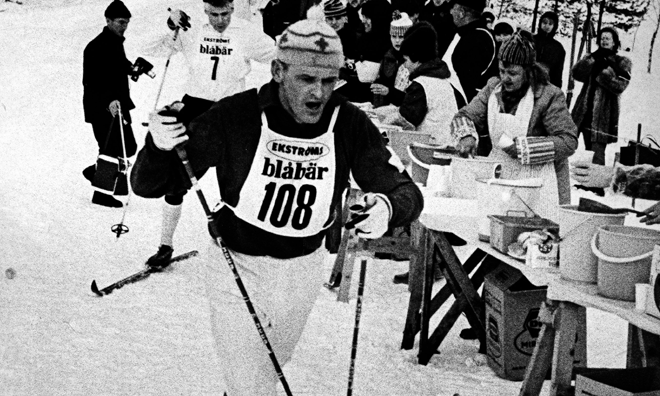
The classic route runs from Sälen to Mora, following a historic corridor of rolling terrain and prepared tracks. The race is held in classic technique and usually starts as a mass start, meaning thousands of skiers set off together. Support stations, timing checkpoints and safety teams are spaced along the course to assist participants of varying abilities.
- Distance: approximately 90 km (long-distance ski marathon)
- Start–finish: Sälen → Mora
- Style: traditional classical technique
- Typical date: first Sunday in March (timing)
History and origins
The inaugural race was staged in 1922 and was inspired by a 16th‑century episode connected to Gustav Vasa. The event was conceived both as a sporting challenge and as a living commemoration of those historic movements. Over the decades it grew from a small contest into a major national tradition.
Notable historical milestones include the prohibition of women competitors between 1924 and 1980, a restriction that reflected contemporary attitudes toward endurance sport and that was eventually abolished. A formally recognized women's award was introduced in 1997, marking progress toward equal acknowledgement in the race.
Significance, events and participation
Vasaloppet is a founding member of the Worldloppet series (international long-distance ski circuit) and typically draws elite athletes alongside recreational skiers. The week around the main race now includes shorter and age- or gender-specific races, making the festival accessible to a wide range of participants and contributing to its cultural and sporting importance in Sweden.
Related articles
Author
AlegsaOnline.com Vasaloppet: Sweden's historic long-distance cross-country ski race Leandro Alegsa
URL: https://en.alegsaonline.com/art/104297
Sources
- worldloppet.com : "Vasaloppet"