
Utsunomiya Line — JR East commuter rail from Ueno to Utsunomiya
The Utsunomiya Line is a JR East railway linking Ueno in Tokyo with Utsunomiya in Tochigi Prefecture. It serves as a major commuter corridor through Saitama and northern suburbs into Tochigi.
Overview
The Utsunomiya Line (宇都宮線, Utsunomiya-sen) is a conventional heavy-rail corridor in Japan operated by East Japan Railway Company (JR East). It runs northward from Ueno in the Tokyo area to Utsunomiya Station in Tochigi Prefecture, covering a route length of approximately 159.9 kilometres. The line functions as the southern portion of the historical Tōhoku Main Line within the Tokyo metropolitan region and provides frequent commuter and regional services between the capital and cities to the north.
Image gallery
2 Images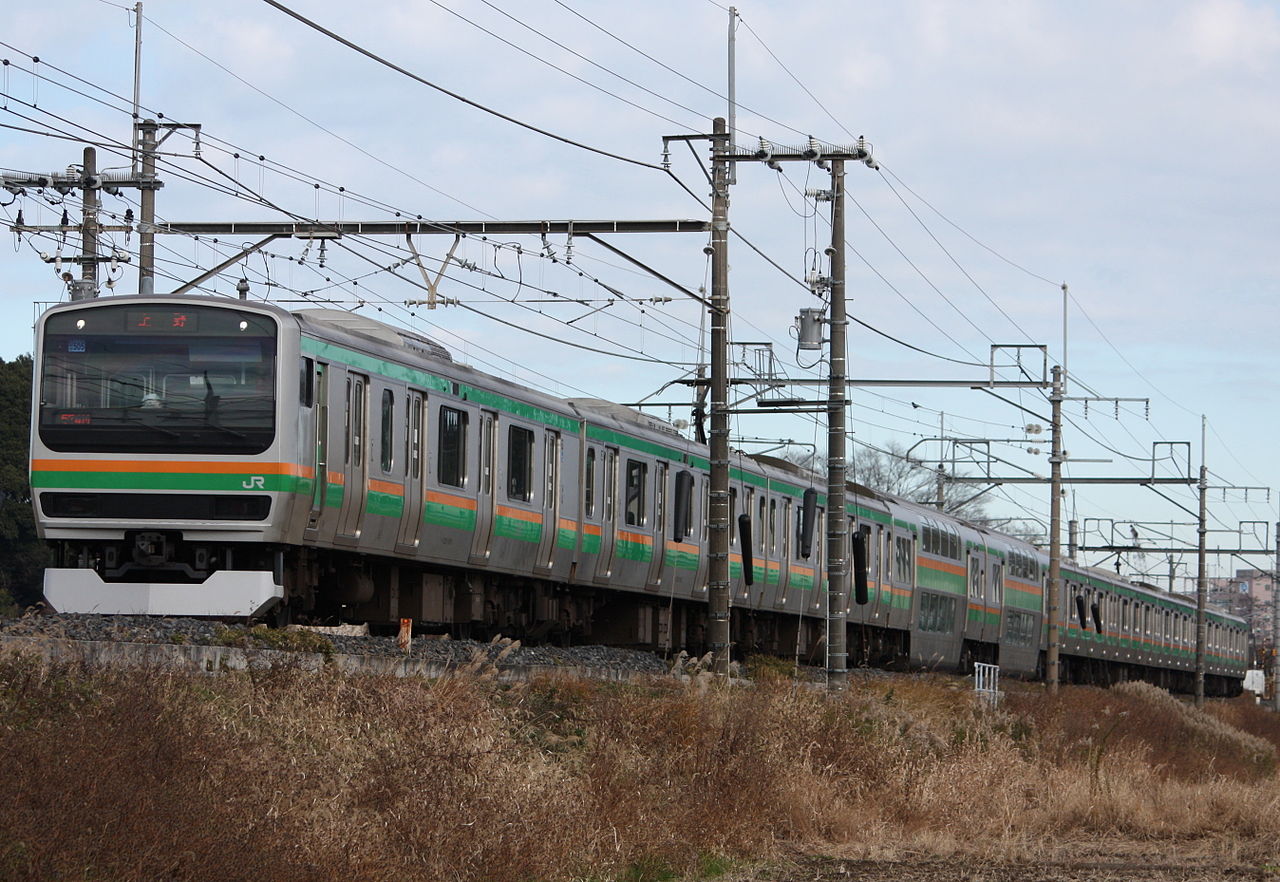

Route and services
The line crosses Saitama Prefecture diagonally from south to north and links many suburban and regional centres. Daytime service is frequent, with a mix of local and rapid trains that stop at major nodes and skip smaller stations. Typical journey times vary by service type; for longer runs beyond Utsunomiya the line continues toward stations such as Kuroiso, which can be reached from Ueno in roughly an hour and a half on certain through services. Connections to other rail networks are important: passengers can transfer to urban lines around central Tokyo, and high-speed Tōhoku Shinkansen services are accessible at Utsunomiya.
Major stations
- Ueno — Tokyo terminal and interchange with multiple urban lines
- Akabane — busy suburban interchange used by many commuters
- Urawa & Saitama-Shintoshin — important Saitama area stops
- Omiya — major rail hub north of central Tokyo
- Hasuda, Kuki, Koga — intermediate suburban stations
- Utsunomiya — prefectural capital and Shinkansen interchange
- Nasu-Shiobara, Kuroiso — northern regional termini and gateways
Rolling stock, livery and performance
Trains on the Utsunomiya Line are electric multiple units used for frequent-stop commuter service and longer rapid runs. A characteristic two-tone green-and-orange livery is associated with this corridor and resembles the appearance of neighboring routes such as the Takasaki Line. Standard operating speeds reach up to around 120 kilometres per hour on suitable track sections, allowing both commuter and regional schedules to be met efficiently.
History and development
The route traces its origins to the Tōhoku Main Line, which historically linked Tokyo with the northeastern prefectures. Over the decades the southern section was rebranded in daily usage as the Utsunomiya Line to reflect its role as a commuter trunk feeding Tokyo from northern suburbs and regional cities. Upgrades to signalling, rolling stock, and station facilities have focused on improving capacity, shortening travel times, and handling peak-period passenger flows.
Usage, importance and notable features
The Utsunomiya Line is a vital commuter artery for people living and working north of Tokyo. Trains are often crowded during weekday peaks, carrying students and office workers into central Tokyo and distributing commuters back into Saitama and Tochigi in the evening. Its reliable service pattern, multiple interchange points, and integration with wider JR East operations make it an essential component of the greater Tokyo area transport network. For further technical or timetable details consult the line operator's information pages and local station guides (operator, regional, commuter, stations).
Distinctions and related lines
While sharing visual and operational similarities with other suburban JR East routes, the Utsunomiya Line is distinguished by its role as the main rail link from Tokyo into central Tochigi. It complements adjacent services, provides through-running options at times, and interchanges with high-speed lines at key northern stations. Travelers should note differences between local and rapid services when planning journeys to avoid unintended stops or transfers.
Related articles
Author
AlegsaOnline.com Utsunomiya Line — JR East commuter rail from Ueno to Utsunomiya Leandro Alegsa
URL: https://en.alegsaonline.com/art/103749