
Utopia, Limited: The Flowers of Progress — Gilbert and Sullivan operetta
A comic operetta by Gilbert and Sullivan (1893), Utopia, Limited satirizes imperialism, government and corporations. It opened at the Savoy Theatre and ran for 245 performances.
Overview
Utopia, Limited, subtitled The Flowers of Progress, is a late comic operetta by the partnership of Gilbert and Sullivan. First produced in 1893, it is the thirteenth of the fourteen full-length stage works the two created together. The piece continues W. S. Gilbert's taste for topsy-turvy satire and Arthur Sullivan's increasingly rich orchestral writing, presenting a comic examination of political and commercial institutions of the late Victorian era.
Image gallery
10 Images


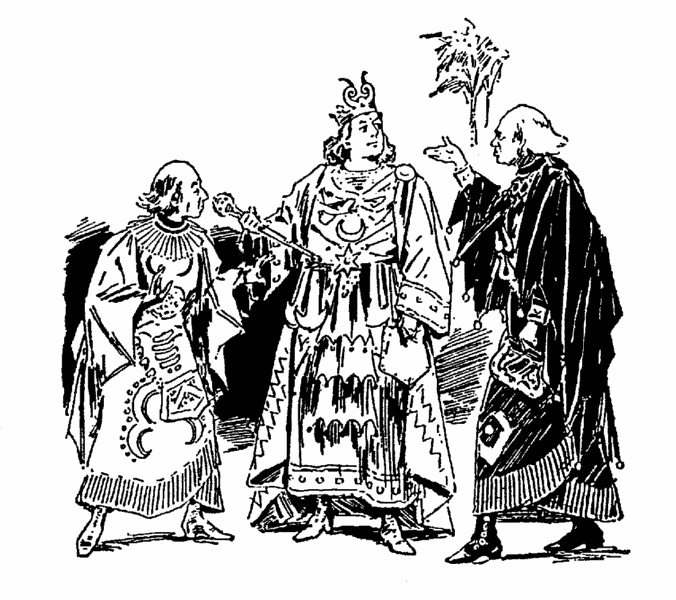
Composition and style
The score blends patter-like passages, ensemble numbers and lyrical solos characteristic of Sullivan's mature theatre music. Gilbert's libretto uses irony and inversion to lampoon formal institutions, combining pointed social commentary with broadly comic situations. The work requires a sizable cast and chorus and a production able to balance spoken dialogue with intricate musical numbers.
Plot elements and themes
Set on a fictional Pacific island, the story concerns the transformation of a native kingdom through the influence of British advisers and commercial ideas. Major themes include the parody of constitutional monarchy, the foibles of political reform, and the adoption—often uncritically—of business practices such as limited liability. The operetta explores how imported fashions of government and commerce create comic mismatches between ideals and practice.
Production history and reception
Utopia, Limited premiered at the Savoy Theatre on 7 October 1893 and ran for 245 performances. Contemporary critics and audiences were divided: some admired its ambition and Sullivan's score, while others found the satire too topical and its length excessive. Compared with earlier hits like H.M.S. Pinafore and The Mikado, it has been revived less frequently, partly because of its larger cast requirements and political references tied to its period.
Legacy and notable facts
- It is often noted as one of Gilbert and Sullivan's later collaborations, reflecting both creative maturity and growing tensions in the partnership.
- The operetta remains of interest to historians for its satirical treatment of corporate and governmental reform in the late 19th century.
- Modern productions emphasize its comic critique of imperial attitudes and bureaucratic absurdities, sometimes updating staging to highlight enduring themes.
Related articles
Author
AlegsaOnline.com Utopia, Limited: The Flowers of Progress — Gilbert and Sullivan operetta Leandro Alegsa
URL: https://en.alegsaonline.com/art/103742