
USS Benicia (1868)
USS Benicia was a late-19th-century screw sloop of the United States Navy that exemplified the transition from sail to steam and served on overseas stations protecting American interests.
The USS Benicia was a wooden-hulled, steam‑assisted warship of the post–Civil War era built for the United States Navy. Classified as a screw sloop, she combined traditional sailing rigging with a steam engine driving a single propeller, a common configuration as navies adjusted to steam propulsion. The vessel was named after the city of Benicia in California.
Image gallery
1 Image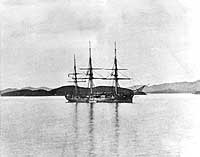
Design and characteristics
Screw sloops like Benicia were designed for extended cruising and for operations in distant waters. They typically carried a full set of sails for economical long-distance travel and a coal-fired engine for maneuvering and maintaining schedules. Armament on such ships usually consisted of a mix of broadside and pivot guns, intended for both ship-to-ship combat and shore bombardment. Benicia’s construction reflected the technological transition of the period: wooden structure, auxiliary steam power, and a rig that allowed for both wind- and steam-driven propulsion.
Role and operations
In the late 19th century, ships of Benicia’s class were used for a variety of duties: showing the flag, protecting American merchant shipping, carrying diplomats and officials, conducting surveys, and participating in limited naval actions or punitive expeditions when required. They were well suited to long deployments on the Pacific and Asian stations where coaling facilities and dockyards were sparse and flexibility was essential.
- Versatile cruiser capable of long voyages under sail or steam.
- Used for presence missions, protection of commerce, and diplomacy.
- Representative of the Navy’s transition from sail to steam.
While not as heavily armored as later steel warships, vessels like Benicia played an important role in sustaining a global American naval presence at a time when the United States was expanding its commercial and diplomatic reach across the Pacific.
For more on the ship type and its context within the fleet, see general references on the United States Navy and the evolution of 19th‑century naval technology. Benicia’s service illustrates how naval architecture and strategic needs evolved in the decades before the advent of modern steel warships and large steam fleets.
Related articles
Author
AlegsaOnline.com USS Benicia (1868) Leandro Alegsa
URL: https://en.alegsaonline.com/art/103687
Sources
- history.navy.mil : here