
United States Agency for International Development (USAID)
USAID is the U.S. government agency that plans and implements civilian foreign assistance to support economic development, health, humanitarian relief, and democratic governance worldwide.
Overview
The United States Agency for International Development (USAID) is the federal agency chiefly responsible for administering civilian foreign assistance on behalf of the U.S. government. Its work spans development, humanitarian aid, and technical cooperation intended to promote stability, economic growth, and human welfare in partner countries. For official information, see USAID.
Image gallery
10 Images





Organization and functions
USAID operates from a headquarters in Washington, with country and regional missions around the world. It funds and manages programs directly and through implementing partners including non-governmental organizations, universities, private contractors, and local institutions. The agency coordinates with other U.S. departments and international organizations to align assistance with foreign policy and development goals.
Main program areas
- Health: disease prevention, maternal and child health, and epidemic response.
- Economic growth: agriculture, trade capacity, and private-sector development.
- Democracy and governance: rule of law, elections support, and civil society strengthening.
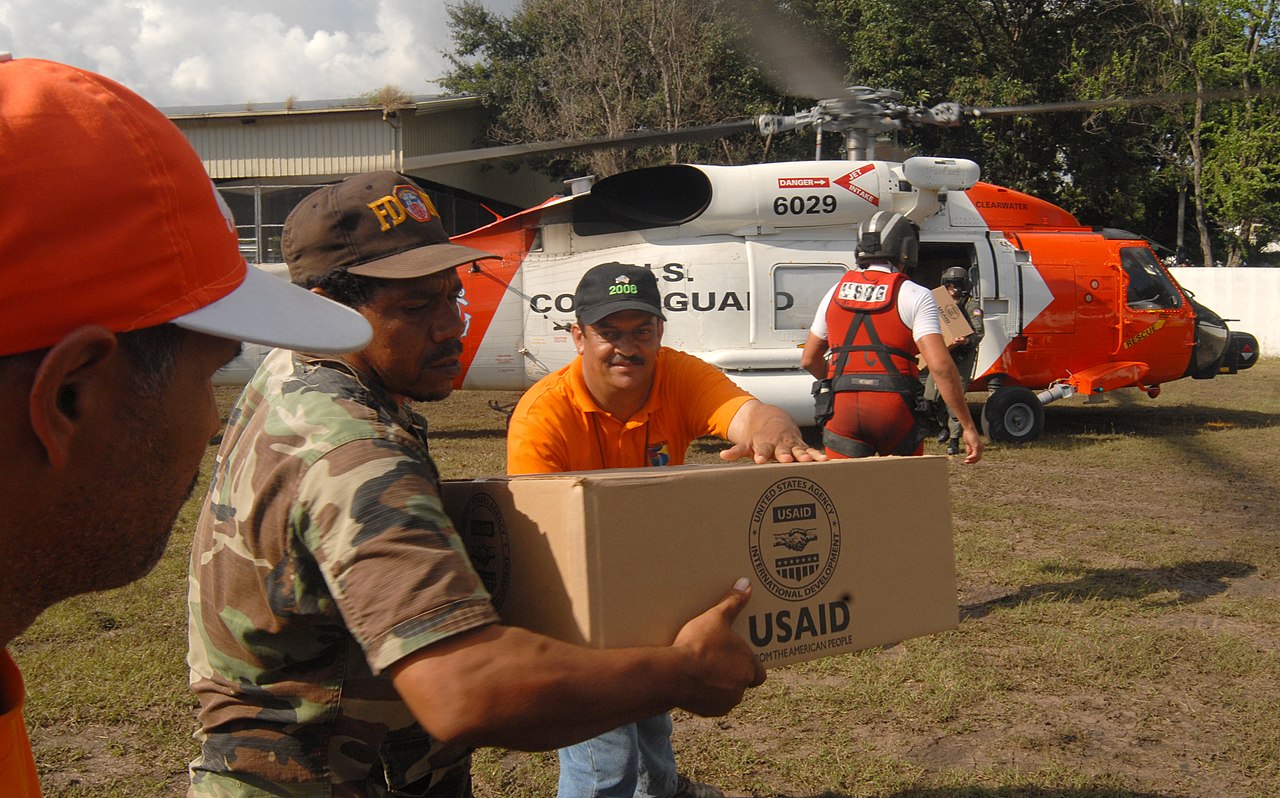
- Humanitarian assistance: emergency relief, food aid, and disaster response.
- Environment and resilience: climate adaptation and sustainable resource management.
History and development
Founded in the early 1960s as part of the U.S. response to postwar reconstruction and Cold War-era development priorities, USAID evolved from earlier bilateral aid programs. Over decades it has adapted to shifting global challenges: from infrastructure and technical aid in mid‑century development efforts to current emphases on public health, governance, and resilience to climate change.
Impact, partnerships, and criticisms
USAID has supported major global health initiatives, agricultural improvements, and disaster responses through long-term projects and rapid humanitarian interventions. It emphasizes local partnerships and capacity building but has also faced critiques over effectiveness, politicization, and the balance between short-term relief and sustainable development. Ongoing reforms aim to improve transparency, local ownership, and coordination with other actors.
Notable facts
Programs are implemented via grants and contracts with a wide range of partners. The agency plays a key role in international responses to epidemics and natural disasters, often serving as a primary U.S. instrument for civilian international assistance.
Related articles
Author
AlegsaOnline.com United States Agency for International Development (USAID) Leandro Alegsa
URL: https://en.alegsaonline.com/art/102992
Sources
- usaid.gov : "Agency Financial Report, FY 2016"
- usaid.gov : "USAID History"
- usaid.gov : "USAID: Automated Directives System 400"
- usaid.gov : "ADS Chapter 101.2 Agency Programs and Functions"
- devex.com : "Kennedy, Johnson and the early years"
- devex.com : "The Cold War and its aftermath"
- devex.com : "The clashes of the 1990s"