
Ulma (Suceava County, Romania)
Ulma is a small rural commune in Suceava County, in the historic Bukovina region of northeastern Romania. Overview of its location, geography, history, economy and cultural features.
Overview
Ulma is a rural commune in the northern part of Suceava County in Romania. It lies in the historic region of Bukovina and is situated at approximately 47°53′N 25°18′E. For a quick map reference see coordinates. Administratively the locality is part of Suceava County within Romania.
Image gallery
2 Images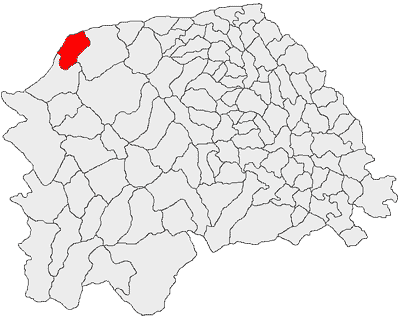

Geography and landscape
The commune sits in the foothills of the Eastern Carpathians and is characterised by rolling hills, mixed forests and river valleys typical of northern Bukovina. The landscape supports a patchwork of small farms, pastures and wooded areas. The area has a temperate continental climate with cold winters and warm summers.
History and development
Ulma shares the broad historical trajectory of Bukovina: part of the medieval Principality of Moldavia, later under Habsburg administration from the late 18th century, and reunited with Romania after World War I. These changing sovereignties influenced local administration, land use and cultural life, leaving traces in architecture and traditions.
Economy and culture
The local economy is predominantly rural and based on small-scale agriculture, livestock rearing and forestry. Villages in this part of Suceava often maintain traditional crafts, folk music and seasonal customs. Wooden churches and vernacular houses are common cultural landmarks and attract modest cultural tourism.
Administration and population
As a commune, Ulma functions as the lowest level of local government in Romania, with responsibilities for local roads, schools and services. Population figures and detailed administrative subdivisions fluctuate and are recorded periodically by national statistics offices.
Notable facts
- Located near the northern border of Romania, close to Ukraine, the area reflects cross-border cultural influences.
- Part of the broader Bukovina cultural region, known for its rural traditions and wooden ecclesiastical architecture.
- The commune’s setting makes it representative of sparsely populated, scenic mountain-foothill settlements in northeastern Romania.
Further information on local administration, travel and statistics can be found through county resources or national repositories.
Related articles
Author
AlegsaOnline.com Ulma (Suceava County, Romania) Leandro Alegsa
URL: https://en.alegsaonline.com/art/102668
Sources
- recensamant.referinte.transindex.ro : Romanian census data, 2002