
George Best Belfast City Airport — overview, history and operations
City-centre airport serving Belfast, Northern Ireland. Single-runway regional airport opened 1983, renamed for George Best in 2006; handles short-haul and business traffic and shares a site with aircraft manufacturing.
George Best Belfast City Airport is the principal city-side airport serving Belfast, Northern Ireland. Its commonly used codes are shown in operational records: IATA BHD and ICAO EGAC. Located about 3 miles (5 km) from the city centre, the airport operates from a single runway and is tightly integrated with the adjacent docklands and industrial sites. The facility first began scheduled commercial flights in 1983 and has since been a focus for regional and business travel.
Image gallery
8 Images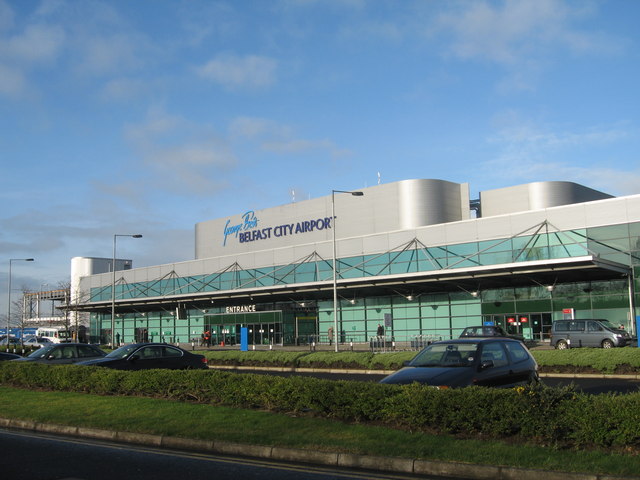


Location and infrastructure
The airport sits beside the Port of Belfast on the eastern edge of the city. Its compact footprint and close urban setting make it unusually convenient for passengers travelling to and from central Belfast, but also impose constraints on expansion. The airfield is described in aviation records as a single-runway airport and shares part of its site with the historic aircraft manufacturing area operated by Short Brothers and later Bombardier (manufacturer site). Administratively the aerodrome falls within County Antrim and the wider region of County Antrim and Northern Ireland.
History and name
Originally opened to commercial traffic in the early 1980s, the facility was known simply as Belfast City Airport for many years. In 2006 the airport was officially renamed to commemorate the Belfast-born footballer George Best, widely recognised for his sporting career; contemporary descriptions often note his fame as a professional footballer and his association with clubs such as Manchester United. The renaming reflected both local pride and an effort to strengthen the airport’s identity.
Operations, traffic and licensing
The airport primarily handles short-haul scheduled services, business and commuter flights rather than long-haul intercontinental routes. Passenger volumes have varied year to year; for example, traffic peaked at around 2.7 million passengers in 2010 before declining to about 2.4 million in 2011. Over time it has been an important base for regional carriers; one of the larger operators in the airport’s recent history has been Flybe. The aerodrome holds a Civil Aviation Authority public use aerodrome licence (number P862), which permits public transport flights and flying instruction under UK regulation (licence P862).
Role and distinguishing features
- Proximity: Its location close to Belfast city centre distinguishes it from larger, more distant airports and makes it popular with business travellers.
- Scale and focus: The airport’s single-runway layout and limited land area concentrate operations on regional and short-haul services.
- Industrial links: Co-location with aircraft manufacturing and the adjacent port supports aerospace and maritime connectivity.
- Community and planning: Urban setting means stricter environmental, noise and planning controls than many regional airports.
Today the airport remains an important node for Northern Ireland’s air transport network, offering quick access to central Belfast and a base for frequent regional links across the United Kingdom and nearby destinations. For operational details, schedules and services consult the airport’s published guides and airline timetables (Belfast) and local transport pages (Port and access).
Tags
Related articles
Author
AlegsaOnline.com George Best Belfast City Airport — overview, history and operations Leandro Alegsa
URL: https://en.alegsaonline.com/art/10212
Sources
- nats-uk.ead-it.com : Belfast/City – EGAC
- caa.co.uk : CAA: UK Annual Airport Statistics