
Tsukioka Yoshitoshi: Ukiyo-e Printmaker of Late Edo and Meiji Japan
Tsukioka Yoshitoshi (1839–1892) was a leading Japanese ukiyo-e artist whose dramatic woodblock prints, narrative series and technical innovations helped bridge traditional printmaking and modern illustration.
Tsukioka Yoshitoshi (月岡芳年, 1839–1892), often called Taiso Yoshitoshi, is regarded as one of the last great masters of ukiyo-e, the traditional Japanese art of woodblock printing and painting. Born in Edo (now Tokyo), he worked across the turbulent transition from the late Tokugawa period into the Meiji era, producing prints that combined classical subjects with a vivid, modern visual energy. In Japanese naming conventions his family name is Tsukioka; for notes on names see Japanese naming.
Image gallery
10 Images




Life and training
Yoshitoshi apprenticed in the ukiyo-e tradition and is most closely associated with the school of Utagawa Kuniyoshi, whose bold compositions and interest in history and the supernatural shaped his early work. He worked prolifically from the 1850s onward, navigating changing markets, new technologies and occasional personal and financial difficulties. He took pupils and later adopted an artist son, Tsukoka Kōgyō (1869–1927). For biographical outlines and timelines consult dedicated resources such as biographical notes.
Style, subjects and innovations
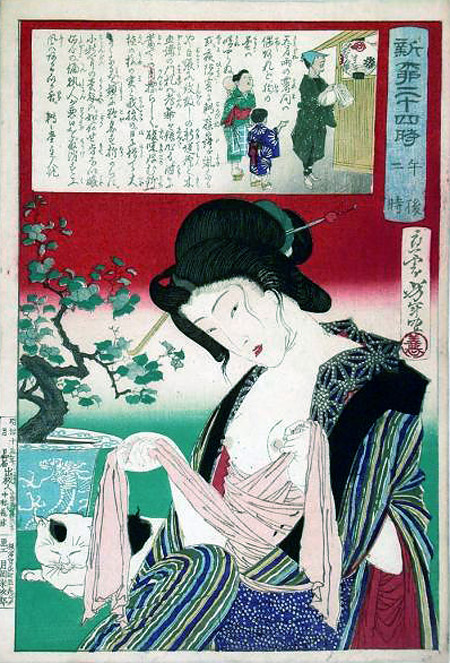
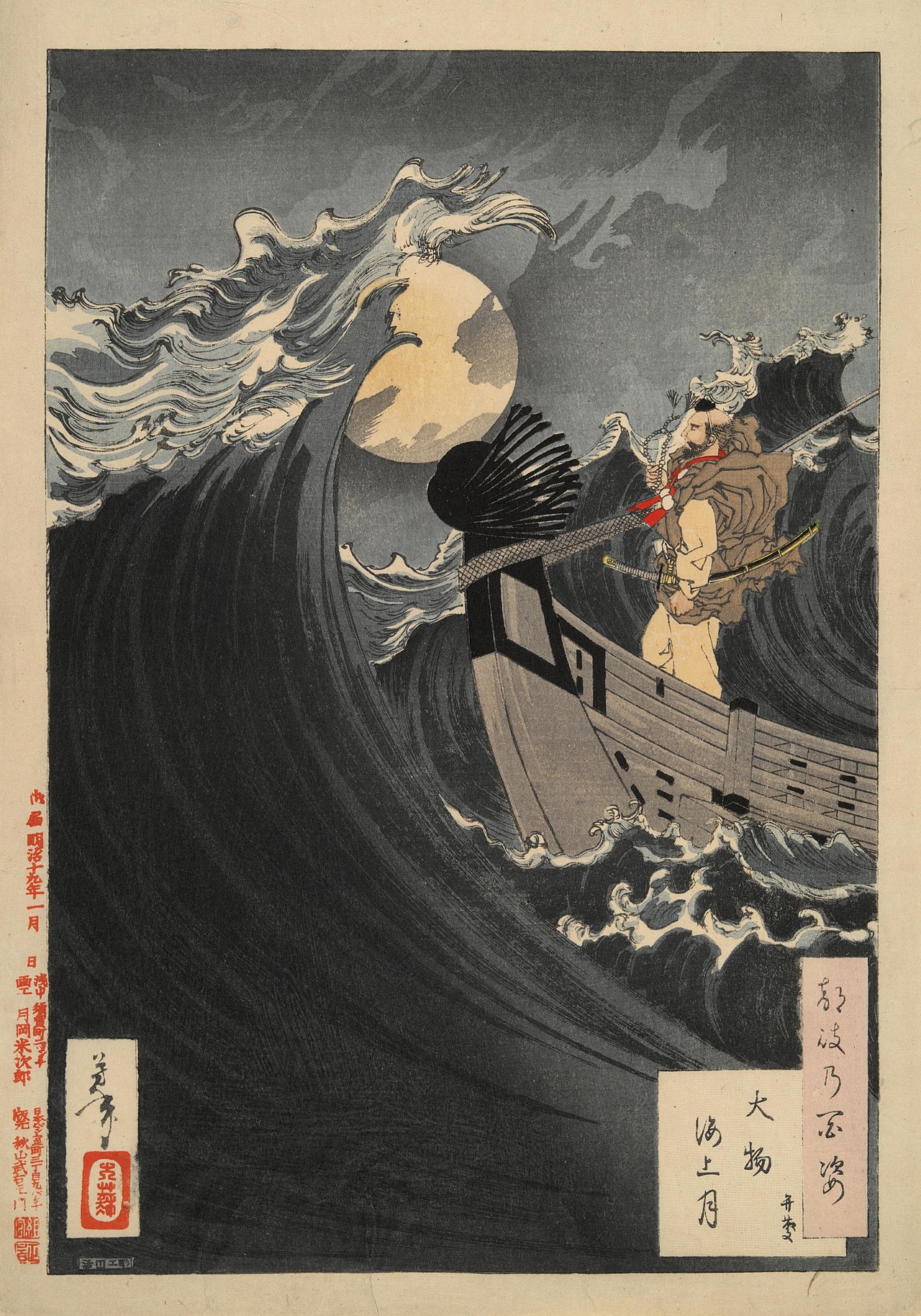
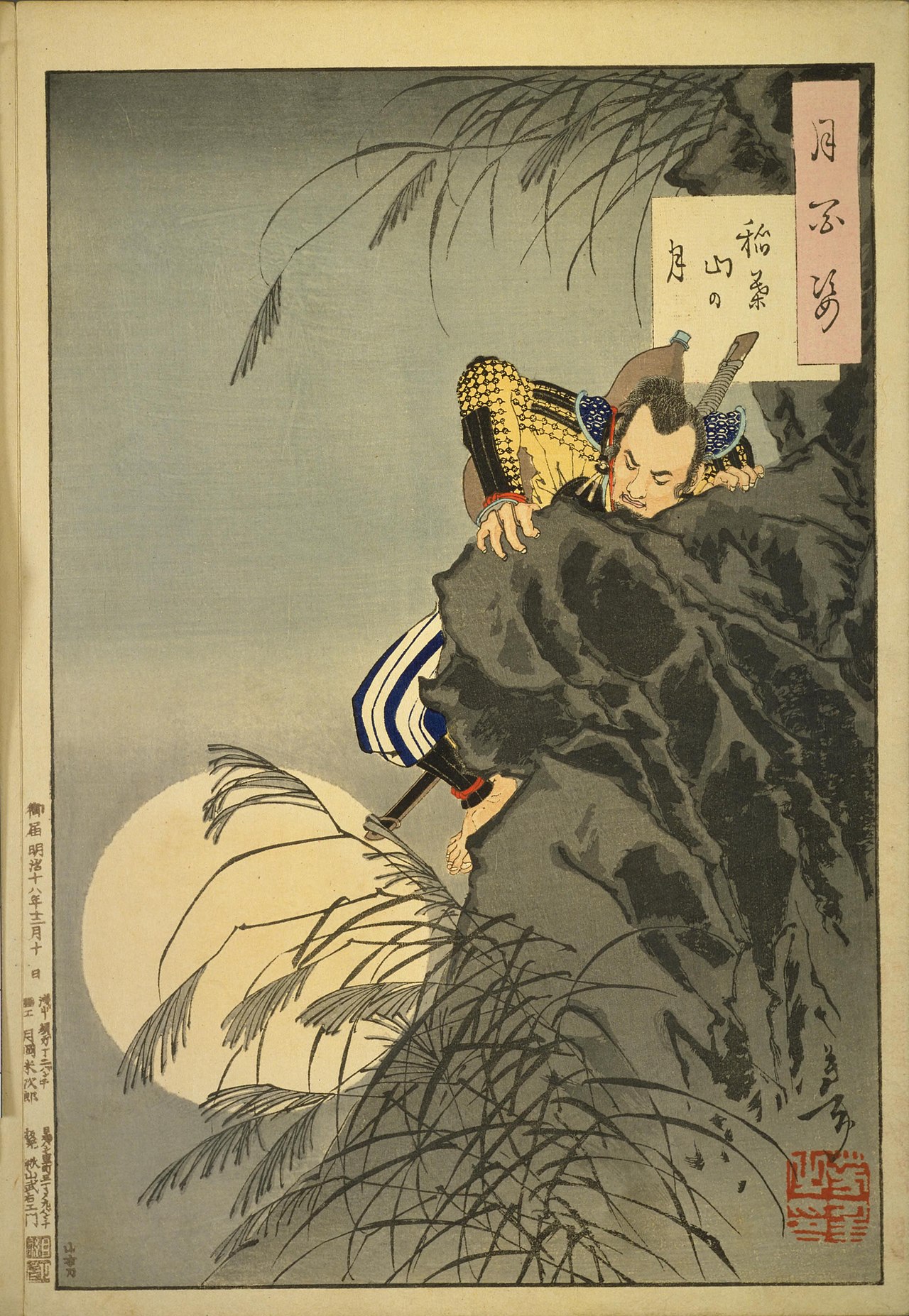
Yoshitoshi is noted for dramatic storytelling and psychological intensity. His subject matter ranged from portraits of historical warriors and kabuki actors to courtesans and vivid supernatural scenes populated by ghosts, demons and eerie apparitions. Technically he balanced traditional woodblock methods with inspirations drawn from Western art: stronger use of perspective, novel approaches to shading and a greater attention to photographic realism in faces and textures appear in his later prints. He experimented with colour and printing techniques to achieve mood and theatrical contrast; art historians discuss these qualities in more detail at artistic analysis.
Major works and legacy
Among his best-known long-format projects is the series often translated as One Hundred Aspects of the Moon, which pairs literary, historical and legendary subjects with evocative moonlit settings. He also produced multiple series devoted to ghostly subjects and dramatic episodes from history and theatre. Yoshitoshi's late work is widely credited with helping to bridge traditional ukiyo-e and modern Japanese illustration, influencing later artists and attracting renewed interest from collectors and museums in Japan and abroad. Selected examples and exhibition entries are available through curated collections: selected works.
Notable facts and distinctions
- He used several art names (gō) during his career; Taiso Yoshitoshi is one of the most familiar.
- His career spanned the final decades of the Edo period and the early Meiji era, a time of rapid social and technological change.
- He revived and transformed themes of the supernatural in ukiyo-e, combining narrative intensity with technical experimentation.
- Although he faced hardship in life, his reputation grew after his death; he is now a central figure in studies of 19th-century Japanese printmaking.
For research, museum catalogues and further reading consult specialist libraries and institutional resources that preserve his prints and scholarship: research and collections.
Related articles
Author
AlegsaOnline.com Tsukioka Yoshitoshi: Ukiyo-e Printmaker of Late Edo and Meiji Japan Leandro Alegsa
URL: https://en.alegsaonline.com/art/101886
Sources
- books.google.com : "Tsukoka Kōgyō"