
Toulon — French Mediterranean port city and naval base
Toulon is a port city in southern France, prefecture of Var, known for its large military harbour, Mediterranean climate, and role as the region's third-largest city after Marseille and Nice.
Toulon is a coastal city in the south of France and the prefecture of the department of Var. It has a population of roughly 170,000 and is the third-largest city in the Provence-Alpes-Côte d'Azur region after Marseille and Nice. The city combines a working port, a military arsenal and an urban centre whose economy and identity have long been tied to the sea. For official information see the municipal portal: Toulon city.
Image gallery
10 Images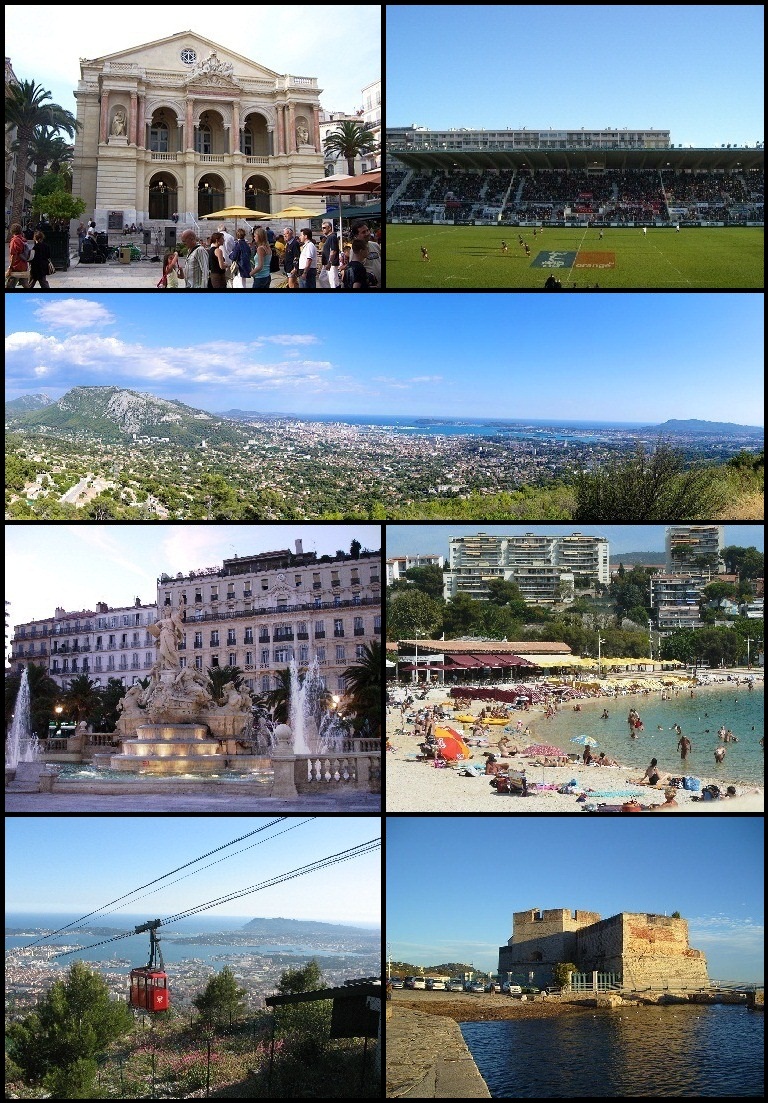


Geography and climate
Toulon sits on a deep natural harbour on the Mediterranean coast, sheltered by surrounding hills and the prominent summit of Mont Faron. The location gives it a typical Mediterranean climate with hot, dry summers and mild winters, making its waterfront and nearby beaches important for local life and tourism. Toulon lies about 190 kilometres from the Italian border and is part of a densely populated coastal corridor in southeast France. For regional context see Provence-Alpes-Côte d'Azur.
History and development
The site of Toulon has been occupied since antiquity as a convenient harbour and stopping point on Mediterranean trade routes. Its importance grew in the medieval period and expanded substantially after the French crown invested in fortifications and shipbuilding in order to project power in the Mediterranean. Over centuries the harbour and naval facilities shaped the town's layout and economy, with residential districts, quays and workshops clustered around the arsenal.
Naval and economic importance
Toulon is chiefly known as the principal base of France's Mediterranean naval forces. The city contains a large military harbour, dockyards and support facilities that serve naval operations, ship maintenance and training. This long-standing maritime role supports related industries such as ship repair, logistics and maritime services. More broadly, the port also handles commercial shipping and operates ferry links to nearby islands and other Mediterranean destinations.
Transport and connections
Well connected by road and rail, Toulon offers regular train services toward larger regional hubs, and its port provides sea links including ferries to Corsica and other islands. Regional transport integration keeps the city within easy reach of Marseille and Nice, and it plays a logistical role within the department of Var.
Culture, tourism and notable sites
Visitors encounter a mix of naval heritage, Provençal culture and seaside leisure. The city has museums, markets, promenades and historic neighbourhoods, while the higher ground of Mont Faron offers panoramic views over the harbour. Local festivals, cuisine focused on seafood and regional traditions reflect Toulon's Mediterranean character. The presence of the navy is visible in ceremonial events and in museums that document maritime history; for details about the naval presence see French Mediterranean fleet.
Quick facts and attractions
- Prefecture of the department: Var.
- Major nearby cities: Marseille and Nice.
- Main roles: military harbour, commercial port, regional urban centre.
- Typical activities: shipbuilding and repair, ferry services, tourism and cultural events.
Toulon remains an important Mediterranean hub where maritime activity and urban life intersect, balancing operational naval facilities with a civic and cultural identity rooted in Provence.
Related articles
Author
AlegsaOnline.com Toulon — French Mediterranean port city and naval base Leandro Alegsa
URL: https://en.alegsaonline.com/art/100868
Sources
- catalog.loc.gov : Le Chevallier à découvert