
Touch rugby
A minimal-contact form of rugby emphasizing ball skills and fitness. Often called Touch or Touch Football, it is inclusive, played recreationally and competitively, and used for training by rugby players.
Overview
Touch rugby, commonly shortened to Touch or Touch Football, is a minimal-contact team sport that evolved from the rugby family. Instead of full tackles, defenders stop attacking players by touching them, which reduces injury risk and makes the game accessible to a wide range of ages and abilities. Teams aim to score by grounding the ball over the opponents' score line, using passing, running and tactical movement rather than physical collisions.
Image gallery
2 Images
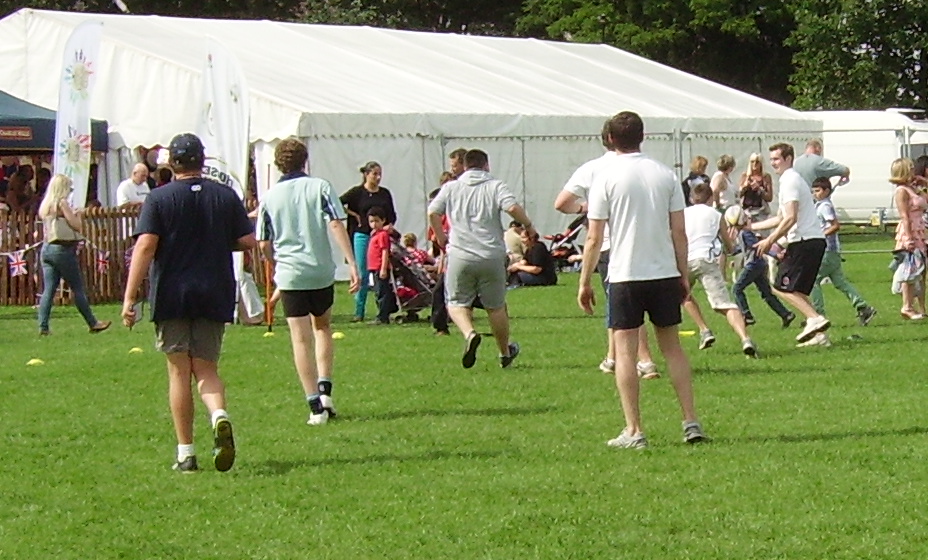
Key characteristics
The sport is played with an oval ball on a marked pitch smaller than a full rugby field. Play is continuous and fast-paced: when a player is touched or held, play stops briefly to restart with a quick tap or roll of the ball. Typical competitive formats use small teams to encourage involvement by many players on the field, and common rules limit the number of touches a team may have in a possession before the ball is turned over.
Rules and equipment
Equipment needs are minimal: an oval ball, appropriate clothing and often no protective padding. Mouthguards may be used in formal play. The laws resemble rugby in forbidding forward passes and emphasizing lateral and backward passing, but they replace tackles with touches. Standardized rule sets exist and are enforced at tournaments, though casual games often adapt rules for numbers, pitch size and scoring.
History and development
Touch began as a training method within rugby communities to practice handling, evasive running and support play without the physical contact of full rugby. Over time it became a recreational and competitive sport in its own right, supported by national governing bodies and international organizations. Its low-contact nature helped it spread rapidly in schools, social leagues and mixed-gender competitions.
Variations and relationship to other games
- Touch vs tag: Touch uses hand contact; tag variants use detachable tags on belts.
- Smaller- and larger-sided games: formats vary from social kickabouts to structured six-a-side competitions.
- Adaptations: rules are often modified for juniors, mixed teams or indoor play.
Uses, benefits and competitions
Touch is valued for skill development, aerobic fitness and inclusivity. Rugby players use it for preseason conditioning and skill work; schools and clubs adopt it for physical education and community sport because it accommodates mixed-gender teams and a broad age range. Organized tournaments and national leagues provide pathways for high-performance touch, while social leagues offer casual participation for players of all levels.
Related articles
Author
AlegsaOnline.com Touch rugby Leandro Alegsa
URL: https://en.alegsaonline.com/art/100848
Sources
- internationaltouch.org : "What is Touch?"
- irelandtouchassociation.com : "What is Touch?"
- internationaltouch.org : "Basic Rules of Touch"