
Token Ring: a token-passing LAN protocol and its history
Token Ring is a LAN protocol that controls access by passing a token around a ring of stations. Developed and popularized by IBM, it emphasizes collision-free transmission and predictable access.
Token Ring is a local area network (LAN) protocol that regulates how devices share a common communication medium by circulating a special control frame called a token. Unlike contention-based systems, Token Ring uses orderly token passing so that only the station holding the token may transmit, eliminating collisions and providing predictable access delays. The protocol operates at the data link layer and was widely used in corporate environments during the 1970s–1990s.
Image gallery
10 Images


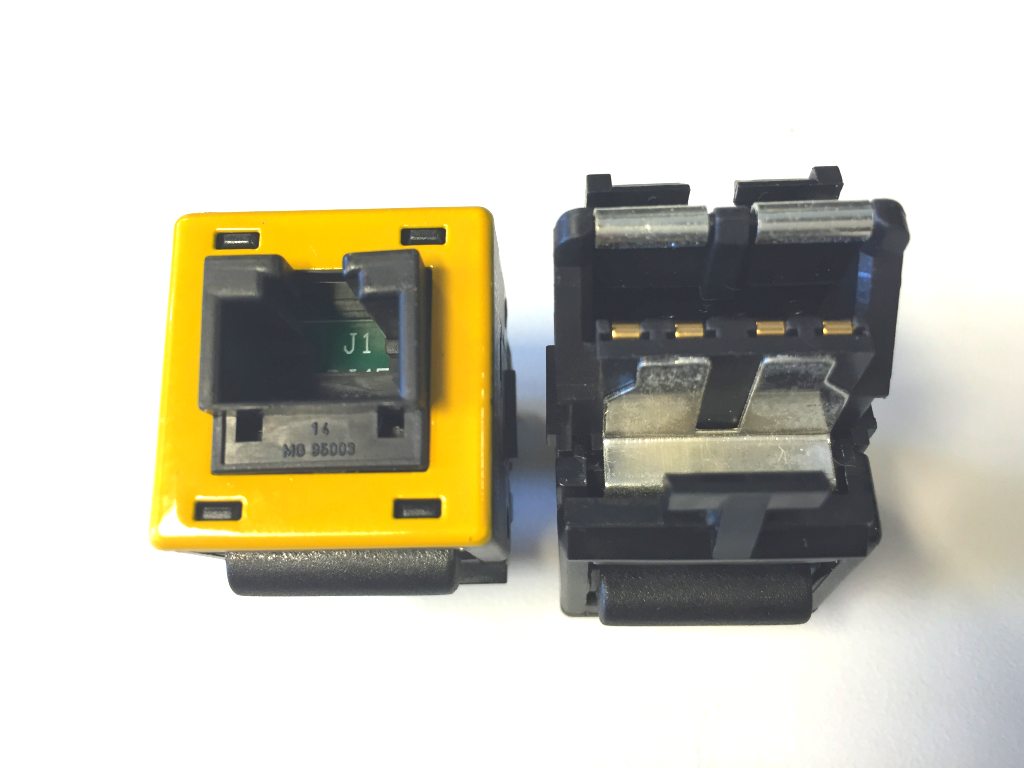

How it works
On a Token Ring network the token is a short frame that travels sequentially from one station to the next in a logical ring. When a station has no data to send it simply forwards the token. When it needs to transmit, it seizes the token, attaches its data frame, and marks the token as busy. The frame then circulates around the ring and is examined by each station in turn; the intended recipient copies the frame and typically sets a response bit to indicate reception. After the originating station sees its frame return, it removes the frame and releases a new free token so other stations may send.
Characteristics and components
- Collision avoidance: Because only the token holder transmits, frames do not collide on the medium.
- Topology: Although logically a ring, many installations used a star-wired physical layout with a central concentrator or Multistation Access Unit (MAU) that internally connected stations in ring order.
- Performance: Token Ring implementations commonly operated at fixed speeds (historic common variants ran at 4 Mbps and 16 Mbps) and included priority/reservation fields to support quality of service.
- Frame handling: Frames circulate until removed by the sender; integrity checks and status bits help manage delivery and error conditions.
History and development
Token-passing concepts predate commercial LANs, but IBM standardized and popularized Token Ring in the 1970s and expanded it through proprietary and later standardized specifications. It found favor in enterprise environments because of its orderly access and predictable behavior under load. Over time, industry standards and implementations evolved, including interoperability with other network layers and management features for larger installations.
Uses, advantages, and decline
Token Ring was used for business networking, connecting workstations, servers, and printers where consistent latency and deterministic access were valued. Advantages included orderly medium access, fairness among hosts, and built-in priority handling. However, Token Ring networks tended to be more expensive to install and maintain than competing solutions. As switched Ethernet technologies advanced—offering higher raw bandwidth, lower equipment costs, and simpler cabling—Ethernet became the dominant choice for most LANs. For further comparison see Ethernet.
Notable distinctions
Token Ring differs from Ethernet's traditional CSMA/CD approach: Token Ring prevents collisions by design, while CSMA/CD allows contention and detects collisions. Physically, Token Ring installations could present as either a true ring or a star wiring scheme with an MAU; logically they always maintained ring semantics. The token mechanism also allowed priority arbitration so certain traffic classes could obtain access sooner than best-effort traffic.
For a concise overview of LAN technologies and where token-passing fits, see Local area networks and for a general description of the token-passing method see token passing. These resources place Token Ring in the broader context of network access methods and protocol design.
Related articles
Author
AlegsaOnline.com Token Ring: a token-passing LAN protocol and its history Leandro Alegsa
URL: https://en.alegsaonline.com/art/100286