
The Princess Bride (1987 film)
A witty, romantic fantasy-adventure directed by Rob Reiner, adapted by William Goldman from his novel. Celebrated for its quotable dialogue, genre-mixing tone, and enduring cult appeal.
The Princess Bride is a 1987 American fantasy-romance film directed and co-produced by Rob Reiner and adapted for the screen by William Goldman from his 1973 novel. Combining swashbuckling adventure, courtly romance and deliberate comedy, the picture stars Cary Elwes and Robin Wright with memorable supporting turns from Mandy Patinkin, Wallace Shawn, André the Giant, Christopher Guest and Chris Sarandon. The film presents its tale as a book being read aloud by a grandfather to his ill grandson, a framing device that preserves the novel's metafictional voice while making the story accessible and intimate.
Image gallery
6 Images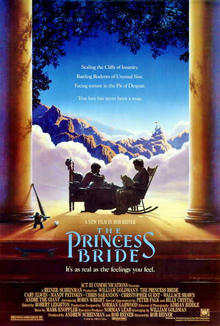


Plot and narrative approach
At its core the story follows Westley, a farmhand who becomes the Dread Pirate Roberts to win back his true love, Buttercup, after she is forced toward marriage with the scheming Prince Humperdinck. Their rescue involves a band of striking characters — the vengeful swordsman Inigo Montoya, the hulking companion Fezzik, and other figures whose personal quests intersect with Westley’s. The film keeps the book’s layering: it is simultaneously a fairy-tale romance, a caper, and a self-aware pastiche that plays with the conventions of heroic epics, often undercut by dry humor and warm sentiment.
Style, themes, and memorable lines
The Princess Bride blends multiple tones: earnest romance, light satire, and physical adventure. It pays homage to classic fairy tales and swashbucklers while lampooning their excesses. The script is widely prized for its sharp, repeatable lines — notably "As you wish," "Inconceivable!" and "Hello. My name is Inigo Montoya. You killed my father. Prepare to die." These moments balance character development and comic payoff, helping the film appeal across ages and reinforcing themes of loyalty, revenge, and the nature of true love.
Production, release, and reception
Released in the United States on September 25, 1987, the film received generally positive reviews but achieved only modest box-office success at first. Over subsequent years it developed a devoted following through home video and television broadcasts, becoming a bona fide cult classic. Critics and audiences have praised the ensemble performances, Goldman’s screenplay, and Reiner’s direction. The movie won the 1988 Hugo Award for Best Dramatic Presentation and in 2016 was selected for preservation in the U.S. National Film Registry as culturally, historically, or aesthetically significant.
Legacy and cultural importance
Beyond awards and archival recognition, The Princess Bride endures in popular culture as a frequently quoted and affectionately referenced film. Its mix of sincerity and irony influenced later genre hybrids and remains a staple for shared family viewings. The story’s structure — a tale told aloud with interruptions and commentary — has been noted as a key reason the film feels both timeless and immediately engaging, helping it remain in regular circulation among new generations of viewers.
Principal cast and further resources
- Westley: Cary Elwes — lead actor profile
- Princess Buttercup: Robin Wright — actress overview
- Inigo Montoya: Mandy Patinkin — character study
- Prince Humperdinck: Chris Sarandon — role notes
- Vizzini and others: Wallace Shawn, Christopher Guest — supporting cast
- Fezzik: André the Giant — cast recognition
- Framing roles: Peter Falk and Fred Savage — frame story
- film production notes
- screenplay and author William Goldman
- original novel information
- critical reception and reviews
- release history
- box office and commercial performance
- contemporary critical response
- home video and cultural spread
- cult following and fan communities
- recognition on AFI lists
- rankings in comedy lists
- National Film Registry entry
- cultural significance notes
- historical context
- aesthetic analysis
- award listings (Hugo Award)
Related articles
Author
AlegsaOnline.com The Princess Bride (1987 film) Leandro Alegsa
URL: https://en.alegsaonline.com/art/98674
Sources
- thefilmspectrum.com : "BRAVO 100 Funniest Movies"
- afi.com : "AFI's 100 GREATEST LOVE STORIES OF ALL TIME"
- ↑
- filmjerk.com : ""The Princess Bride" becomes part of the Midnight Madness at the Rialto"
- rottentomatoes.com : "THE PRINCESS BRIDE (1987)"