
The Onion Field (1979 film)
1979 American crime drama directed by Harold Becker, adapted from Joseph Wambaugh’s nonfiction book. A dramatization of a real police kidnapping and its long aftermath, noted for strong performances and realism.
Overview
The Onion Field is a 1979 American crime drama directed by Harold Becker and adapted from Joseph Wambaugh’s 1973 nonfiction book. The film dramatizes a notorious law-enforcement crime from the early 1960s and concentrates as much on the emotional and legal aftermath as on the initial violent event. It was distributed by Embassy Pictures and is remembered for its restrained, factual approach to a true-crime story.
Image gallery
1 Image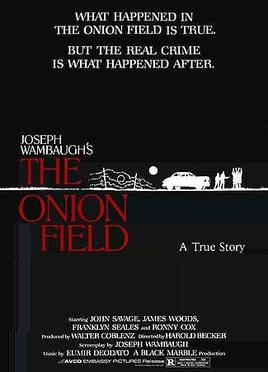
Plot and focus
The narrative follows two police officers who are stopped during a routine traffic encounter and then abducted by two criminals. One officer is killed, while the other survives and must live with the physical and psychological consequences of the incident. Rather than sensationalizing violence, the film devotes significant screen time to the surviving officer’s guilt, bureaucratic consequences, and the judicial process that follows. The story explores how a single crime reverberates through victims, their families, law enforcement, and the courts.
Cast and production
The movie features a cast that includes prominent character actors of the era. Principal performers include James Woods, Ted Danson, Priscilla Pointer, and Christopher Lloyd, along with John Savage, Ronny Cox, Franklyn Seales and others. Harold Becker’s direction aims for a naturalistic tone; the production emphasized realism in sets, costumes and procedural detail to reflect the investigative and courtroom aspects of the true story. The screenplay remains broadly faithful to Wambaugh’s book in its chronological presentation of events and focus on character consequence.
Themes and style
- Psychological aftermath: the film depicts survivor guilt, trauma and the difficulty of returning to ordinary life after violence.
- Institutional response: it examines police procedures, internal inquiry and the criminal justice system’s handling of a high-profile case.
- Restraint and realism: rather than exploitative spectacle, the film uses measured pacing and sober performances to convey the human cost of crime.
Reception and legacy
Upon release, The Onion Field received praise for its performances and its unglamorous, serious treatment of true events. Critics highlighted the actors’ portrayals and the film’s commitment to the procedural and emotional dimensions of the story. Over time the movie has been cited in discussions of police-related true-crime cinema and adaptations of nonfiction books, serving as an example of how a film can translate investigative reporting into character-driven drama.
Notable facts
Based on a widely read nonfiction account, the film helped introduce a general audience to Joseph Wambaugh’s style of police storytelling, which blends factual reporting with psychological insight. The movie’s emphasis on aftermath and accountability distinguishes it from crime pictures that focus primarily on action. For readers seeking further information on cast biographies, production notes, or the historical case that inspired the story, follow links to cast profiles and archival resources provided by film reference sites and library collections.
Related articles
Author
AlegsaOnline.com The Onion Field (1979 film) Leandro Alegsa
URL: https://en.alegsaonline.com/art/98557