
The Osterman Weekend (1983 film)
1983 espionage thriller directed by Sam Peckinpah, adapted from Robert Ludlum's novel. Ensemble cast includes Rutger Hauer, John Hurt and Burt Lancaster; themes of surveillance, trust and Cold War paranoia.
The Osterman Weekend is a 1983 suspense thriller that adapts the espionage novel of the same name into a compact, tense film set against Cold War unease. The movie is commonly remembered as the final feature directed by Sam Peckinpah, and it draws on the conspiracy and betrayal motifs of its source material written by Robert Ludlum. Its tone mixes psychological suspense with spycraft, and it has been discussed for the way it reflects late 20th-century concerns about surveillance and loyalty.
Image gallery
1 Image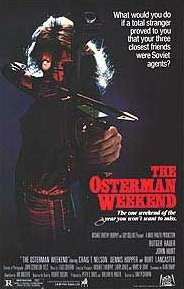
Plot and themes
At its core the story follows a circle of friends who are drawn into a plot involving alleged espionage and manipulation. The narrative hinges on uncertainty: who can be trusted, what evidence proves treachery, and whether appearances conceal larger plots. The film emphasizes paranoia, private surveillance, and the moral ambiguity that can arise when ordinary relationships are examined through a security lens. Rather than action set pieces alone, much of the drama unfolds through conversations, confrontations and shifting allegiances.
Cast and characters
The production assembled an ensemble cast that contributes to the movie's interpersonal tension. Principal performers include:
- Rutger Hauer — a leading presence whose screen persona suits the film's ambiguous moral landscape.
- John Hurt — brings intensity and restraint to a central role.
- Burt Lancaster — adds gravitas as an elder figure caught in the unfolding drama.
- Craig T. Nelson — part of the circle whose loyalties are tested.
- Dennis Hopper — provides a volatile presence that heightens suspicion.
- Chris Sarandon and others round out the ensemble, each contributing to the porous boundary between private life and political intrigue.
Production and adaptation
Adapting a lengthy espionage novel for the screen required condensation of plotlines and consolidation of characters. The film focuses on the emotional and ethical consequences of intelligence work rather than attempting to reproduce every subplot of the book. It was produced and distributed by a major studio, and its release fit into the era's steady stream of spy and conspiracy films that examined contemporary anxieties about power, secrecy and information.
Reception and legacy
Critical response to the film was mixed: some reviewers praised the cast and the suspenseful premise, while others found the plotting uneven or the adaptation compressed. Over time the movie has been treated as a notable late entry in the careers of its principal talents, especially as the final feature directed by Peckinpah. For viewers interested in Cold War-era thrillers, ensemble-driven suspense, or film adaptations of popular spy fiction, the picture remains a point of interest.
Notable points
The Osterman Weekend is often mentioned in discussions of how novels are tightened for screenplays and how filmmakers translate themes of distrust and surveillance into visual form. It also serves as a reminder of the period's cultural preoccupations with espionage and the fragile line between private relationships and political manipulation.
Questions and answers
Q: Who directed The Osterman Weekend movie?
A: The Osterman Weekend movie was directed by Sam Peckinpah.
Q: When did Sam Peckinpah pass away?
A: Sam Peckinpah passed away in 1984, after directing The Osterman Weekend.
Q: What is the genre of The Osterman Weekend?
A: The Osterman Weekend is a suspense thriller movie.
Q: Who wrote the book upon which The Osterman Weekend movie was based?
A: The book upon which The Osterman Weekend movie was based was written by Robert Ludlum.
Q: Who are some of the actors in The Osterman Weekend?
A: Rutger Hauer, John Hurt, Burt Lancaster, Craig T. Nelson, Dennis Hopper, and Chris Sarandon are some of the actors in The Osterman Weekend.
Q: Which company distributed The Osterman Weekend movie?
A: The Osterman Weekend movie was distributed by 20th Century Fox.
Q: In what year was The Osterman Weekend movie released?
A: The Osterman Weekend movie was released in 1983.
Related articles
Author
AlegsaOnline.com The Osterman Weekend (1983 film) Leandro Alegsa
URL: https://en.alegsaonline.com/art/98571