
The Adventures of Elmo in Grouchland
1999 family film starring Elmo in a live-action/puppet adventure. Directed by Gary Halvorson, the movie follows Elmo into Grouchland; its soundtrack was released on MJJ Music.
Overview
The Adventures of Elmo in Grouchland is a 1999 children's fantasy-comedy film built around the Sesame Street character Elmo. Directed by Gary Halvorson, the picture blends live action with puppetry and follows the small, red Muppet on a quest to retrieve a beloved possession. The film was created for a young audience and emphasizes simple themes of friendship, responsibility, and empathy.
Image gallery
1 Image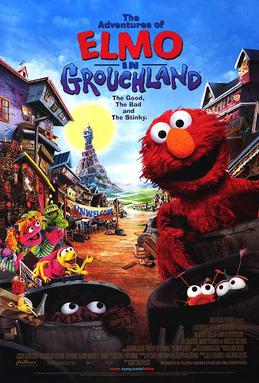
Plot and themes
The basic premise places Elmo in an unfamiliar place called Grouchland after a personal item goes missing. To get it back he must navigate a landscape of grouchy inhabitants, learn to cope with fear and loss, and find creative ways to solve problems. The story is structured around a hero's journey scaled to preschool sensibilities, using music, humor, and clear moral lessons to keep the narrative accessible.
Production and music
The film combines studio sets, human actors, and the work of experienced Muppet performers; Elmo was performed by Kevin Clash. Production values reflect a family-oriented, theatrical release from the late 1990s. Its soundtrack was issued through the record company associated with pop star Michael Jackson and his imprint MJJ Music, which helped promote the film's musical numbers to a broader audience.
Reception and legacy
On release the film drew attention as one of the few feature-length projects centered on a single Sesame Street character. It was modest at the box office, with reported gross receipts of $11,683,047. Critical response and audience reactions tended to note its clear appeal to preschool viewers while pointing out that its jokes and pacing were aimed primarily at very young children rather than adults.
Notable facts and context
- Designed for children, the movie uses direct moral lessons and bright, colorful production design.
- It showcases traditional puppetry alongside human performers, illustrating the crossover between television and feature film production for established children's properties.
- As part of the broader Sesame Street franchise, the film contributed to merchandising, home video releases, and continued use of Elmo as a central character for preschool educational content.
For families and educators, the film remains a clear example of late-20th-century efforts to translate short-form educational characters into longer narrative formats while keeping learning goals and age-appropriate entertainment at the forefront.
Related articles
Author
AlegsaOnline.com The Adventures of Elmo in Grouchland Leandro Alegsa
URL: https://en.alegsaonline.com/art/97468