
Temuco: Overview and Significance of a Southern Chilean City
Temuco is a major city in southern Chile, capital of Araucanía region; known for forestry, Mapuche culture, universities, and its history as a frontier settlement during the Occupation of Araucanía.
Temuco is a Chilean city and the administrative centre of the Araucanía region. It lies in the south-central part of the country and functions as an economic, cultural and educational hub for a wide rural hinterland. According to the 2002 census Temuco had 245,347 inhabitants, and since then it has remained one of Chile's larger regional cities.
Image gallery
10 Images
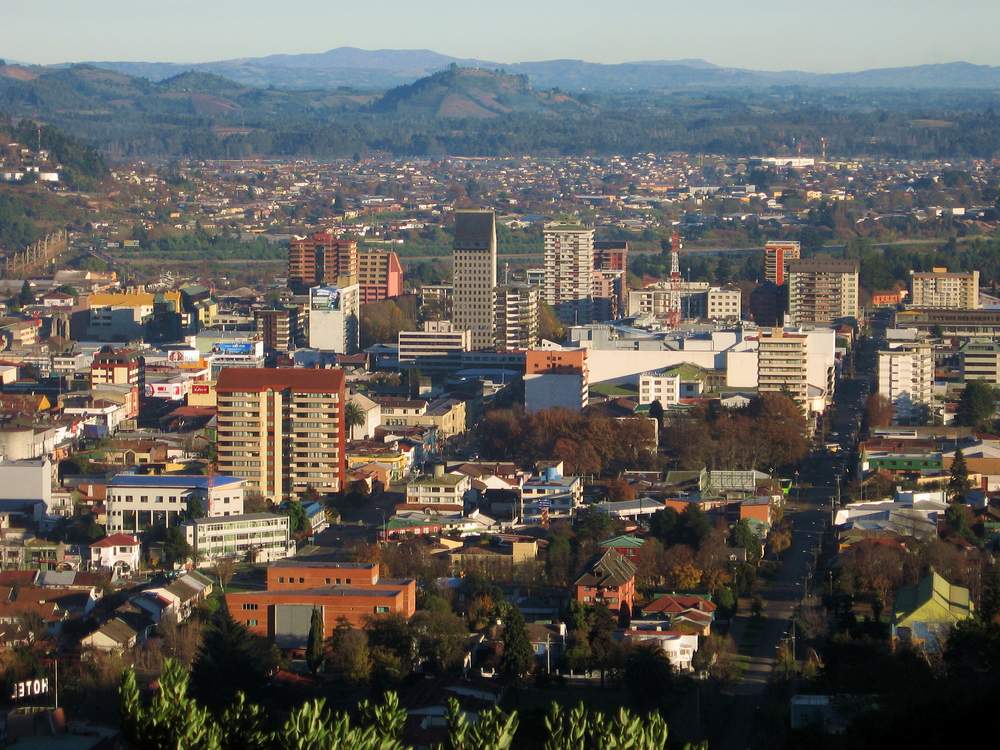


Geography and climate
Temuco occupies a valley near the course of the Cautín River and the foothills of the Andes. The surrounding landscape mixes agricultural plains with forestry plantations. The climate is temperate with distinct wet winters and milder, drier summers; rainfall is higher than in central Chile, influencing local land use and vegetation.
History and development
The settlement originated as a military fort in the late 19th century during the process known as the Occupation of Araucanía. Over subsequent decades it evolved from a frontier outpost into a regional capital, shaped by waves of settlement, agricultural colonisation and later industrial and service-sector growth.
Economy, education and culture
Temuco's economy is closely linked to agriculture and forestry, including timber processing and related manufacturing, alongside commerce and public services. The city hosts universities and technical institutes that attract students from the region and contribute to research and professional training. It is also an important centre for Mapuche culture: artisanal crafts, traditions and contemporary cultural expressions are visible in markets, museums and festivals.
Transport and urban life
As a regional node, Temuco connects to other Chilean cities by road and rail and is served by a regional airport. Urban growth has brought diverse neighbourhoods, commercial areas and public facilities; challenges include managing urban expansion, environmental impacts of forestry, and ensuring infrastructure for a growing population.
Notable facts and distinctions
- Capital of Araucanía region and a focal point for Mapuche cultural life.
- Historically established as a military fort and later developed into a commercial and educational centre.
- Economic base mixes agriculture, forestry and tertiary services, including higher education.
Related articles
Author
AlegsaOnline.com Temuco: Overview and Significance of a Southern Chilean City Leandro Alegsa
URL: https://en.alegsaonline.com/art/96939
Sources
- temucochile.com : "Asociación Chilena de Municipalidades"
- ine.cl : "National Statistics Institute"