
Administrative subdivisions of Ethiopia
Overview of Ethiopia's multi-tiered administrative system: regional states and chartered cities, zones, woredas (districts), kebeles (wards), their roles, origins, and notable features.
This article summarizes the principal levels of government that organize public administration in Ethiopia. The country's system is federal and multi-tiered: the largest units are regional states and chartered cities, which are subdivided into zones, then woredas (districts), and finally kebeles (neighbourhood or ward units).
Image gallery
2 Images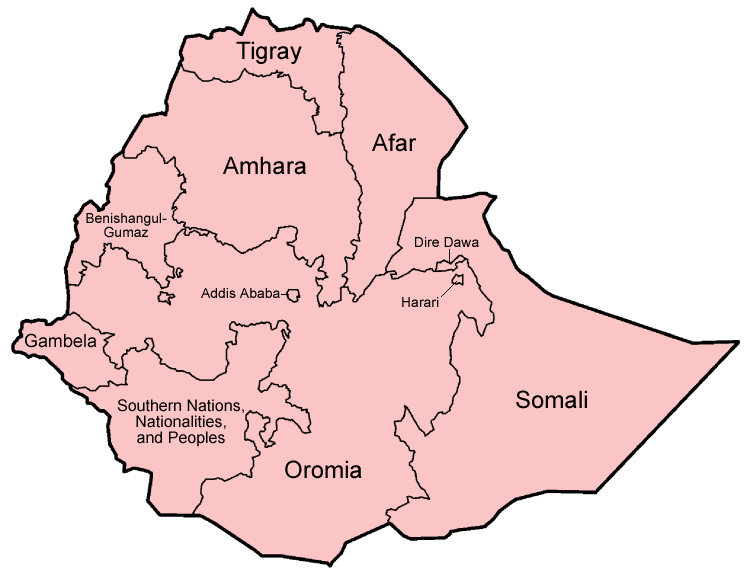

Administrative hierarchy
- Regional states and chartered cities — the highest subnational entities with their own governments and constitutions in key matters.
- Zones — intermediate units used to coordinate services across several woredas; not all regions use zones uniformly.
- Woredas (districts) — basic local government units responsible for education, health, and local development planning.
- Kebeles — the smallest administrative units, providing direct interface with residents for basic services and civil registration.
The constitution of the federal state provides the legal basis for these divisions and grants regions significant autonomy, including the right to form their own government structures and languages of administration.
History and development
Modern Ethiopia's territorial organization was reshaped in the 1990s when a federal constitution introduced ethnically based regional states to accommodate the country's diversity. Since then boundaries and statuses have occasionally changed through legislation and referendums, creating new regions or adjusting local arrangements to reflect political and demographic developments.
Functions and examples
At each level authorities are responsible for different public functions. Regions manage large-scale budgets, education policy and intergovernmental affairs; zones and woredas focus on implementing programs and delivering services; kebeles handle community-level matters like registries, sanitation and conflict mediation. Charter cities, such as major urban centers, have special administrative status to reflect their economic and political roles.
Notable features include the existence of ‘‘special woredas’’ that report directly to regional governments and the flexibility for regions to reorganize internal subdivisions. This layered structure aims to balance local autonomy with national unity and practical governance across a culturally diverse country.
Related articles
Author
AlegsaOnline.com Administrative subdivisions of Ethiopia Leandro Alegsa
URL: https://en.alegsaonline.com/art/94470