
STS-2 (Space Shuttle mission)
STS-2 was the second orbital flight of NASA’s Space Shuttle program, flown by Columbia in November 1981. The mission validated reuse of the orbiter, tested systems and carried early shuttle experiments including the Canadarm.
Overview
STS-2 was the second mission of NASA's Space Transportation System and the second orbital flight of the space shuttle orbiter Columbia. Launched in November 1981, the flight built on lessons from the maiden shuttle mission and focused on in-orbit systems checks, engineering experiments and demonstration of early operational capabilities.
Image gallery
9 Images


Crew and vehicle
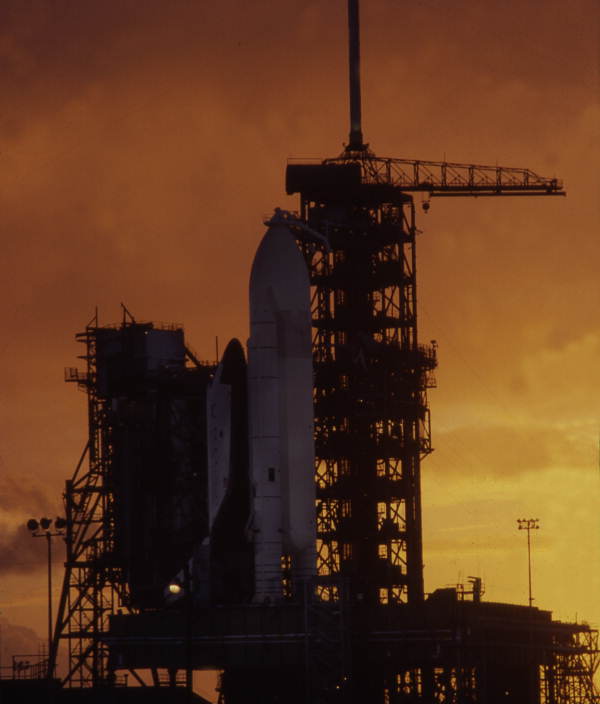
The mission was flown by a two-person crew: commander Joe H. Engle and pilot Richard H. Truly. The orbiter Columbia, which had made the program's first flight earlier in 1981, was reused for STS-2 — the first time a crewed spacecraft was reflown — marking a key milestone for the shuttle's design goal of reusability.
Objectives and payloads
STS-2 concentrated on validating orbiter systems after refurbishment and exercising on-orbit procedures. A selection of engineering and scientific investigations rode aboard, including tests of the Shuttle Remote Manipulator System (the Canadarm) and a series of sensors and experiments to monitor thermal, structural and avionics performance. The mission also served as an early opportunity to refine procedures for payload handling and astronaut operations in low Earth orbit.
Flight and landing
The mission launched in November 1981 and remained on orbit for approximately two days, completing multiple orbits before returning to Earth. Columbia landed successfully at Edwards Air Force Base in California. During the flight the crew performed checkout activities, monitored experiment results and helped demonstrate that the shuttle could be turned around and flown again after refurbishment.
Mission facts
- Orbiter: Columbia
- Crew: Joe H. Engle (commander), Richard H. Truly (pilot)
- Launch: November 1981
- Duration: about two days in low Earth orbit
- Landing site: Edwards Air Force Base, California
Legacy and significance
STS-2 helped demonstrate the shuttle's core concept of a partially reusable spacecraft and provided data that informed later operational missions. By exercising the Canadarm and refining on-orbit procedures, the flight contributed directly to the shuttle's ability to deploy, retrieve and service satellites and to carry out scientific and commercial payloads in subsequent years. As an early post–flight test mission, STS-2 occupies an important place in the development of routine shuttle flight operations.
Related articles
Author
AlegsaOnline.com STS-2 (Space Shuttle mission) Leandro Alegsa
URL: https://en.alegsaonline.com/art/94358