
Stagecoach — horse-drawn passenger and mail transport
A stagecoach is a horse-drawn coach that carried passengers, mail and goods on scheduled routes between stopping points (stages). Widely used from the 17th to 19th centuries in Europe, North America and beyond.
Overview
A stagecoach is a large, horse-drawn passenger vehicle that ran on a fixed timetable between designated stopping points known as stages. Originating in the early modern period, stagecoaches developed into an organised form of public transport and mail delivery before railways became widespread in the 19th century. They were used across Britain, continental Europe, North America and in some colonies, adapting to local roads and economic conditions.
Image gallery
10 Images




Design and components
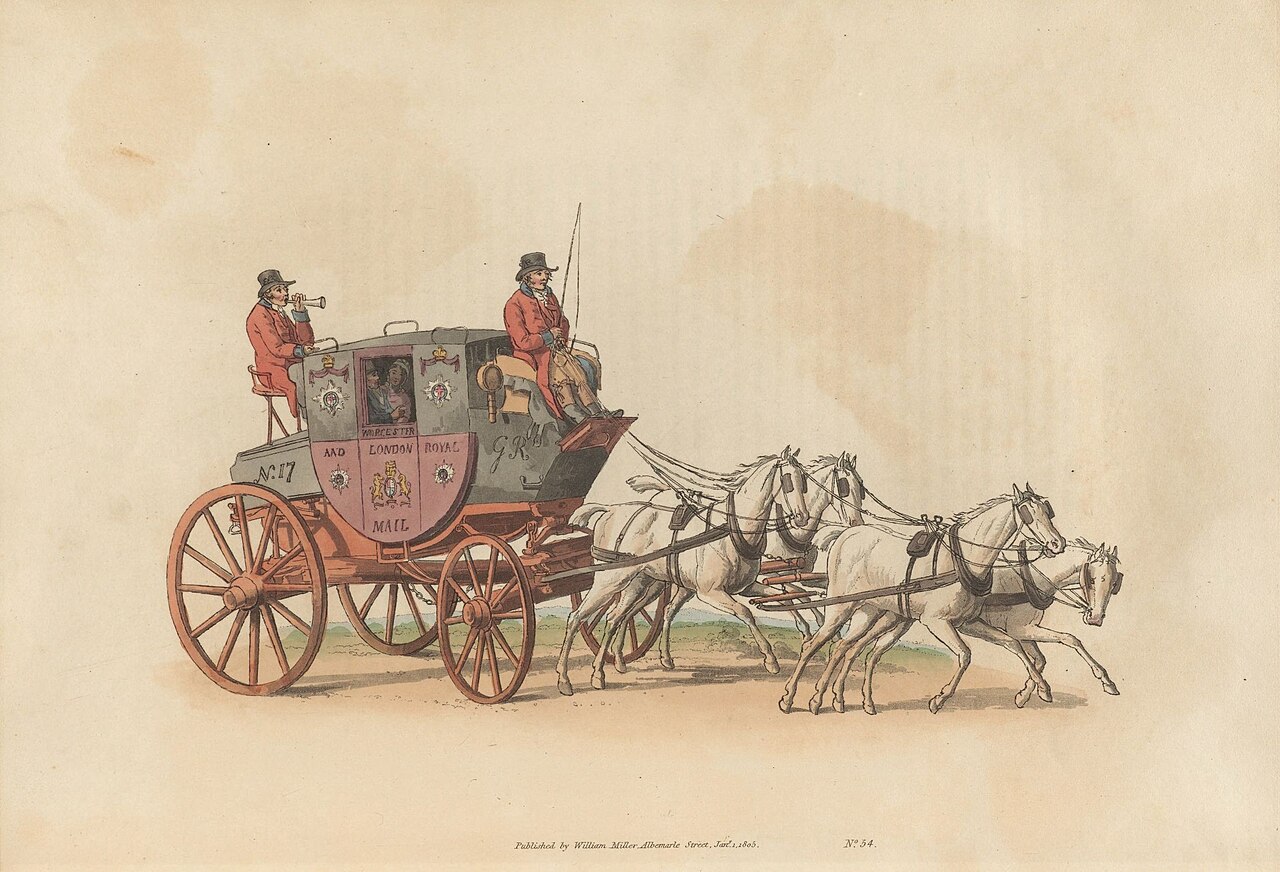
Stagecoaches were built for a balance of speed, durability and capacity. The body was mounted on a suspension system—originally leather straps called thoroughbraces and later steel springs—to soften the ride on uneven roads. Large spoked wheels and a sturdy underframe helped them cope with rough surfaces. Inside, seating was arranged to carry several passengers, while luggage was stowed on roof racks or in a boot. The driver sat on a forward box; on some routes a postillion rode one of the lead horses instead.
Operation and the relay system
Routes were divided into stages of measured distance. At each stage travellers could obtain food and rest, and teams of tired horses were replaced by fresh animals at staging posts, inns or posting houses. This relay system allowed coaches to maintain higher average speeds than ordinary wagons and made regular timetables possible. Because of their speed and schedule, many stagecoaches also carried post and parcels and were often called mail coaches.
Regional variants
- Britain and Europe: Improvements in road management and postal organisation in the 18th century encouraged scheduled coach services linking towns and cities.
- North America: Designs such as the Concord coach became associated with long overland routes and frontier travel, adapted to rougher terrain and longer distances between settlements.
- Other colonies: Similar services appeared where roads and demand permitted, but vehicles and operation reflected local climate and conditions.
Social and economic role
Stagecoaches reduced travel time, supported trade and communication, and helped integrate regional economies. They offered a relatively affordable, scheduled means of travel for a range of social classes and played a key role in distributing news and mail. Because they often carried cash and valuables, coaches could also be targets for highway robbery, prompting measures such as armed escorts or secure mail compartments.
Decline and legacy
The rapid expansion of railway networks in the 19th century made long-distance coach services uneconomical, though local and rural coach travel continued where railways did not reach. Elements of coach design and operation influenced later transport systems, and preserved vehicles and reenactments keep the history visible. Stagecoaches remain prominent in literature, film and cultural memory as symbols of a transitional age in land travel.
Related articles
Author
AlegsaOnline.com Stagecoach — horse-drawn passenger and mail transport Leandro Alegsa
URL: https://en.alegsaonline.com/art/93259