
Basil II — Byzantine Emperor (r. 976–1025)
Byzantine emperor Basil II expanded imperial territory, subdued the First Bulgarian Empire, and reinforced central authority; his long reign marked the empire's greatest territorial extent since Justinian.
Overview
Basil II (born 958, died 15 December 1025) was a member of the Macedonian dynasty who ruled as Byzantine emperor from 10 January 976 until his death. His reign is noted for sustained military activity, administrative firmness, and a longevity that allowed policies and campaigns to have lasting effect. Under Basil II the Byzantine Empire reached a level of territorial expansion not seen since the age of Justinian.
Image gallery
10 Images




Military campaigns and territorial gains
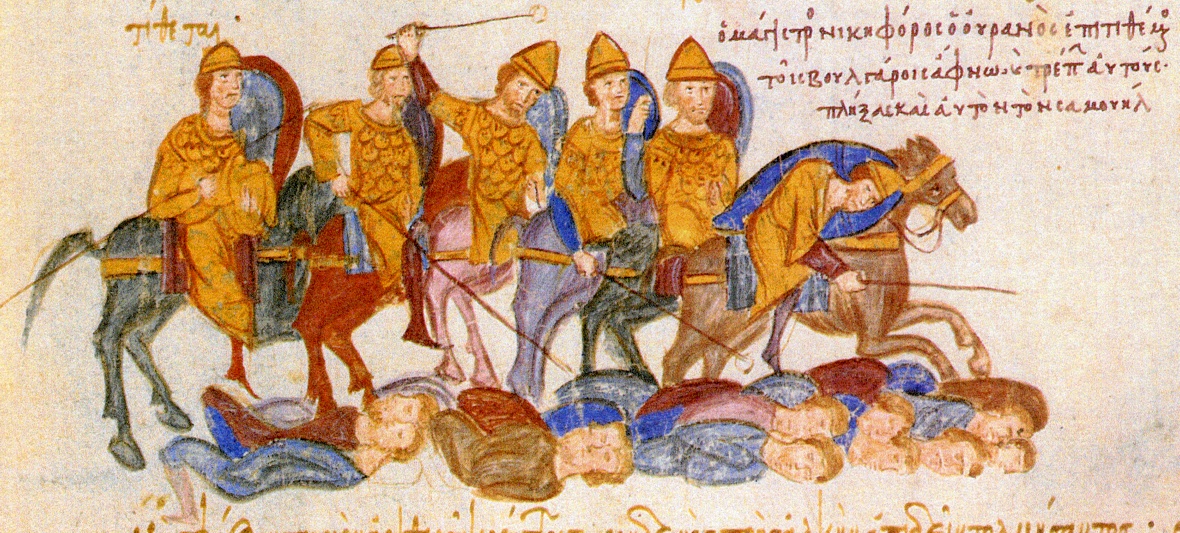
Basil personally directed many military operations and relied on a disciplined army that included elite units such as the Varangian Guard. His longest and most consequential conflict was the protracted series of wars against the First Bulgarian Empire. After decades of campaigning he achieved the decisive results in the early 11th century that led to the incorporation of Bulgaria into the empire by 1018. Contemporary and later sources gave him the sobriquet "Bulgar-slayer"; some chronicles report harsh punishments inflicted on defeated foes, but the exact details are debated by historians.
Administration, society and economy
Beyond warfare, Basil took measures to strengthen imperial authority and to check the power of great landholding families. Imperial legislation and administrative action under his rule aimed at preserving revenue and curbing the growth of private estates that could erode central control. The imperial treasury was reportedly in robust condition at his death, a contrast to the fiscal problems later emperors faced.
Significance and legacy
Basil II's conquests extended the empire's borders northward to the Danube in places and secured gains in the eastern frontier, consolidating territory in the Balkans and parts of Anatolia and the Caucasus. He died childless after a long reign, and his successors did not fully maintain his military and fiscal policies; the empire remained powerful but would later confront renewed challenges. Historians view Basil as one of Byzantium's most effective medieval rulers whose long tenure left a clear imprint on the imperial state.
Notable facts
- Ruled from 976 to 1025 and belonged to the Macedonian dynasty.
- Completed the annexation of the First Bulgarian Empire, finalized around 1018.
- Often remembered for strict discipline and strong centralized government.
Tags
Related articles
Author
AlegsaOnline.com Basil II — Byzantine Emperor (r. 976–1025) Leandro Alegsa
URL: https://en.alegsaonline.com/art/9239