
Shirred eggs (baked eggs, œufs en cocotte)
Shirred eggs are eggs baked in a shallow dish so the whites set while yolks stay soft. Simple to prepare, they accept creams, cheeses, herbs and are served for breakfast or light meals.
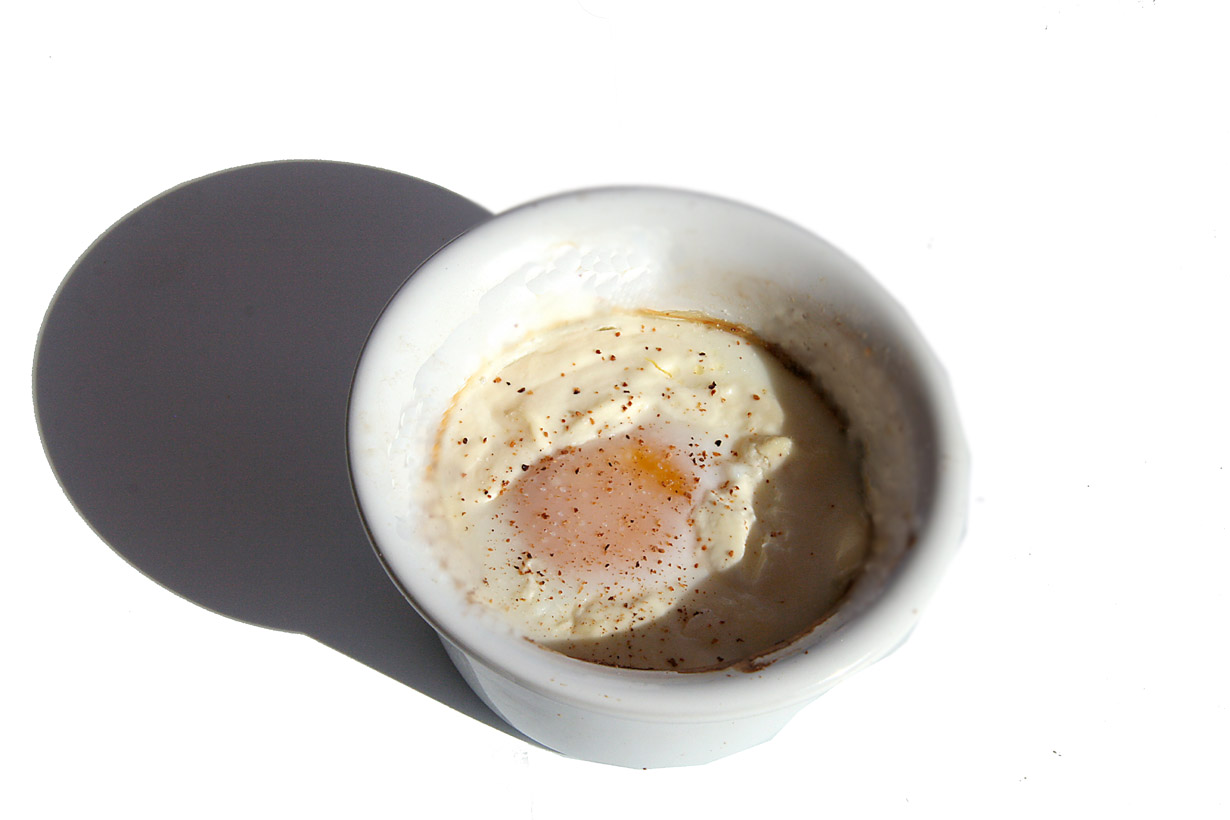
Shirred eggs are whole eggs cooked in an oven or hot water bath in a shallow vessel so that the white becomes firm while the yolk remains soft or runny. The preparation is commonly called baked eggs in English and often known by the French name œufs en cocotte. The term "shirred" originally refers to the shallow dish traditionally used to bake them.
Image gallery
2 Images
Characteristics and common ingredients
A typical serving contains one or two eggs placed in a small ramekin or the wells of a shallow baking pan. Many recipes add a little butter or cream under or over the egg to enrich the texture, and finishing touches can include grated cheese, chopped herbs, smoked fish, ham, or a sprinkle of breadcrumbs. The defining feature is the contrast between a set white and a soft yolk that can be broken and mixed with toast or vegetables.
Basic preparation
Shirred eggs are usually baked in a moderate oven; a common approach is to preheat the oven and bake the eggs until the whites are opaque and the yolks wobble slightly. For gentler, more even cooking some cooks place the ramekins into a water bath before baking. Timing depends on oven temperature and dish size, but the method is forgiving and easily adjusted for firmer or runnier yolks. For technique notes see recipes that describe how eggs are cooked gently to preserve texture.
History and naming
The exact origin of shirred eggs is not pinpointed to a single date, but the dish reflects a long culinary tradition of baking eggs in small vessels. The French preparation œufs en cocotte became popular in classic cookery because the water-bath method yields a delicate texture; English-language cookbooks adopted the term "shirred" for baked-in-dish versions. The name highlights the equipment as much as the result.
Variations, serving and distinctions
Variations range from minimalist (egg with butter and salt) to richer forms with cream, cheese, or vegetable beds. Shirred eggs differ from poached eggs (cooked directly in simmering water) and coddled eggs (gently cooked in a porcelain coddler or pot) by being finished in an oven. The important distinction is the balance of a set white and a tender yolk—described succinctly as a firm white but soft or runny yolk. Shirred eggs are commonly served with crusty bread, toasted soldiers, salads, or as a component of brunch menus.
Practical tips
- Use room-temperature eggs for more even cooking.
- Add a teaspoon of cream or butter to prevent the white from drying out.
- Watch the oven closely near the end of cooking; a few minutes can change yolk consistency.
- Experiment with toppings—cheese and herbs melt into the yolk for extra flavor.
Author
AlegsaOnline.com Shirred eggs (baked eggs, œufs en cocotte) Leandro Alegsa
URL: https://en.alegsaonline.com/art/89888