
SCUM Manifesto
A controversial 1967 radical feminist manifesto by Valerie Solanas advocating the overthrow of patriarchal institutions; part polemic, part satire, widely debated in feminist and cultural history.
Overview
The SCUM Manifesto is a provocative pamphlet written by Valerie Solanas and first circulated in 1967. Using deliberately confrontational language, the text argues that the existing social order is dominated by male privilege and that radical measures are needed to overturn patriarchal institutions. The acronym "SCUM" commonly stands for "Society for Cutting Up Men," and the manifesto blends polemic, parody, and social critique to make its case.
Image gallery
2 Images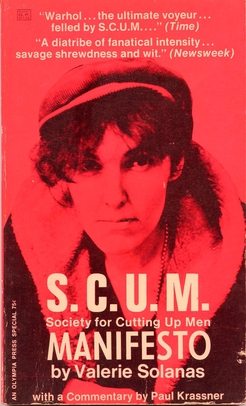

Content and themes
Solanas presents the manifesto as a compact, urgent call to action. Its tone alternates between angry denunciation and sardonic exaggeration, deploying caricatured descriptions of "the male" alongside broader critiques of political, cultural, and economic power. Major themes include the critique of male authority, a rejection of conventional gender roles, and the advocacy of women-centered social organization. Scholars and readers have debated whether passages should be read literally or as hyperbolic satire meant to expose systemic injustices.
Structure and notable passages
The document is organized into short, forceful sections rather than extended argumentation. It lists perceived failures of the male sex, proposes the formation of an organization called SCUM to facilitate radical change, and sketches a vision of a post-patriarchal society. Elements of the text employ dark humor and rhetorical excess; for many readers those stylistic choices are inseparable from its political intent.
Publication, reception, and interpretations
Published during the late 1960s, a period of intense social movements, the manifesto attracted immediate controversy. Contemporary reception ranged from condemnation and alarm to fascination and intellectual engagement. The work has been reprinted numerous times and translated into several languages; it continues to be discussed in feminist theory, literary studies, and cultural history. Some interpret it as sincere advocacy of separatist action, while others read it as satirical provocation or performance art that dramatizes gendered oppression.
Historical context and influence
The SCUM Manifesto emerged amid second-wave feminism and other radical movements of the 1960s, when debates about gender, violence, and social change were especially heated. Its style reflects the period's appetite for direct, uncompromising critique. Over time it has entered popular and academic discourse as a touchstone of extreme feminist rhetoric, cited both by critics of radical feminism and by scholars exploring the boundaries between manifesto, satire, and social theory.
Notable facts and further reading
Valerie Solanas's life and public actions influenced how the manifesto was received and discussed, intensifying interest in its provocations. Readers seeking primary texts or scholarly commentary can consult reprints and critical collections; for an online version see the manifesto text and for critical responses and analysis see secondary literature. The SCUM Manifesto remains a disputed and frequently taught work, notable for its rhetorical force and its role in conversations about gender, power, and protest.
- Genre: Political manifesto / polemic
- Author: Valerie Solanas
- Date: 1967 (first circulated)
Related articles
Author
AlegsaOnline.com SCUM Manifesto Leandro Alegsa
URL: https://en.alegsaonline.com/art/88237
Sources
- thenation.com : thenation.com