
Saint-Imier — town in the Bernese Jura, Switzerland
Saint-Imier is a French-speaking municipality in the Bernese Jura of canton Bern, known for its watchmaking heritage, 19th‑century industrial development and the 1872 Saint‑Imier labour congress.
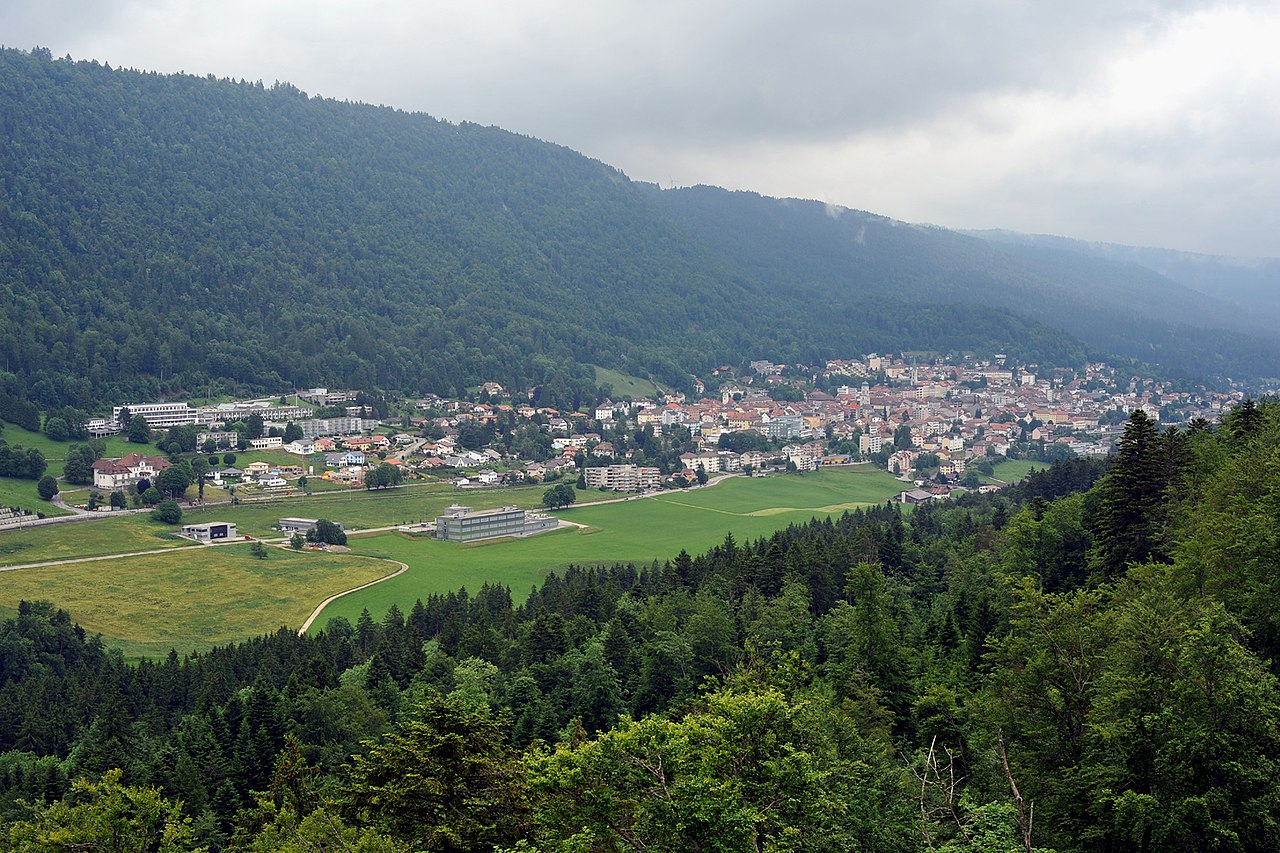
Saint‑Imier is a municipality in the French-speaking Bernese Jura region of Switzerland. It sits in a valley of the Jura mountains and forms part of the administrative district commonly called Jura bernois. Administratively the town belongs to the canton of Bern, while nationally it is a constituent locality of Switzerland. Local life reflects the town's position between rural highlands and the small industrial towns of the Jura range.
Image gallery
9 Images


History
Settlement around Saint‑Imier grew up in association with a religious foundation dedicated to a figure traditionally known as Saint Imier (or Imerius), and the place name preserves that early legacy. During the medieval and early modern periods the locality developed as a regional market and parish centre. Industrialization in the 19th century brought workshops and small factories, transforming the economic base from agriculture to specialized manufacturing. Saint‑Imier also figures in political history: in 1872 a meeting of labour activists there produced the congress often referred to as the Saint‑Imier congress, a notable event in the history of the international workers' movement.
Watchmaking and economy
The town became closely associated with Swiss watchmaking. Several firms and independent workshops were established in the 19th and early 20th centuries, and that cluster of skills helped shape the local economy. Most prominently, the Longines brand traces its origins to Saint‑Imier and has long-standing historical ties with the town. Another important name, Breitling, was founded in Saint‑Imier before its operations moved elsewhere; today that company is associated with the town of Grenchen. Beyond large names, many small specialised suppliers and craft ateliers continue to support precision manufacturing and restoration work.
Culture, landscape and amenities
Saint‑Imier sits amid wooded hills and limestone ridges typical of the Jura; the surrounding landscape supports hiking, cycling and seasonal outdoor activities. Architecturally the town shows a mixture of traditional Jura houses, 19th‑century industrial buildings and later residential development. Cultural life includes local festivals, artisan fairs and occasional exhibitions that reflect the watchmaking craft and regional traditions.
Practical information and distinctions
- Language: predominantly French, reflecting the Bernese Jura character.
- Economy: small industry, watchmaking-related suppliers and local services.
- Notable aspects: historic association with watchmaking and the 1872 labour congress.
For administrative details and municipal services see the town's entry as a local municipality: Saint‑Imier municipal page. Further regional information and tourism guidance can be found via broader canton and national resources: canton and national portals.
Related articles
Author
AlegsaOnline.com Saint-Imier — town in the Bernese Jura, Switzerland Leandro Alegsa
URL: https://en.alegsaonline.com/art/85699
Sources
- bfs.admin.ch : "Arealstatistik Standard - Gemeinden nach 4 Hauptbereichen"
- bfs.admin.ch : "Ständige Wohnbevölkerung nach Staatsangehörigkeitskategorie Geschlecht und Gemeinde; Provisorische Jahresergebnisse; 2018"