
Royston: Market Town in North Hertfordshire
Royston is a historic market town in North Hertfordshire, England, known for Royston Cave, the Prime Meridian crossing, market traditions, and its role as a local transport and community centre.
Royston is a market town in North Hertfordshire, England, situated close to the A505 and on transport routes between Cambridge and London. The town has long-standing local importance as a service and trading centre for the surrounding villages. The Prime Meridian (the Greenwich meridian) passes through the town area, a notable geographical feature often mentioned in local descriptions.
Image gallery
6 Images


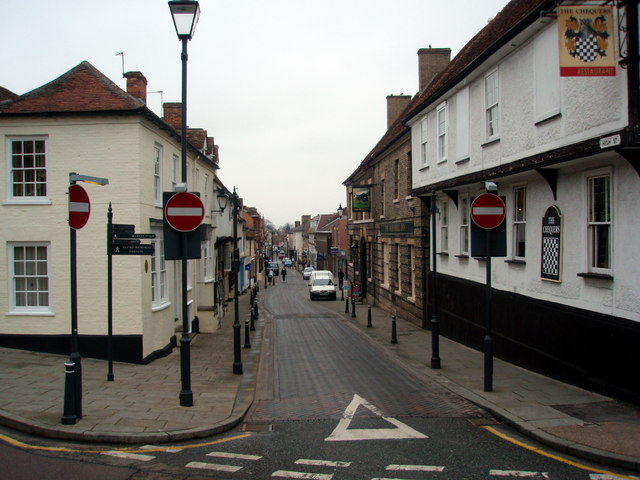

Geography and urban character
Royston lies where historic routes meet modern roads. The town centre retains a traditional market-town layout with a principal High Street and public squares. Several green spaces and commons lie near the built-up area, offering recreational areas for residents. Royston also has a railway station on the line between Cambridge and London, which supports commuting and local travel.
History and name
The town has medieval roots and grew where older trackways converged. Early documentary forms of the name appear in medieval records and have evolved into the modern form Royston. Its development was influenced by trade, markets and its position on coaching and later rail routes. Over centuries Royston expanded from a market settlement into a larger town serving a wider rural hinterland.
Notable sites and heritage
Royston is best known for Royston Cave, an artificial subterranean chamber carved into chalk and decorated with carved figures and symbols of apparent religious significance. The cave’s origin and purpose remain subjects of historical and archaeological interest, and it is interpreted by local historians and museums. Another frequently noted feature is the town’s association with the Prime Meridian line that crosses the area, which is marked and sometimes highlighted in local guides. For more local civic information see North Hertfordshire information.
Community, education and economy
The town supports a range of shops, markets, small businesses and schools. Several primary and secondary schools serve the town and surrounding villages; some have participated in collaborative arrangements under a local academy trust to coordinate education provision. Royston’s economy combines retail and services with some light industry and a commuter population that travels to larger regional centres.
Culture, events and local organisations
Royston maintains active local institutions such as a town museum, historical society and community organisations that promote heritage, arts and civic life. Regular markets, seasonal fairs and community events contribute to local identity. Visitors and residents are often drawn by the town’s mix of historic interest, accessible countryside and links to larger urban centres.
Practical information and distinctions
- Transport: road access via the A505 and rail services toward Cambridge and London.
- Heritage: Royston Cave and a market-centred historic core.
- Community: schools, local museums and active civic groups.
Further reading and tourist information are available from local council and visitor resources, which provide updated details on events, access to the cave and town services. Royston’s combination of transport links, historical sites and community life make it a distinctive locality within Hertfordshire.
Related articles
Author
AlegsaOnline.com Royston: Market Town in North Hertfordshire Leandro Alegsa
URL: https://en.alegsaonline.com/art/84532